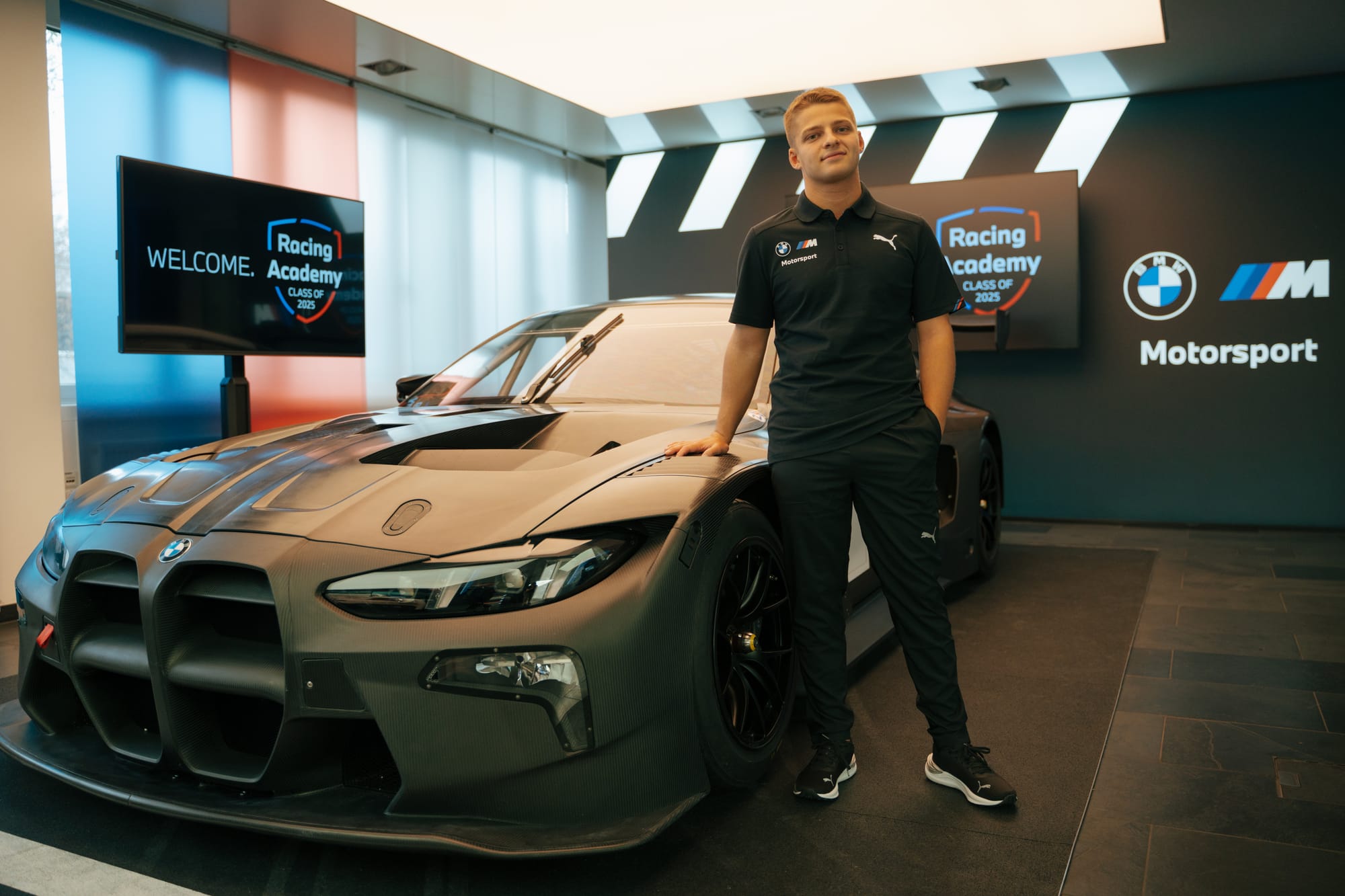
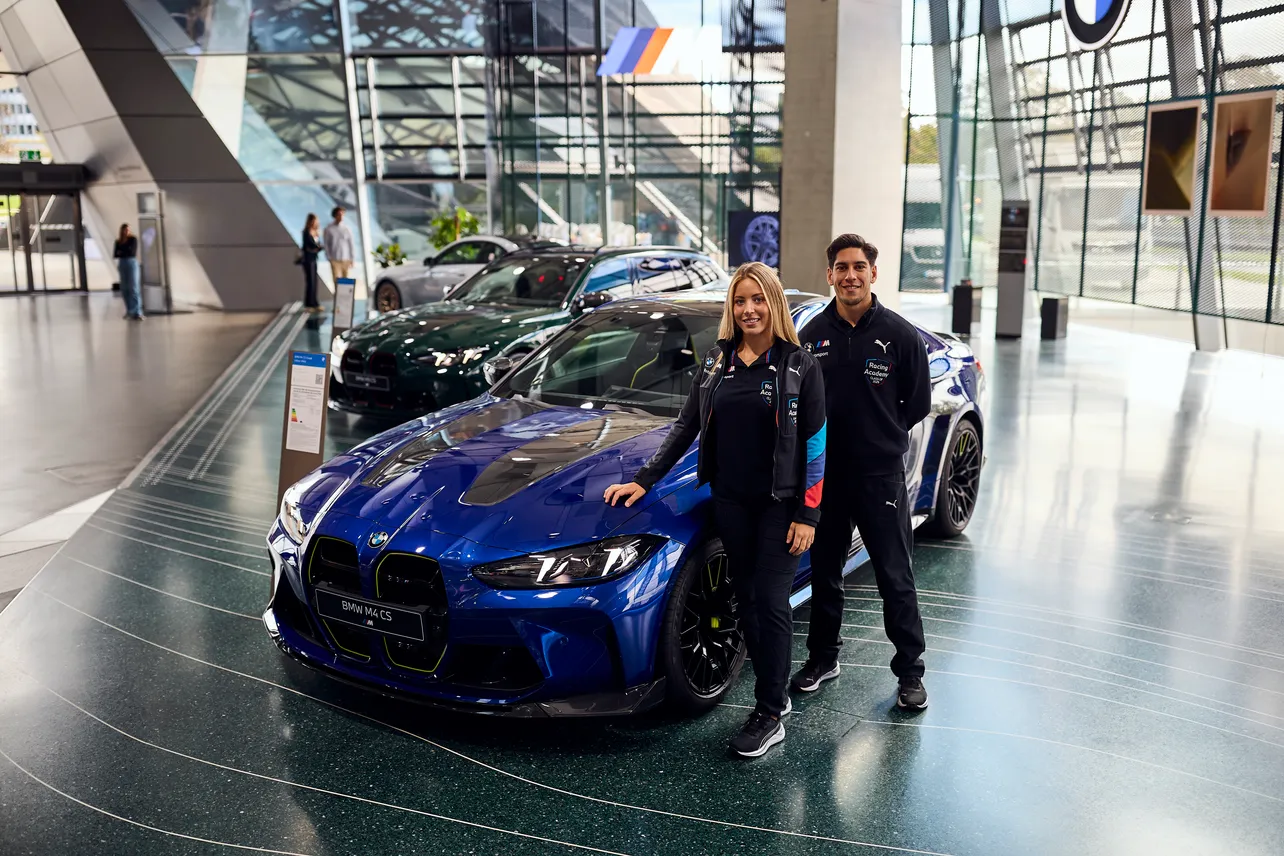
BMW operates a driver development program known as the BMW M Racing Academy. It focuses on drivers competing in GT racing and builds on existing racing experience. Unlike traditional junior programs, it is closely linked to BMW’s customer racing activities. To understand the role of the program, it is necessary to look at how GT racing is structured.
GT Racing and Customer Racing
Customer racing is a core part of BMW’s motorsport business. In GT4 and GT3 series, BMW develops race cars based on its road models — such as the BMW M4 GT4 and BMW M4 GT3 — and sells them to independent racing teams.
These teams run the cars in international and regional championships and build their own driver line-ups. BMW supports them beyond the initial sale by providing spare parts, technical updates, and engineering assistance for setup and operation. The teams typically combine experienced racing drivers with so-called gentleman drivers, who are often business professionals or entrepreneurs competing at a high level and contributing to the program.
Because BMW supplies the cars and supports their operation, it depends on these teams and drivers to run them successfully. This is why BMW supports driver development — to maintain a consistent level of performance across its customer racing programs.
BMW M Racing Academy
The BMW M Racing Academy was introduced in 2025 as a development program for drivers already competing in customer racing. Following its first cohort, the program continues in 2026 with a second group of selected drivers. The Academy does not focus on beginners. It works with drivers who are already active in GT racing, primarily in GT4 categories, and develops them further for higher levels of competition.
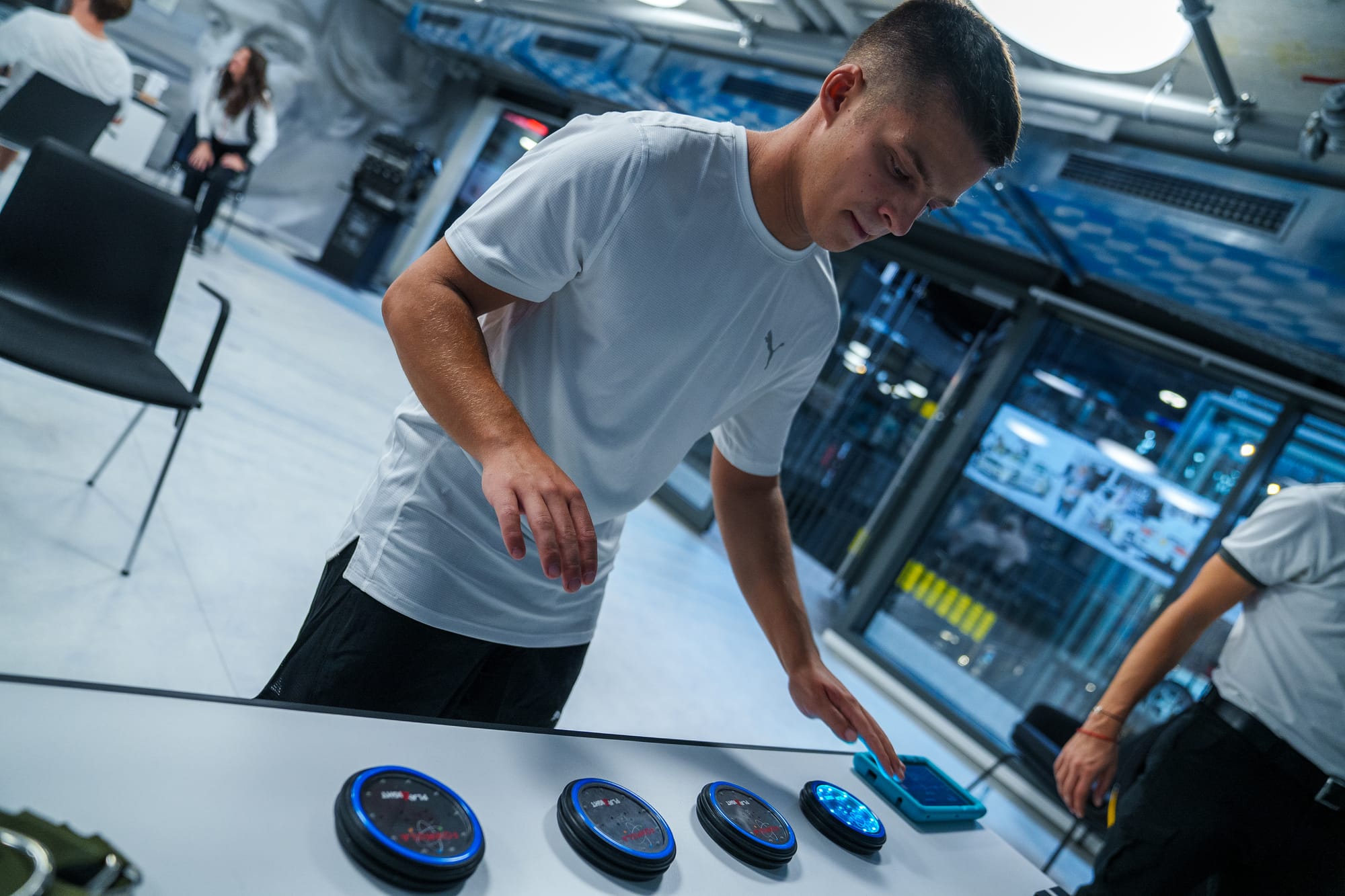
The drivers compete in customer teams, often in BMW machinery, and are selected based on their performance and potential. Entry into the program is highly selective. From a large pool of applicants, a group of candidates is invited to a multi-stage selection process, including driving assessments, simulator challenges, physical and mental testing, as well as interviews. Only a small number of drivers are ultimately selected for each class.
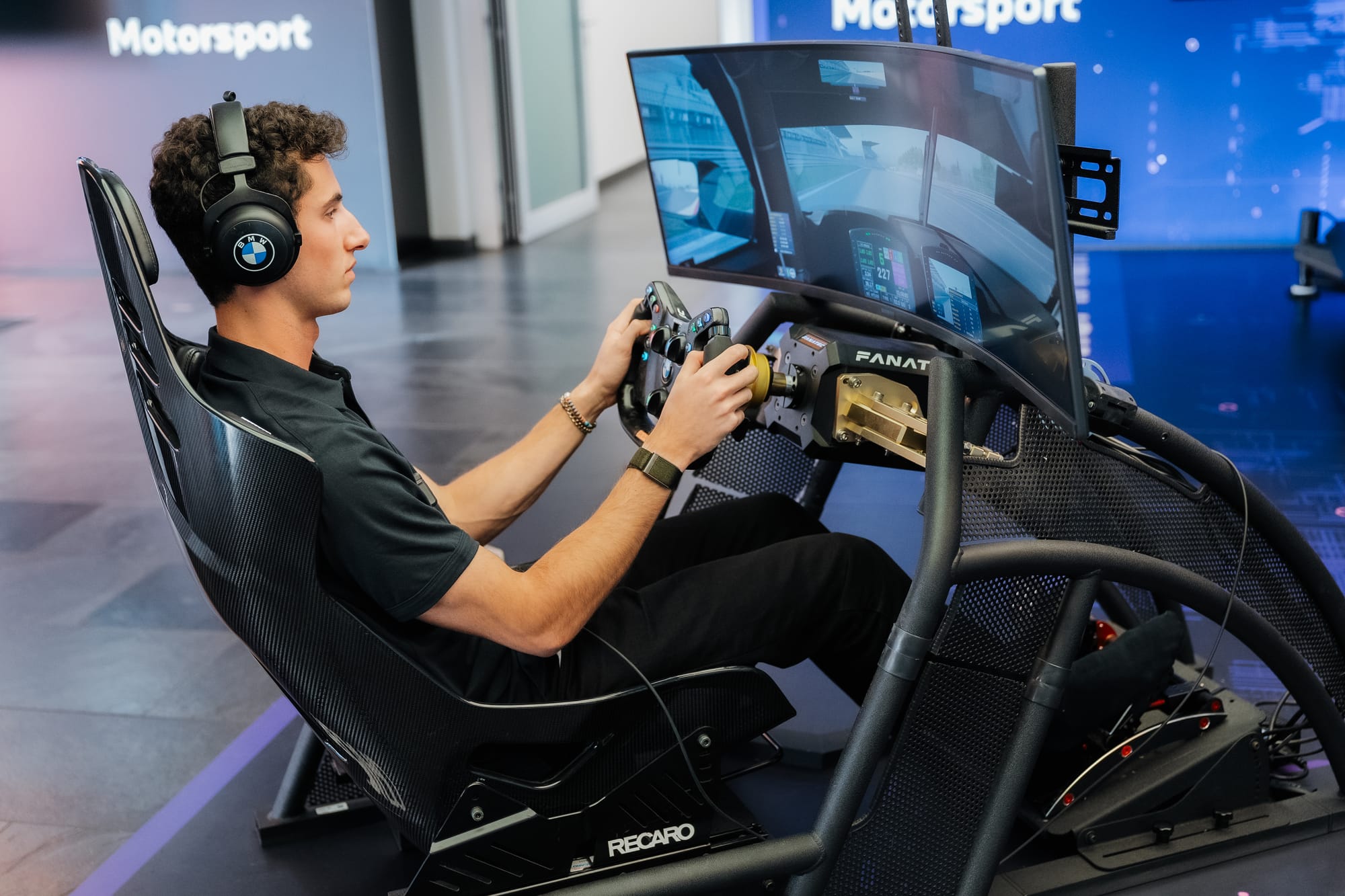
Within the Academy, the focus is on developing drivers beyond basic race performance. Training includes on-track performance and consistency, simulator work, working with engineers and understanding data, race preparation and execution, physical training, as well as media and communication.
The program is structured over several months and combines training blocks with race-related activities. Drivers take part in test sessions, simulator work, and practical exercises that simulate real race conditions, including endurance scenarios and team coordination. For example, drivers may take part in endurance simulations designed to replicate 24-hour race conditions. These sessions are used to train performance under demanding conditions, where consistency, tire management, and coordination with the team become central.
Drivers work closely with BMW engineers and experienced factory drivers. They learn how to structure feedback, how to approach race weekends, and how to manage performance over longer race distances. Performance is continuously evaluated throughout the program, including not only driving ability, but also communication, feedback quality, and consistency under pressure.
Participants are also exposed to higher-level racing environments. This includes attending major race events such as WEC or IMSA weekends and gaining insight into vehicle development programs. Throughout the year, they are mentored by BMW factory drivers and gain access to processes and knowledge that are typically not available at customer racing level.
In addition to performance, drivers are prepared for their role within the brand. This includes media work, communication, and representing BMW in a professional environment. The Academy builds on existing experience and develops it into a more structured and professional level.
Why BMW Runs the Program
As outlined in the customer racing structure, BMW supplies race cars to independent teams and supports their operation over time. These teams depend on drivers who can operate the cars consistently and at a competitive level, both in terms of performance and within a structured team environment.
The Academy addresses this directly by developing drivers within BMW’s own system. It ensures that teams have access to drivers who are not only capable on track, but also able to work with engineers, manage feedback, and operate reliably across a full race program.
Without a consistent level of driver quality, the performance of customer teams becomes uneven, which directly affects the competitiveness and perception of the racing programs. By supporting driver development, BMW stabilizes this layer and improves the overall level of its customer racing activities.
At the same time, the program allows BMW to identify drivers who can progress to higher levels of competition. The primary objective, however, remains the same: maintaining a strong and consistent driver base across BMW’s customer racing programs.
Conclusion
The BMW M Racing Academy is part of a broader structure rather than a standalone initiative. In GT racing, manufacturers supply the cars, teams operate them, and drivers form a central part of the system. By developing drivers within this structure, BMW supports both the competitive level of its racing programs and the long-term stability of its customer racing business.