Germany — Reconnecting Defence to the Industrial Base
Yours Magazine · 15 May 2026 · 6 min read
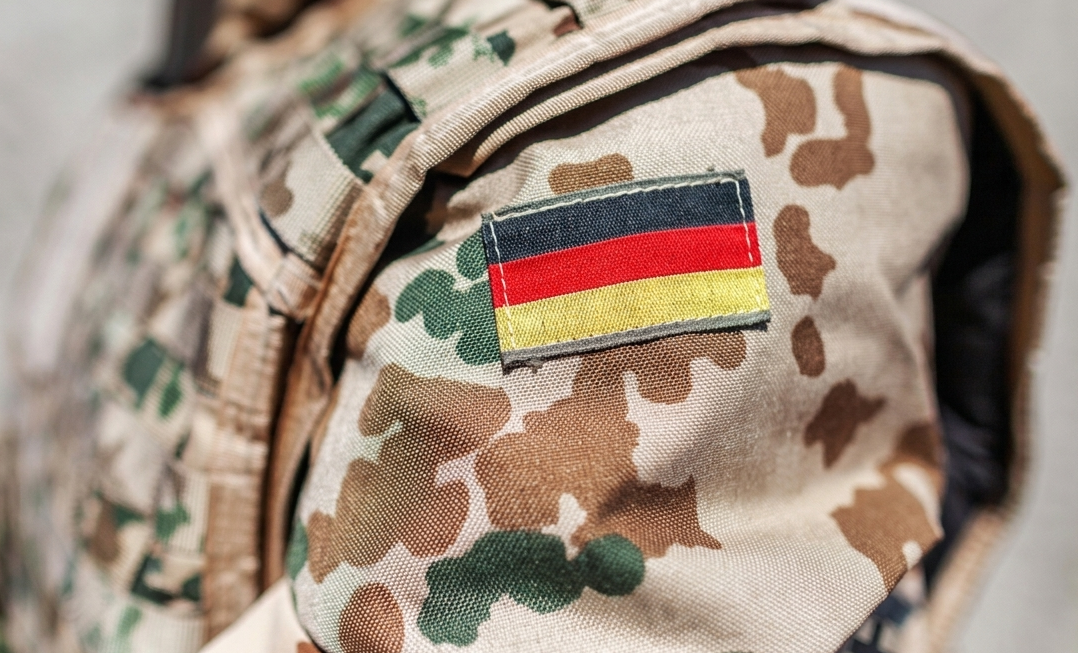
Much of the recent discussion around Germany’s defence expansion has focused on military spending, procurement figures, tanks, ammunition production, and weapons deliveries.
But Germany’s current defence expansion increasingly extends beyond procurement alone.
For decades after the Second World War, much of the country’s industrial and research base remained largely separate from military development. Defence production stayed concentrated around a relatively small number of specialised companies such as Rheinmetall, Krauss-Maffei Wegmann, Airbus, and smaller defence suppliers.
That separation is now beginning to weaken. Germany is starting to connect defence more directly to broader industrial, technological, and research systems that historically supported its civilian economic strength.
Political Change and Defence Expansion
The broader transformation began after Russia’s invasion of Ukraine in 2022, when Chancellor Olaf Scholz announced a €100 billion special fund for the Bundeswehr aimed at rebuilding readiness, procurement, and ammunition stocks after decades of underinvestment.
Under Chancellor Friedrich Merz, following the 2025 federal election, the effort gained significant momentum. The government pushed through a €500 billion infrastructure programme alongside major increases in defence spending.
By 2026, the political direction had become more explicit: the government declared the goal of building Europe’s strongest conventional army, with defence spending projections rising toward more than €150 billion annually later in the decade.
The government also introduced a new National Security Council to improve coordination between defence, intelligence, foreign policy, and economic ministries.
At the same time, procurement reforms were introduced to speed up military projects, industrial expansion, and infrastructure development. This is particularly important because Germany’s defence expansion increasingly depends not only on a small number of large contractors, but also on the country’s wider industrial base.
Mittelstand and Industrial Supplier Networks
One of Germany’s core economic strengths is the depth of its industrial supplier ecosystem. The country operates through dense manufacturing networks — the Mittelstand — made up of thousands of highly specialised firms that form the backbone of large parts of German industry. Many operate as global leaders within narrow technical and manufacturing niches, producing components, industrial machinery, electronics, optics, software, advanced materials, and precision-engineered parts.
For decades, most of these companies remained focused on civilian markets while defence production stayed concentrated around a relatively small number of specialised contractors. That separation is now beginning to change.
Modern military systems increasingly require advanced electronics, sensors, embedded systems, software integration, automation, robotics, and precision manufacturing — areas where many Mittelstand firms already possess strong capabilities. As more companies enter defence supply chains or adapt dual-use technologies for military applications, Germany is expanding defence production beyond its traditional contractors into a much broader industrial network.
This broader supplier structure can also provide greater industrial resilience and production flexibility compared with systems that rely more heavily on a smaller number of major contractors.
Defence expansion may also create new industrial demand and employment opportunities at a time when parts of Germany’s manufacturing sector — particularly the automotive industry and its suppliers — are facing economic pressure.
Discussions around possible cooperation between larger defence and automotive plants, including talks involving Rheinmetall and Volkswagen facilities, increasingly reflect the growing overlap between industrial manufacturing capacity and defence production.
Industrial Semiconductors and Embedded Systems
Germany’s strengths in industrial semiconductors, power electronics, embedded systems, and sensors add further weight to this shift.
Unlike the United States, Germany is not primarily positioned around hyperscale AI computing or consumer AI chip dominance. Its semiconductor strengths are more industrial and engineering-focused. Companies such as Infineon and Bosch specialise in reliable, high-precision systems designed for industrial machinery, automation, automotive systems, and operation under demanding conditions.
These technologies also overlap with many modern military requirements. Drones, radar systems, communications equipment, autonomous platforms, vehicles, and battlefield electronics all depend heavily on specialised semiconductor technologies.
The semiconductor cluster around Dresden (Silicon Saxony) continues to expand, further strengthening Germany’s position in industrial-grade electronics and semiconductor manufacturing even if the country remains less dominant in consumer AI chips.
Universities, Applied Research, and Engineering
Germany already maintained military-linked research through institutions such as the Universität der Bundeswehr München, which operated more directly alongside the armed forces and defence sector.
Much of the wider civilian university system was different. For decades, many universities maintained civil clauses restricting military-related research, while engineering and applied research remained focused mainly on civilian industry and manufacturing.
That separation is now beginning to weaken. Technologies such as artificial intelligence, quantum computing, cybersecurity, autonomous systems, aerospace, drones, sensors, and software increasingly operate as dual-use technologies with both civilian and military applications.
Large German and European funding programmes connected to security and technological sovereignty are also pushing more universities and research institutions into these areas.
One of the clearest examples is the TUM Security and Defense Alliance launched in 2026 by the Technical University of Munich together with the Universität der Bundeswehr München and companies including Airbus Defence, HENSOLDT, MBDA, Helsing, Quantum Systems, SAP, and Isar Aerospace.
The importance of the project also lies in the role of TUM itself. The university is one of Europe’s leading engineering and research institutions and sits at the centre of a major industrial and technology ecosystem. Together with the Bundeswehr university, defence companies, and technology firms, the alliance focuses on bringing research in artificial intelligence, cybersecurity, autonomous systems, drone technology, and satellite communications into military and dual-use applications.
Networked Warfare, AI, and Space-Based Systems
Furthermore Germany’s defence expansion increasingly extends into newer operational and technological areas that go beyond traditional military platforms alone. Modern warfare increasingly depends not only on tanks, aircraft, or artillery individually, but on how information, communications, reconnaissance, software systems, and autonomous technologies operate together across integrated networks.
This includes areas such as artificial intelligence, drones, battlefield software, satellite reconnaissance, secure communications, radar integration, electronic warfare, autonomous systems, and ISR networks used for intelligence, surveillance, and reconnaissance.
Companies such as Helsing develop software systems designed to process sensor data, accelerate battlefield analysis, support targeting, and integrate autonomous systems into wider command structures.
Germany is also expanding sovereign satellite and reconnaissance capabilities. One important example is the Rheinmetall-ICEYE joint venture, which will begin producing Synthetic Aperture Radar (SAR) satellites in Germany from 2026 onward.
Unlike conventional optical satellites, SAR systems use radar rather than visible light, allowing surveillance during darkness, cloud cover, smoke, and poor weather conditions. This provides more continuous intelligence, surveillance, and reconnaissance capability for military operations.
At the same time, programmes such as SATCOMBw are expanding secure military communications capabilities as Europe increasingly seeks to strengthen its own satellite reconnaissance, battlefield networking, intelligence systems, and communications infrastructure.
These developments increasingly connect Germany’s industrial strengths in software, sensors, embedded systems, electronics, industrial AI, communications technologies, and engineering with the requirements of modern networked warfare.
Infrastructure and Military Mobility
The current transformation also increasingly extends into physical infrastructure and logistics. Modern military capability depends not only on production and technology, but also on the ability to move equipment, sustain supply chains, deploy forces, and maintain operational mobility across large distances.
Germany is therefore increasingly adapting parts of its civilian infrastructure for military mobility and logistical resilience. This includes rail corridors, bridges, ports, depots, digital infrastructure, logistics systems, and transport networks that would become critical during large-scale military deployments across Europe.
One example is the modernization of Bremerhaven Port, Europe’s largest vehicle port, where infrastructure is being expanded for heavy military transport and large-scale equipment movement.
The broader shift increasingly positions Germany not only as a defence producer, but also as a logistical and industrial backbone within wider European and NATO planning.
Bureaucracy, Procurement, and Structural Friction
Despite the scale of the shift, Germany continues to face major structural limitations in procurement and industrial scaling.
For years, criticism of the Bundeswehr focused not only on spending levels, but also on slow approval processes, fragmented procurement structures, legal reviews, and administrative complexity that often delayed the conversion of political announcements into operational capability.
Part of this structure reflected Germany’s post-war political system, which emphasized oversight, regulation, and budgetary control over rapid military expansion.
In response, Germany introduced the Bundeswehr Planning and Procurement Acceleration Act (BwPBBG) in 2026 to simplify approval procedures, accelerate contracts, and reduce some of the bottlenecks that historically slowed procurement and infrastructure projects.
At the same time, parts of industry are already moving ahead of procurement timelines through pre-investment and industrial scaling. Rheinmetall’s rapid ammunition expansion partly reflects this approach, with the company investing heavily in production capacity based on expectations of sustained long-term demand.
However, expanding defence production at a national scale remains a complex industrial challenge. Think tanks, industry groups, and defence analysts continue to point to labour shortages, high energy costs, regulatory complexity, and slow industrial scaling as potential obstacles to faster expansion.
Criticism therefore increasingly focuses not only on spending levels, but on whether Germany can translate rapidly rising defence budgets into production capacity, technological development, and operational capability quickly enough.
Conclusion
Germany’s current defence expansion increasingly extends beyond military procurement alone. Rather than relying only on a relatively narrow group of defence contractors, the country is beginning to connect defence more closely to the wider industrial, technological, research, infrastructure, and engineering systems that historically supported its civilian economic strength.
This includes Mittelstand supplier networks, industrial semiconductors, universities, applied research, logistics infrastructure, software systems, satellite capabilities, and dual-use technologies that increasingly overlap with modern military requirements.
The result is a broader structural shift in which defence is becoming more integrated with Germany’s wider industrial ecosystem rather than operating separately from it.
Whether the transformation succeeds fully remains uncertain. Bureaucratic constraints, procurement delays, labour shortages, and political caution continue to affect the pace of change. However, the direction itself represents a significant departure from the post-war model in which Germany’s civilian industrial system and defence sector largely remained apart.