
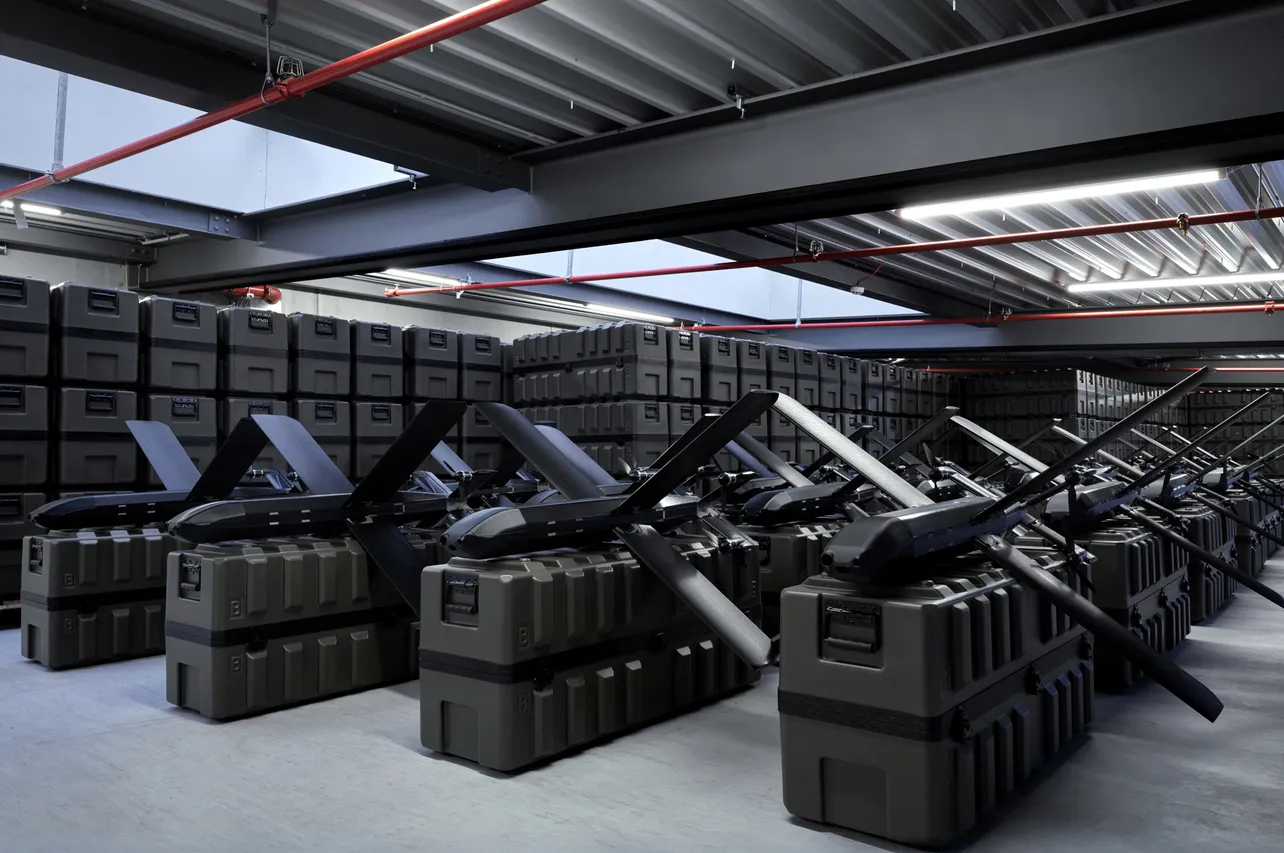
Europe’s next-generation modular system for scalable defense production in 2025 and beyond
After Russia's invasion of Ukraine in 2022, European governments faced a manufacturing problem that had been building for decades. Military stockpiles designed for limited engagements were being consumed faster than traditional defense contractors could replace them. Artillery ammunition, precision missiles, and unmanned systems were needed in quantities that existing production lines could not deliver. The war revealed that modern conflict operates at a scale and tempo that peacetime manufacturing cannot sustain.
Helsing, a German defense technology company founded in 2021, approached this problem from a different direction. Rather than expanding existing factories or building single large-scale facilities, the company designed a manufacturing model intended to function under pressure. The Resilience Factory concept centers on distributed production, standardized processes, and local supply chains. The aim is not to optimize for peacetime efficiency, but to maintain output when disruption is constant.
The First Factory
RF-1, Helsing's first Resilience Factory, opened in southern Germany in December 2024. The facility produces the HX-2, an electrically powered strike drone with a range of up to 100 kilometers. The HX-2 weighs 12 kilograms, uses an X-wing configuration for stability and maneuverability, and integrates AI for navigation and targeting in environments where GPS signals are jammed or communication links are severed.
RF-1 currently produces 450 HX-2 units per month. With additional workforce training, the facility is designed to reach 1,000 units per month. This production rate represents a baseline capacity that can be scaled further during periods of sustained demand. The facility's design prioritizes throughput over complexity, using standardized components and simplified assembly processes.
Helsing does not disclose RF-1's physical size, internal layout, or specific assembly procedures. The company maintains operational security around facility locations and production details, particularly given concerns about sabotage linked to Russian intelligence operations in Europe. What is publicly known is that the factory operates on a software-first design philosophy, where system complexity is absorbed by software rather than hardware, reducing the number of physical components and assembly steps required.
How Production Is Organized
The HX-2 was designed with manufacturing constraints in mind from the beginning. Traditional defense systems often require specialized components, custom tooling, and extended assembly timelines. The HX-2 uses commercially available materials and manufacturing techniques that allow for rapid scaling. The drone's design eliminates folding mechanisms and complex articulation systems, reducing points of failure and simplifying production.
Helsing's Altra software platform integrates with the HX-2 during final assembly. Altra coordinates multiple drones into swarms controlled by a single operator, combining reconnaissance data from sensors, artillery systems, and battlefield management software into a unified operational picture. The software layer handles targeting, navigation, and mission execution, allowing the hardware to remain relatively simple.
The production process is designed to accommodate workforce expansion. Initial operations at RF-1 required a core team of trained assemblers, but the standardized procedures allow for rapid onboarding of additional workers as production scales. This approach contrasts with traditional aerospace manufacturing, where specialized skills and lengthy training periods limit how quickly a facility can increase output.
The Distributed Model
Helsing plans to replicate the Resilience Factory model across Europe. A second facility, RF-2, is currently in the planning phase in Germany, with a target capacity higher than RF-1. In November 2025, Helsing opened its first UK Resilience Factory in Plymouth, a 18,000-square-foot facility producing the SG-1 Fathom, an autonomous underwater glider designed for anti-submarine warfare. The Plymouth site employs 50 workers initially, with plans to double that within a year.
The distributed model serves several functions. First, it eliminates single points of failure. If one site is disrupted by conflict, supply chain breakdown, or sabotage, other facilities continue operating. Second, it enables local sourcing. Each factory is designed to draw components from regional supply chains, reducing dependence on international logistics networks that may be vulnerable during wartime. Third, it provides sovereign production capacity. European governments can maintain domestic manufacturing capabilities without relying on foreign suppliers for critical defense systems.
The replication timeline for Resilience Factories appears to be measured in months rather than years. The Plymouth facility moved from announcement in July 2025 to operational status in November 2025, a four-month timeline. This speed is possible because the factories adapt existing industrial buildings rather than constructing purpose-built facilities, and because the production processes are standardized across locations.
When RF-2 becomes operational, the combined monthly output of RF-1 and RF-2 is expected to reach approximately 2,500 HX-2 units. Helsing states that the factory network can scale to tens of thousands of units per month during conflict, though the company has not detailed how many facilities would be required to reach that capacity or what timeline would be needed to activate surge production.
Integration with Software
The Resilience Factory model works because Helsing designed its hardware and software together. The HX-2 operates within Altra, Helsing's reconnaissance-strike platform, which collects data from drones, satellites, electronic sensors, and ground units. Altra processes this information and presents operators with targeting recommendations, mission coordination, and real-time updates.
When multiple HX-2 drones operate together, Altra coordinates their movements, assigns targets, and adjusts tactics based on battlefield conditions. The software updates continuously through over-the-air transmission, allowing deployed systems to adapt to new threats without physical modification. This architecture keeps hardware simple and puts operational flexibility in the software layer, where changes can be made quickly and distributed across the entire fleet.
The same principle applies to the SG-1 Fathom gliders produced at the Plymouth facility. These underwater systems integrate with Lura, Helsing's maritime AI platform, which uses acoustic analysis to detect and classify submarines and surface vessels. The gliders can remain deployed for up to three months, operating autonomously or in coordinated groups to monitor sea lanes and underwater infrastructure.
Strategic Logic
The Resilience Factory model addresses a fundamental mismatch between how defense industries have traditionally operated and how modern conflict consumes equipment. Traditional defense manufacturing focuses on producing small numbers of high-cost, high-capability systems over long timelines. This approach works when military operations are limited in scope and duration, and when peacetime budgets prioritize unit capability over quantity.
Ukraine's experience since 2022 has demonstrated that modern conflict operates differently. Unmanned systems are lost or damaged at scale. Electronic warfare degrades expensive precision weapons. Artillery ammunition is consumed faster than traditional production lines can replace it. The war has shown that quantity matters, and that manufacturing capacity during conflict is as strategically important as the performance of individual weapons.
Helsing's approach prioritizes mass production of systems that are effective enough to accomplish military objectives while being simple enough to produce in large numbers. The HX-2 is not intended to replace precision missiles or artillery systems. It complements them by providing a lower-cost option for engaging targets at range, particularly in environments where traditional systems may be jammed or where the number of targets exceeds the available inventory of expensive munitions.
The distributed factory model also aligns with European strategic priorities. Since the invasion of Ukraine, European governments have emphasized the need for defense industrial capacity that does not depend on foreign suppliers or vulnerable supply chains. Resilience Factories allow individual countries to produce critical systems locally, using domestic workforces and regional supply networks, while maintaining interoperability through shared software platforms.
Limitations and Trade-Offs
The Resilience Factory model carries inherent trade-offs. Distributed production increases complexity in supply chain coordination and quality control. Each factory must maintain the same manufacturing standards, and components must be compatible across sites. This requires robust logistics systems and standardized procedures that may be difficult to maintain during periods of disruption.
Cost structures also differ from traditional defense manufacturing. While Helsing states that the HX-2 is significantly cheaper than conventional systems, the company does not disclose specific unit costs. Reports from Ukraine describe the HX-2 as "very economical," though the exact price remains commercially sensitive. In April 2025, Bloomberg reported criticism from Ukrainian forces and defense experts regarding the pricing of Helsing's drones, with some sources describing them as overpriced compared to locally produced alternatives. Helsing responded that its pricing met standards set by German and Ukrainian defense ministries, and that drones equipped with Helsing software had destroyed equipment valued at up to 20 times their original cost.
The software-first approach creates dependency risks. If a significant portion of European defense systems rely on Helsing's Altra platform for coordination and targeting, any vulnerability in the software could affect operations across multiple countries and systems simultaneously. This concentration of capability in a single software layer presents both an efficiency advantage and a potential point of failure.
Component sourcing remains a challenge. While Resilience Factories are designed to draw from local supply chains, certain critical components such as advanced sensors, processors, and batteries are globally concentrated. European production capacity for these elements is limited, and disruption to international supply chains could affect factory output even with distributed manufacturing.
The model also depends on workforce availability. Scaling production from 450 units per month to thousands requires trained workers. While Helsing's standardized processes reduce training time compared to traditional aerospace manufacturing, rapid expansion during conflict would still require significant labor mobilization and skill development.
Operational Status
Helsing has secured contracts for 10,000 strike drones to date. This includes 4,000 HF-1 drones produced in partnership with Ukrainian manufacturers and 6,000 HX-2 drones for delivery to Ukraine. Germany has financed the HF-1 deliveries, while funding arrangements for the HX-2 batch have not been fully disclosed. The HX-2 is also undergoing testing with armed forces in France, Germany, the United Kingdom, and other European countries. The German Bundeswehr aims to complete trials by the end of 2025.
The Plymouth facility has begun production of the SG-1 Fathom gliders, which are being tested at the British Underwater Test and Evaluation Centre in Scotland and at Turnchapel Wharf near Plymouth. These systems are intended for deployment with the Royal Navy and allied navies for persistent underwater surveillance and anti-submarine operations.
Helsing operates across multiple European countries with approximately 600 employees at its Munich headquarters and other locations. In June 2025, the company acquired Grob Aircraft, a German composite aircraft manufacturer with 275 employees, signaling an expansion into additional hardware production beyond drones and maritime systems.
Conclusion
Helsing's Resilience Factory model represents an operational response to the production demands revealed by the war in Ukraine. By distributing manufacturing capacity, simplifying hardware design, and centralizing complexity in software, the company has created a system intended to maintain output under sustained pressure.
The model's effectiveness will be measured over time. Whether distributed factories can scale rapidly during crisis, whether local supply chains can support increased production, and whether software-dependent systems can operate reliably in contested environments remain open questions. The approach reflects a bet that future conflict will require large quantities of effective systems rather than small numbers of perfect ones, and that manufacturing resilience is as strategically important as battlefield capability.