
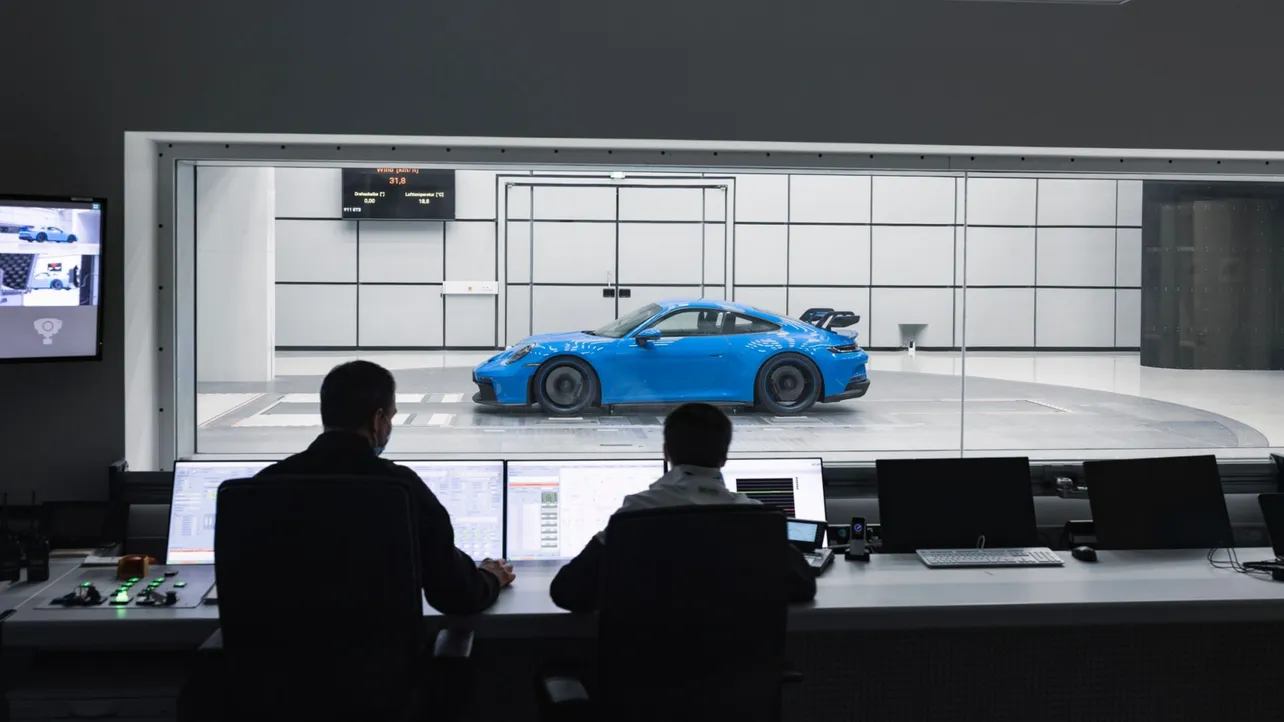
Porsche's GT cars are shaped by decades of endurance racing, testing at Weissach, and data collected from competition worldwide.
This article explains how that development system was built, how racing formats and regulations evolved, and how race work transfers directly to road cars—including current aerodynamic optimizations developed by Manthey Racing. It also examines how modern tools—cloud telemetry, simulation, and AI—are expanding what engineers can learn from each race.
Early Days of Racing
In the early 1900s, manufacturers began entering long-distance competitions to understand how their cars behaved over extended periods of driving. One of the most demanding formats was the Carrera Panamericana, a multi-day race covering more than 3,000 kilometres across Mexico. It combined long straightaways, rough surfaces, altitude variations, and hours of continuous running. These conditions exposed cars to heat, vibration, and constant mechanical stress, providing insights into cooling, high-speed stability, and component wear that couldn't be gained elsewhere.
As endurance racing evolved, organizers gradually shifted these events from public roads to permanent circuits for safety and control. The 24 Hours of Le Mans became one of the defining races in this transition—an event designed to replicate the length and mechanical stress of long-distance driving in a more controlled environment. Over the following decades, this model shaped most endurance formats and created a predictable setting for engineering evaluation.
Porsche's Early Position — The 911 and Weissach
In the 1960s, Porsche introduced the 911 as a successor to the 356. The car was designed for stability, mechanical durability, and reliable performance over long periods of driving. It competed across rallies and circuit events such as Monte Carlo and the Nürburgring—formats that rewarded consistent pace rather than single-lap speed.
Around the same time, between 1960 and 1970, Porsche began centralizing its development work in Weissach near Stuttgart. The facility gradually became the core of the company's testing, simulation, and engineering operations. This centralization enabled the development of specialized 911 variants designed specifically for endurance and GT-style racing.
The Early GT Period — Two Operating Models
During the 1960s and 1970s, GT racing remained loosely standardized. Different countries and organizers applied different regulations, but the central requirement stayed the same: consistent performance over an extended time.
Porsche competed in this environment with two operating structures. First, factory-run race cars managed directly by Porsche's motorsport department. Second, independent customer teams who purchased a 911 and entered races under their own banner. Both groups used the same base model but operated independently. Porsche supplied parts and technical support, while external teams provided additional track environments and data.
This dual structure is common in motorsport because it increases the variety of operating conditions—circuits, climates, driving styles—and produces wider datasets than a single team could generate. It also expands on-track presence and opens a secondary channel for race-car sales. For independent teams, it offers access to standardized cars, consistent parts supply, and technical assistance.
The Formation of GT Classes
At the same time, international organizers began formalizing GT racing through clearer technical rules. The process started in the mid-1990s with the introduction of GT1, a category that permitted wide freedom in modification. Aerodynamics, chassis components, and engine systems could be redesigned extensively. This delivered high performance but also produced rapid cost escalation. Most GT1 programmes required factory-level resources to operate over a season.
As running costs increased, regulators introduced GT2 as a more controlled alternative. The category required cars to remain closer to their road-going configuration and limited the scope of aerodynamic and mechanical changes. This reduced the level of development required and made the operation more feasible for independent teams. GT2 became the primary GT class after the end of GT1, but over time, its cars also moved toward higher downforce, more specialized components, and greater overall expense.
In 2005, organizers added GT3 to stabilize the structure further. GT3 regulations imposed tighter limits on development, required the use of production-based chassis, and introduced Balance-of-Performance adjustments to keep different models within a single performance window. The objective was to control operating budgets, reduce the technical burden on teams, and make the cars suitable for both professional and private drivers. Manufacturers produced homologated GT3 models with consistent parts supply, and teams could operate them without the engineering demands associated with earlier categories. As a result, GT3 created larger, more stable grids and became the dominant GT platform across major championships.
Under this system, a 911 could compete against models such as the BMW M3/M4 or the Ferrari 488, with shared principles governing power, weight, and aerodynamic performance.
Road GT Models — Race Development for Everyday Users
The GT development work later shaped Porsche's product lineup in the Porsche centers. In the mid-1990s, Porsche introduced the first 911 GT2 as a limited, track-focused variant. The lineup grew over time to include GT3, GT3 RS, GT2 RS, and Touring versions. These models applied endurance-racing logic directly to road cars: thermal behaviour, aerodynamic balance, high-speed stability, and component durability. For customers, this meant access to vehicles engineered to operate reliably at sustained speed—not only in short intervals, but over extended driving periods.
Porsche's GT System Today — Factory, Customer Teams, Weissach, and Testing
The present structure operates on the same foundations. Porsche participates in some endurance events as part of its factory program and continues to supply customer race teams with race cars, consultation, parts, and support.
The current customer model is the 911 GT3 R. More than 100 race teams have used this platform, generating data across more than 500 events worldwide. Each race contributes information on tire wear, brake temperatures, pressure distribution, and behaviour under continuous load.
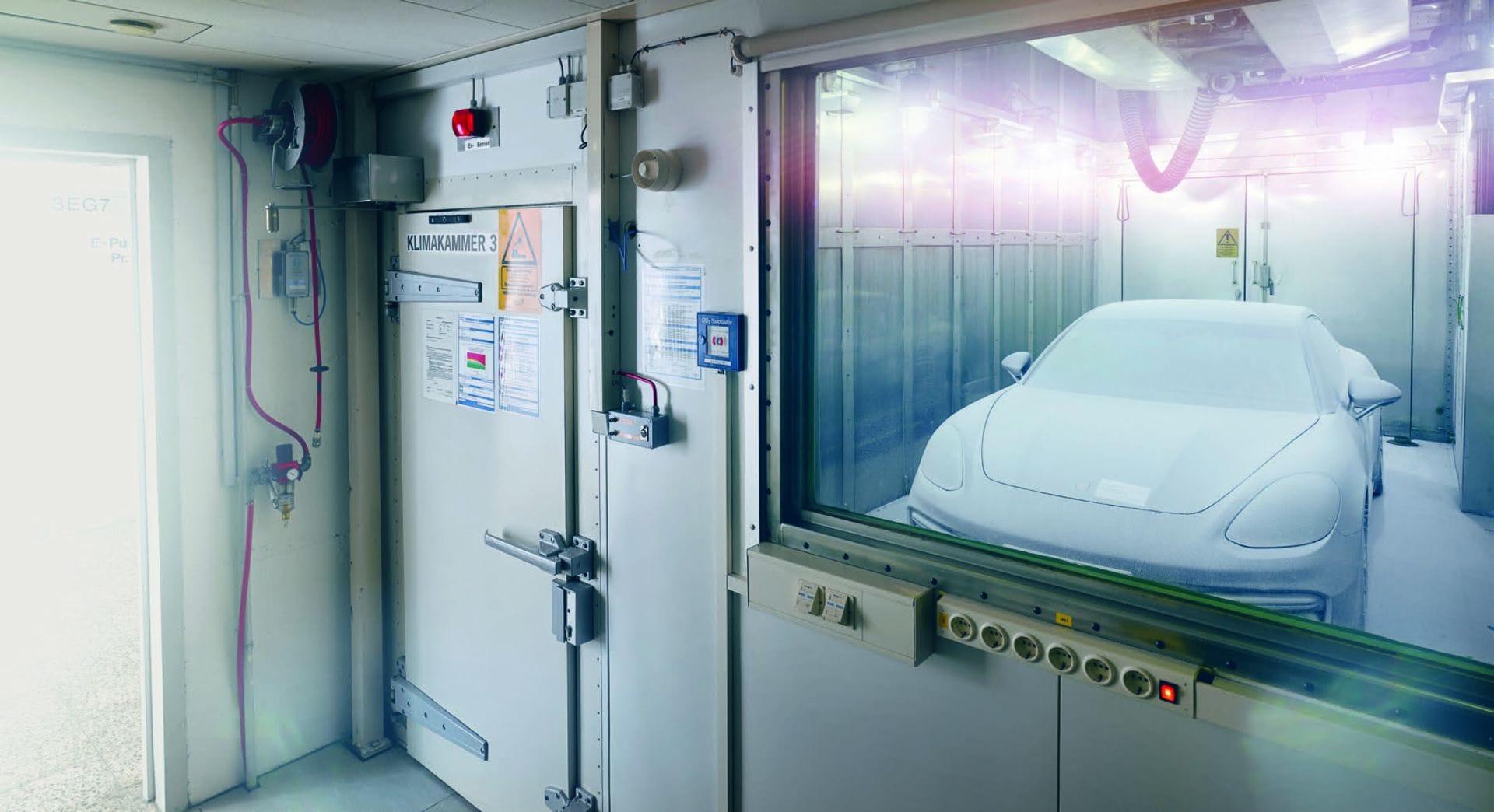
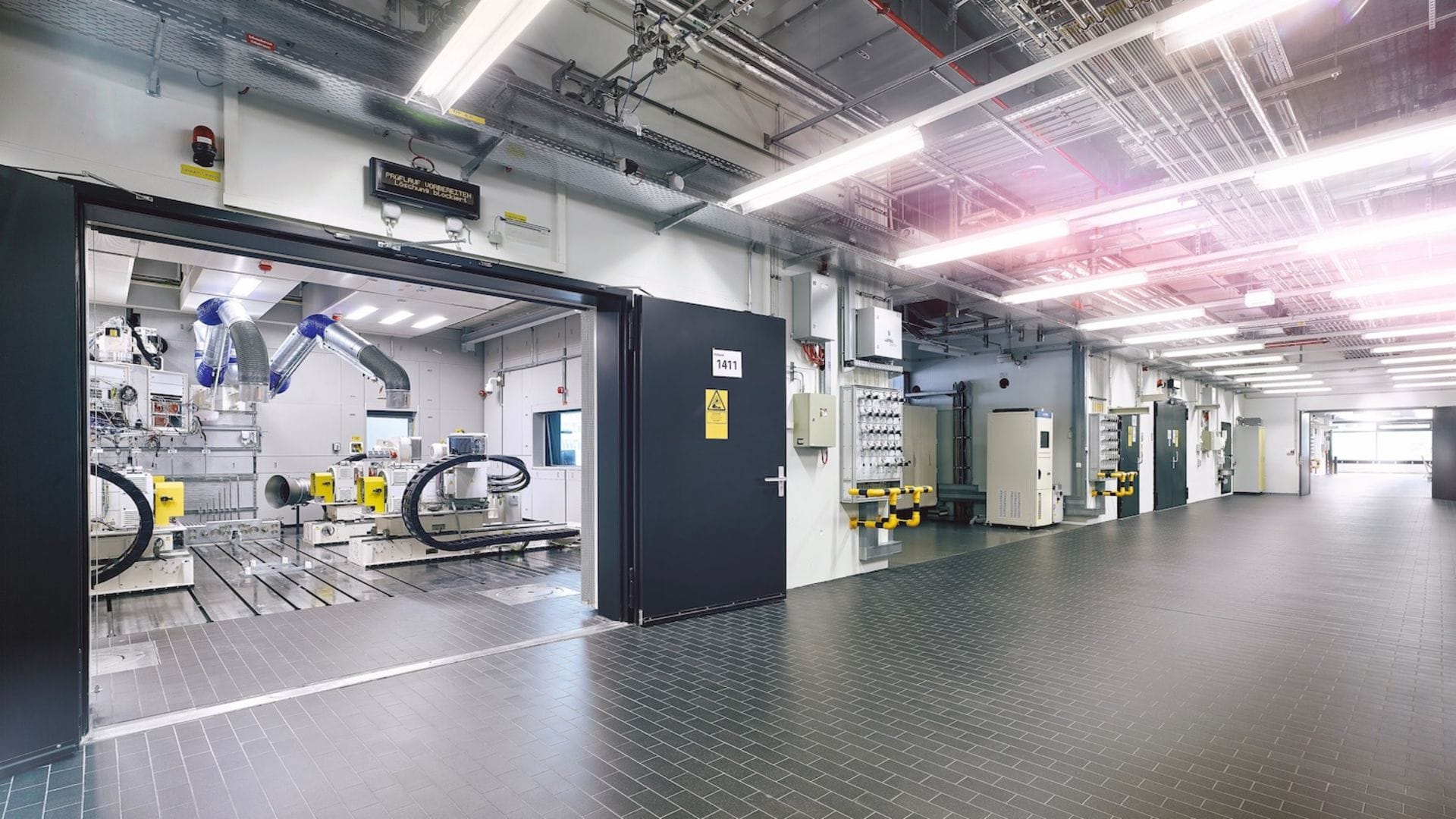
Weissach processes this global data using an expanded set of engineering tools. The campus now includes a wind tunnel, multi-axis endurance rigs—machines that twist, compress, and load a chassis from several directions to simulate race stress—and climate chambers that replicate extreme heat and cold. There's also a seven-post chassis dynamometer, a platform that uses hydraulic actuators to reproduce the forces a car experiences over kerbs, bumps, and high-speed compression. Cars are subjected to controlled 24-hour durability cycles without moving, allowing engineers to expose suspension systems, aerodynamic parts, and cooling behaviour to sustained load.
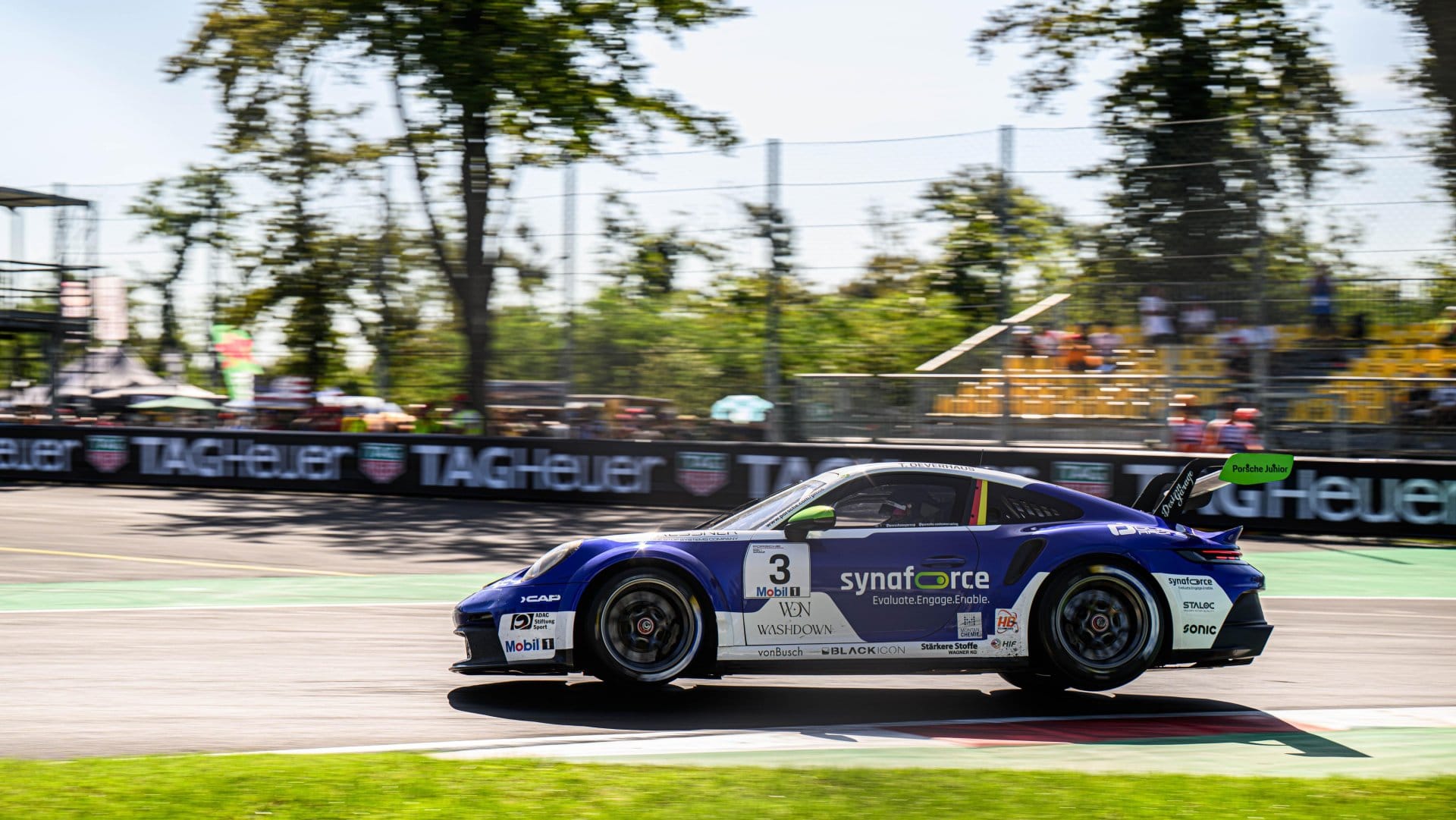
Porsche has also moved toward live telemetry. In partnership with Microsoft and Ituran, its Carrera Cup cars now transmit real-time data to cloud-based analytics platforms. This allows engineers to monitor performance, identify anomalies earlier, and understand how components behave under sustained load. The same logic now influences development work across customer racing and supports the data environment used for GT engineering.
At the same time, Porsche continues to offer GT road cars globally, carrying endurance principles into production.
Manthey Racing — Nürburgring Development Partner
Manthey Racing is one of Porsche's long-term technical partners. Founded in 1996 and based in Meuspath beside the Nürburgring Nordschleife, the company tests and develops cars on a circuit known for elevation changes, surface variation and sustained load. These conditions reveal aerodynamic and chassis behaviour faster than on conventional tracks. Manthey began as an independent customer team, and its success led Porsche AG to acquire a 51% stake in 2013. The company now works across several divisions and links track testing to approved components for Porsche road cars.
Manthey's upgrades for Porsche GT models follow a straightforward aerodynamic approach. The latest package for the 911 GT3 RS uses Porsche's GT validation standards and adjusts how the car manages airflow and load through several components:
- Front splitter extension: lowers front pressure and guides air under the car
- Dive planes: increase front grip through controlled airflow
- Wheel-arch guides: release pressure from the front arches and stabilize temperatures
- Extended diffuser: increases underbody downforce
- Rear wing and endplates: larger design for higher load and lower turbulence
- Suspension and brake-cooling changes: align mechanical behaviour with aerodynamic load
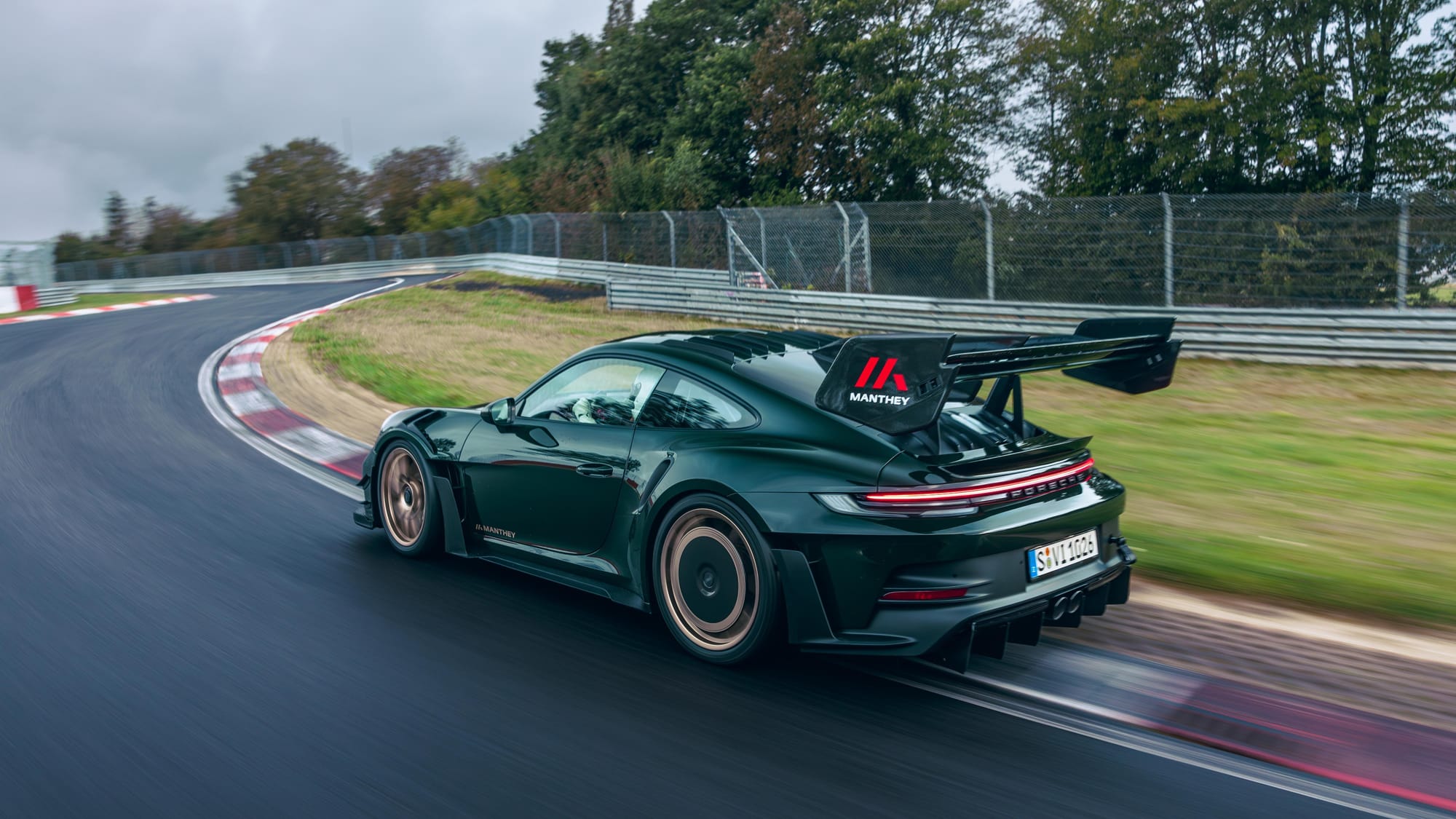
At 285 km/h, the standard GT3 RS produces about 860 kilograms of downforce. The Manthey kit raises this to roughly 1,000 kilograms. A typical road sports car generates 80–120 kilograms at a similar speed. On the Nürburgring, the additional load reduces the GT3 RS lap time by about 4.2 seconds without changes to engine power.
Manthey validates each component through simulation and structured testing on the Nordschleife, working in cooperation with Porsche engineers throughout the development process. Once approved by Porsche, the complete race kit is now available to any customer through Porsche Centres worldwide. This creates an additional optimization platform where racing-derived components can be applied directly to road cars, allowing owners to increase track performance through the same upgrades used in competition development.
Conclusion
Porsche's GT cars are shaped by a long cycle of endurance racing, structured testing at Weissach and the continuous input of factory and customer teams. This system has created a development environment based on real running, controlled validation, and large amounts of operating data.
The next phase builds on this structure. Porsche has begun using cloud-based data systems developed in cooperation with Microsoft to collect and process information from its racing programmes. Telemetry from GT3 and Carrera Cup cars can now be analyzed in real time, giving engineers faster insight into tire behaviour, temperatures, airflow stability, and long-stint performance. AI tools assist by identifying patterns and help reduce the time needed to move from data to practical adjustment.
Future GT models will also face new requirements linked to hybrid systems, where airflow must support both downforce and the thermal control of batteries and high-voltage components. This makes integrated thermal-aero management more important than before.
The direction is consistent: GT cars will continue to be defined by stable performance over long periods of running, but the development process will rely more on continuous data, cloud-based analysis, and AI-supported modelling. These tools do not replace track testing—they make each step more targeted and efficient.