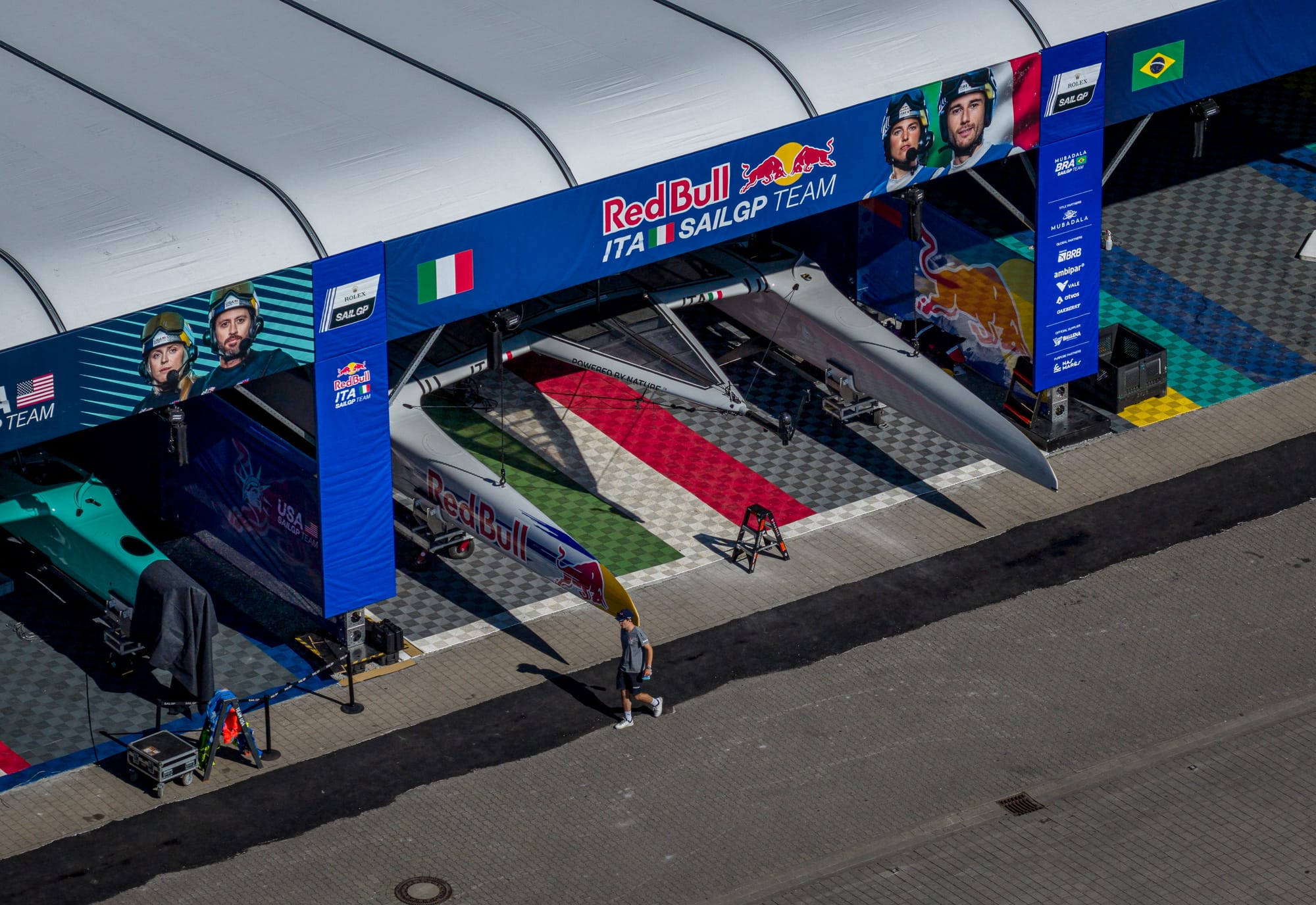
Competitive sailing has traditionally been difficult to follow. Olympic races happen far offshore, the America’s Cup runs infrequently, and results often unfold over hours or days in conditions that are hard for spectators to see or understand. SailGP was created to solve this problem by redesigning the format from the ground up.
Launched in 2019 by Russell Coutts, five-time America’s Cup winner, and Larry Ellison, founder of Oracle, SailGP runs as a professional league with short, high-intensity races close to shore.
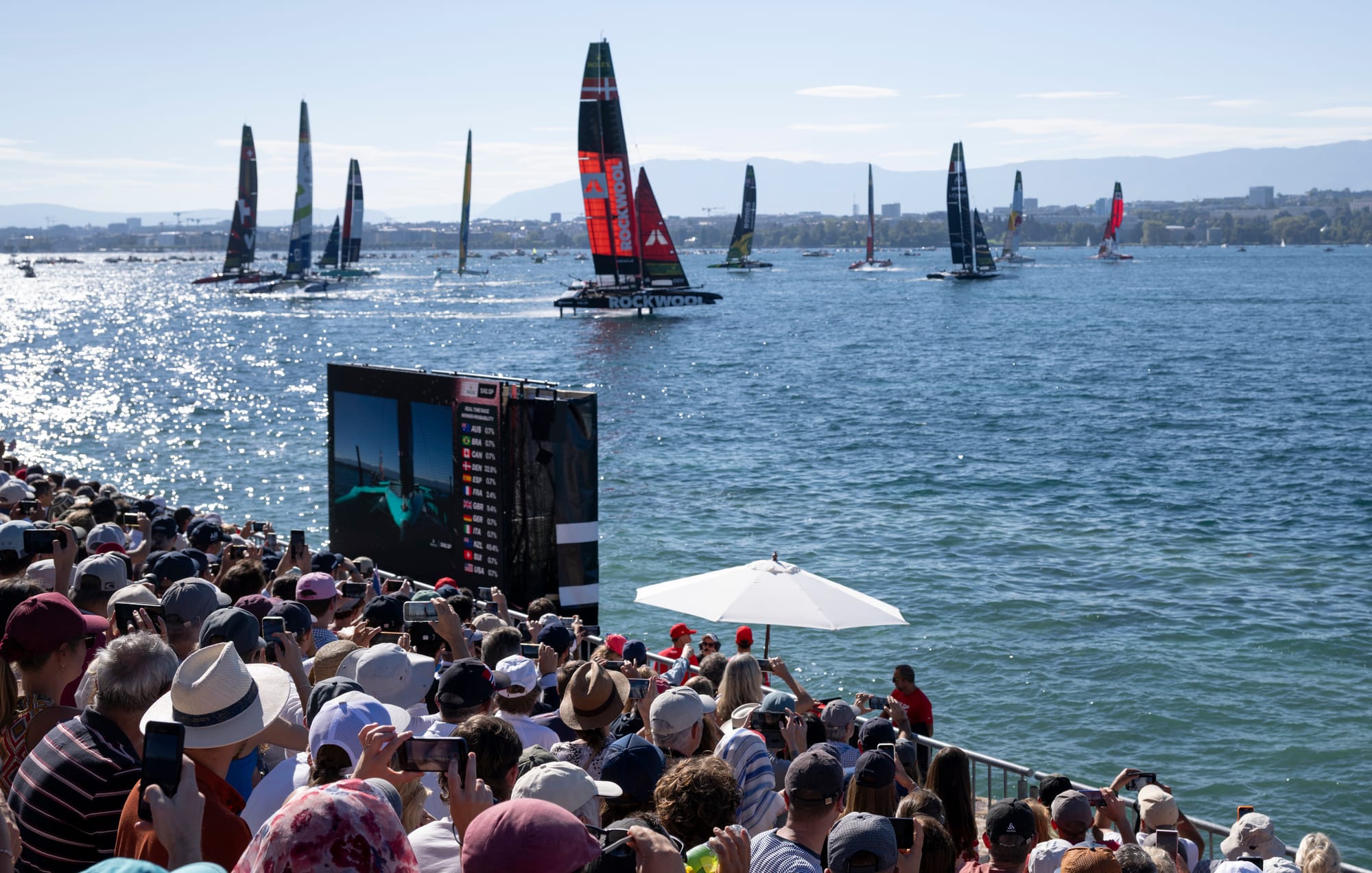
Events take place over a single weekend. Teams race multiple times on a compact course visible from land, with the top finishers advancing to a final race that decides the winner. All boats start together, accelerate immediately, and race back and forth between turning points rather than spreading across open water. Position changes are visible as they happen, and mistakes have immediate consequences.
All teams use identical equipment, removing technical advantages and ensuring results depend on execution — how well crews handle starts, timing, wind conditions, and tactical pressure during the race. This structure makes SailGP both an elite sailing competition and a spectator sport that can be followed clearly from shore or on broadcast.
The Technology — Foiling and Rigid Wings
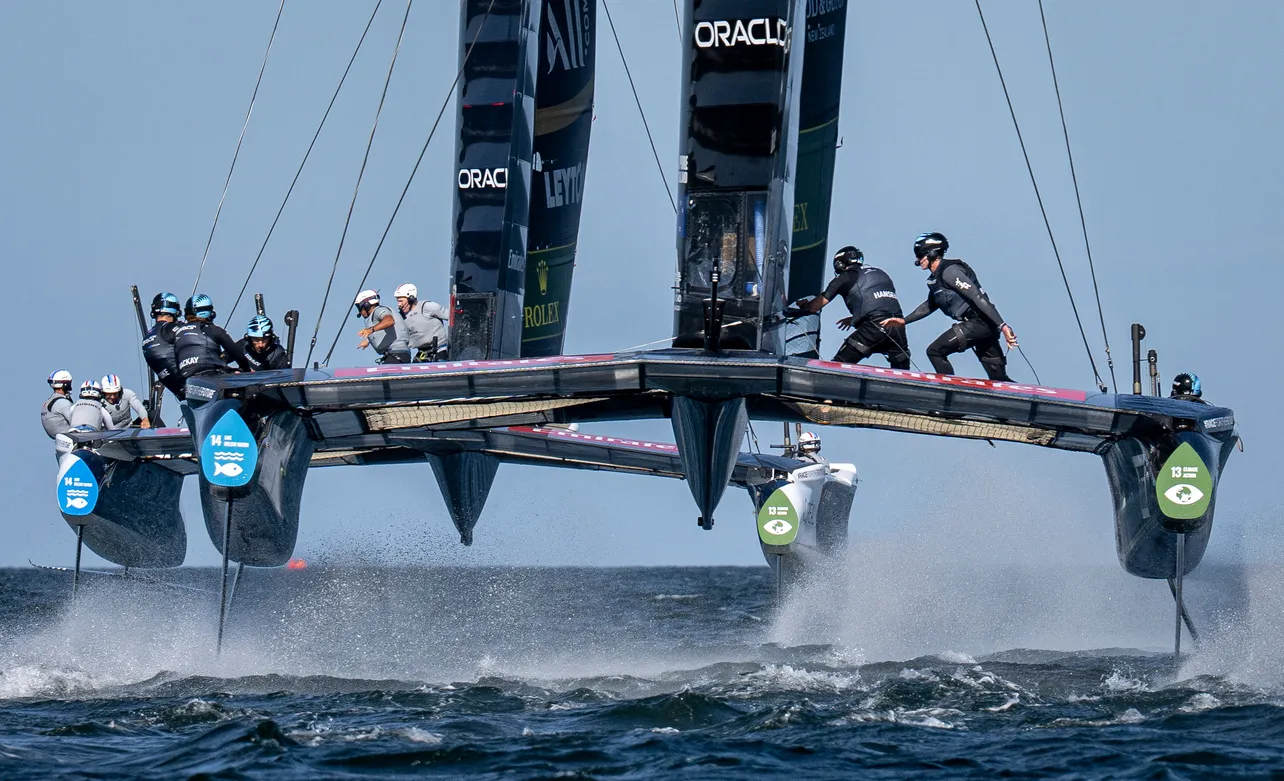
SailGP uses a single type of boat: the F50, a 50-foot racing catamaran designed for extreme performance. The design is built around two core technologies that separate it entirely from traditional sailing.
Traditional sailing boats sit in the water and push through it, creating drag that limits speed. The F50 behaves differently. As speed increases, hydrofoils — underwater wings attached to the hulls — generate lift. The main body of the boat rises entirely out of the water, leaving only the foils and rudders in contact with the surface. This eliminates wave resistance and allows the boat to skim above the water at speeds that would be impossible for a displacement hull.
The second difference is the sail system. Most racing sailboats use soft fabric sails that change shape with wind pressure. The F50 uses a rigid wing sail — a solid, airplane-like structure that maintains its aerodynamic profile under load. Air flows over the wing in a controlled, efficient way, generating significantly more power and allowing finer adjustments to angle and trim. The wing is operated hydraulically, with the crew making constant micro-adjustments to optimize performance as wind conditions shift.
Together, foiling and the rigid wing produce speeds of up to 90 kilometers per hour — roughly four to five times faster than conventional racing sailboats, which typically reach 10 to 20 kilometers per hour, with even fast offshore boats rarely exceeding 30.
This speed fundamentally changes the nature of the race. Decisions must be made faster, margins for error shrink, and the physical and mental demands on the crew increase dramatically.
Crew Structure — Six Roles, One System
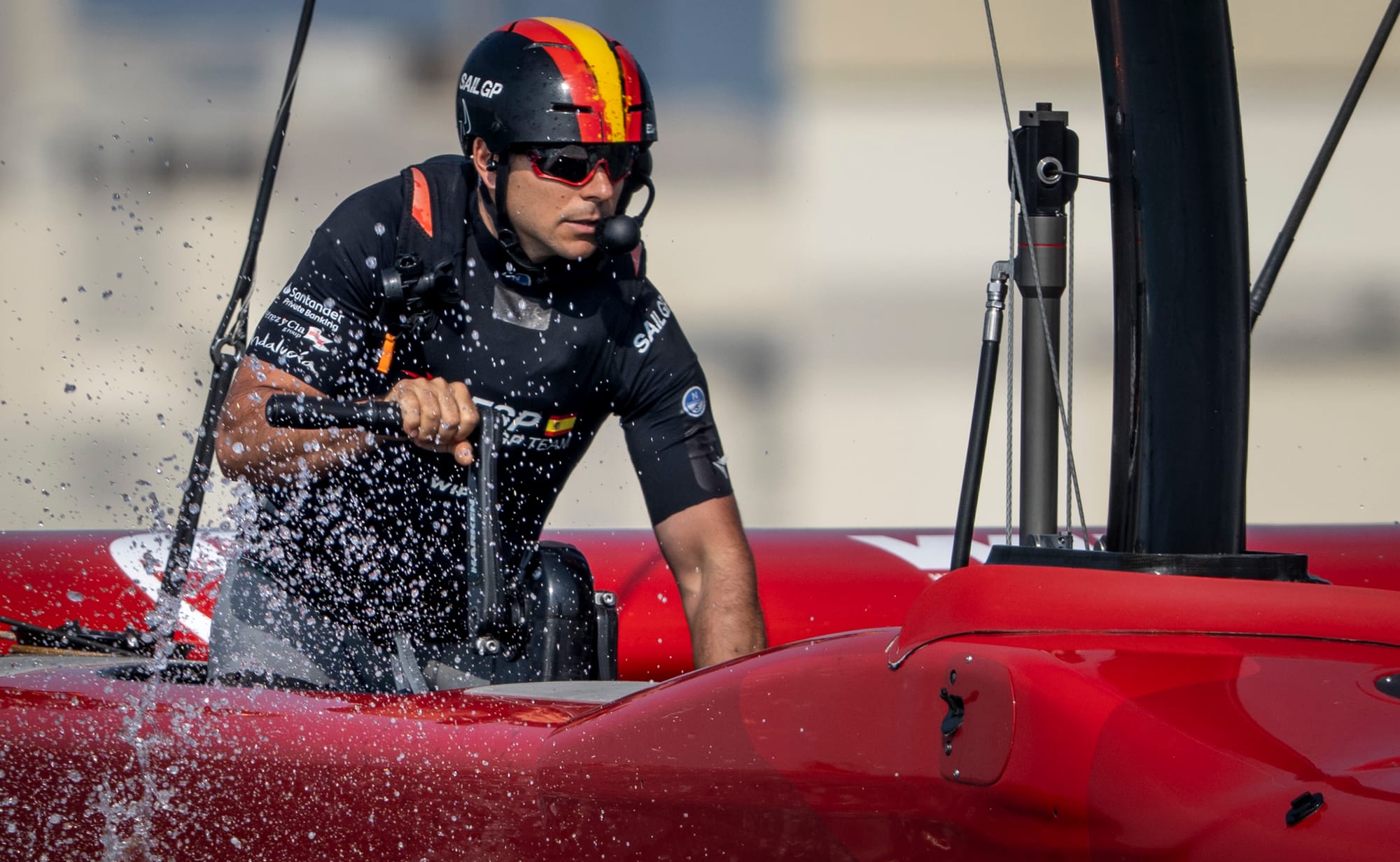
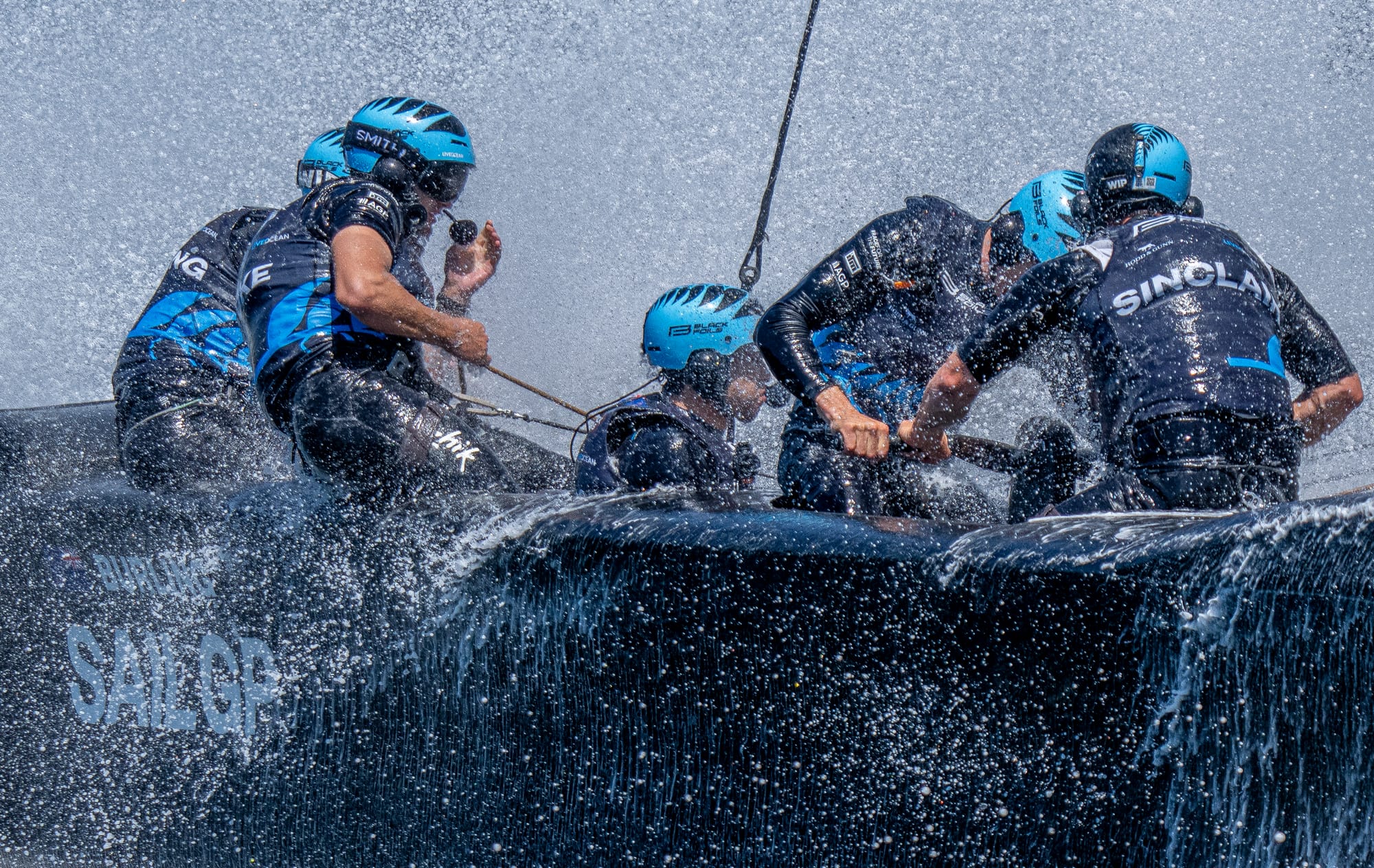
Each F50 is operated by a six-person crew, working as a single coordinated unit.
The strategist reads wind conditions, monitors competitors, and calls tactical moves before and during the race. Because races are short and margins are tight, decisions must be made quickly and adjusted in real time based on how the race develops.
The driver steers the boat at speed, focusing on positioning, timing at the start line, and controlling the boat through turns and maneuvers. The role requires executing the strategist’s calls while managing the physical limits of a boat moving at 90 kilometers per hour just above the water.
The flight controller manages the boat’s stability as it foils. This role controls ride height and balance, adjusting the foils to keep the boat stable as speed and conditions change. Small errors in flight control can cause the boat to crash back into the water or become unstable in turns.
The wing trimmer controls the rigid sail, adjusting how much power is generated and how it is delivered. Changes in wing angle and trim directly affect acceleration, top speed, and balance, making this one of the most sensitive roles on the boat.
Two grinders provide the physical power needed to operate the hydraulic systems that control the wing, foils, and other onboard systems. Their work supplies the force required for rapid adjustments under load and remains one of the most physically demanding roles in the sport.
SailGP teams compete under national identities — Great Britain, Australia, New Zealand, France, the United States, and others — rather than as private race entries. The sailors themselves are elite professionals, many with Olympic or America’s Cup experience. Because all teams use identical boats, competitive balance remains tight, and small differences in crew coordination and execution often determine results.
The Business Model — Franchise Structure and Private Capital
SailGP operates as a professional sports league built for scale. Teams compete under national identities, but funding comes from private investors and commercial partners, not governments or public sports bodies.
The league has moved toward a franchise-style model in recent seasons. Investors are not buying boats or technology, which remain centrally controlled by the league. Instead, they are buying the right to operate a national team and to build long-term commercial value around it. This structure maintains competitive balance while allowing private capital to enter the sport.
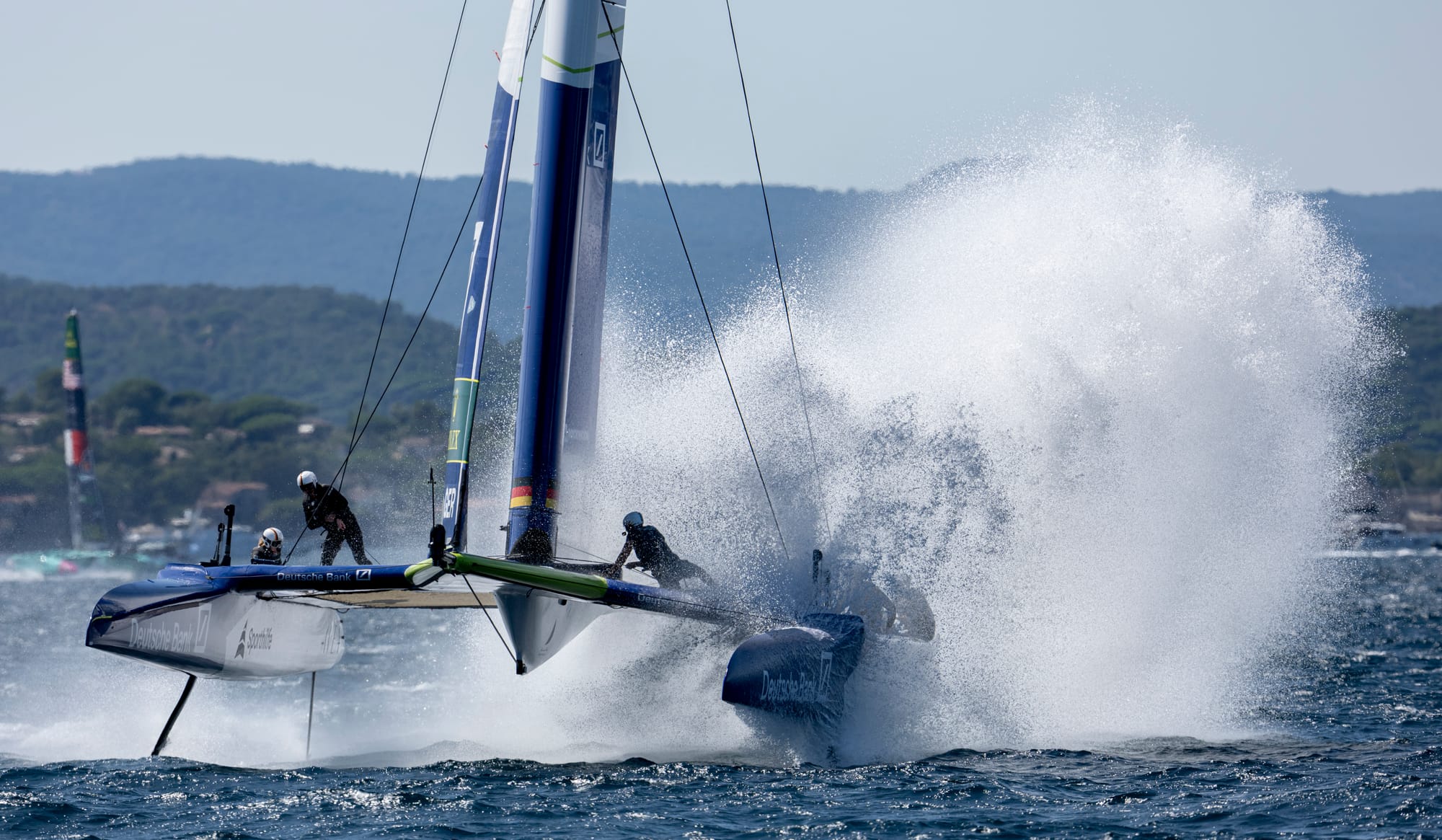
High-profile investors have entered SailGP. The Germany SailGP Team is backed by entrepreneur Thomas Riedel, with Sebastian Vettel, four-time Formula One world champion, as a co-investor. The team is supported by Deutsche Bank as a major commercial partner.
Other teams have attracted similar backing from global blue-chip brands, particularly in finance, technology, automotive, and consumer goods, positioning the league as a premium international sports property.
Broadcasting is central to SailGP’s growth strategy. In the 2025 season, the league reported a global broadcast audience of around 215 million viewers, averaging approximately 18 million viewers per event. Several race weekends set new records, including more than 23 million viewers for a single event. In the United States, SailGP recorded over 3.4 million viewers for a single broadcast.
Industry reporting indicates that SailGP’s league revenue exceeded $200 million in 2025, with 12 teams and more than 100,000 ticketed spectators worldwide.
These numbers reflect strong commercial and audience demand for a format that makes elite sailing accessible without reducing its technical or athletic demands. Performance is expressed in real time, under pressure, and in front of spectators who can see the entire race unfold.
Conclusion
SailGP is a professional sailing league built around speed, repetition, and visibility. Races take place close to shore, on compact courses, with identical boats and short formats that make results clear as they unfold.
The boats operate at speeds far beyond traditional sailing, using foiling technology and rigid wing sails. Crews are made up of six specialists, with defined roles and little margin for error. Competition is organized under national teams, funded by private capital, and distributed through global broadcast partnerships.
Taken together, SailGP differs from established sailing formats in how often it races, where races take place, how performance is decided, and how the sport is presented to spectators. It does not replace traditional sailing disciplines, but exists alongside them as a distinct, high-speed league designed for modern audiences.