
After the Second World War, France had to rebuild the institutions that supported national security. The occupation revealed that the country lacked the structures needed to anticipate risks, mobilise forces and protect national territory. The state faced shortages in intelligence, industry and logistics, and wanted to avoid a situation where national defence depended on outside support.
When Charles de Gaulle reorganised the state after 1945, he set defence on a long-term path in which France would build and operate its essential security tools within the country. The aim was not to create the most significant armed forces, but to create a system that could function without relying on another state for the most critical elements of defence. France wanted its own intelligence picture, its own nuclear deterrent, its own defence industry, and its own ability to deploy forces abroad.
To move in this direction, the government rebuilt defence around several core components. It launched a national nuclear programme, expanded internal and external intelligence branches, restored a domestic industry that could design and produce equipment, strengthened overseas positions and created an expeditionary model that allowed rapid deployments. Over time, these elements formed a connected ecosystem that gave France control over information, technology, logistics and operational authority.
The result is a military system designed for autonomous decision-making. Each layer reinforces the next, and the system can function even when allied support is limited or unavailable.
Intelligence — The System That Supports Independent Action
France built its intelligence structure as the first layer of post-war autonomy. The state wanted its own picture of the world and its own understanding of political and military developments. This required organisations that could collect information abroad, monitor internal threats and support military operations with reconnaissance and analysis.
The DGSE manages external intelligence. It runs human networks across Africa, the Middle East, Asia and Europe, and maintains long-term expertise in regions where France has strategic, economic or historical links. Its work includes political analysis, counterterrorism, monitoring foreign military activity and supporting overseas operations. The DGSE maintains capabilities for covert activity, information collection and strategic assessments that support both diplomacy and defence planning. Today around 7,200 agents work for the DGSE to conduct external intelligence and covert operations.
Inside France, the DGSI monitors internal threats, foreign influence and counter-espionage. It handles domestic terrorism cases, tracks organised networks and works closely with police and judicial authorities. The DGSI connects intelligence with law enforcement, maintaining internal stability and monitoring vulnerabilities that could affect national security.
Military operations rely on the DRM. It collects and interprets satellite imagery, electronic signals and battlefield reconnaissance. The DRM provides planning support for overseas operations, security assessments and target analysis. The organisation ensures that French forces operate using national intelligence data and not exclusively allied sources.
Space assets reinforce all three branches. France operates optical and radar satellites that provide surveillance, maritime tracking and military communications. These systems give the state day-to-day visibility over key regions, including North Africa, the Sahel, the Mediterranean, the Indian Ocean and the Indo-Pacific.
Together, this structure allows France to build a complete intelligence picture using its own systems. It supports national decision-making, early-warning functions, and independent assessments during crises.
Nuclear Forces — The Foundation of Strategic Autonomy
The nuclear programme forms the centrepiece of France’s independence. From the beginning, the state wanted every part of the deterrent — research, design, testing, command and delivery — to be national. The system was built gradually from the late 1940s and remains fully controlled by French institutions.
France operates ballistic missile submarines that provide continuous patrol coverage. These submarines carry French-designed missiles with independently developed guidance systems. They rely on national shipyards, propulsion technologies, sensors and onboard command systems. The sea-based force provides a protected second-strike capability that ensures continuity even in extreme conditions.
The airborne component uses fighter aircraft equipped with air-launched nuclear missiles. Rafale aircraft support the airborne mission, and MBDA supplies the missile systems. This layer provides strategic flexibility and allows different types of signalling in periods of tension.
Supporting systems include research centres, testing facilities, simulation platforms and nuclear infrastructure. Warhead development, material processing and safety protocols remain inside French government and industrial institutions. France does not share nuclear control or rely on foreign technology for the core elements of the deterrent.
The nuclear layer provides a guarantee that France can make decisions independent of allied structures. It also shapes the design of command systems, communications networks and intelligence functions.
Defence Industry — Producing Core Capabilities Nationally
France maintains a defence industry that covers nearly every major category of military equipment. This industrial capacity allows the state to equip its armed forces without relying on external suppliers for critical systems. It also supports long-term development programmes that align with national requirements.
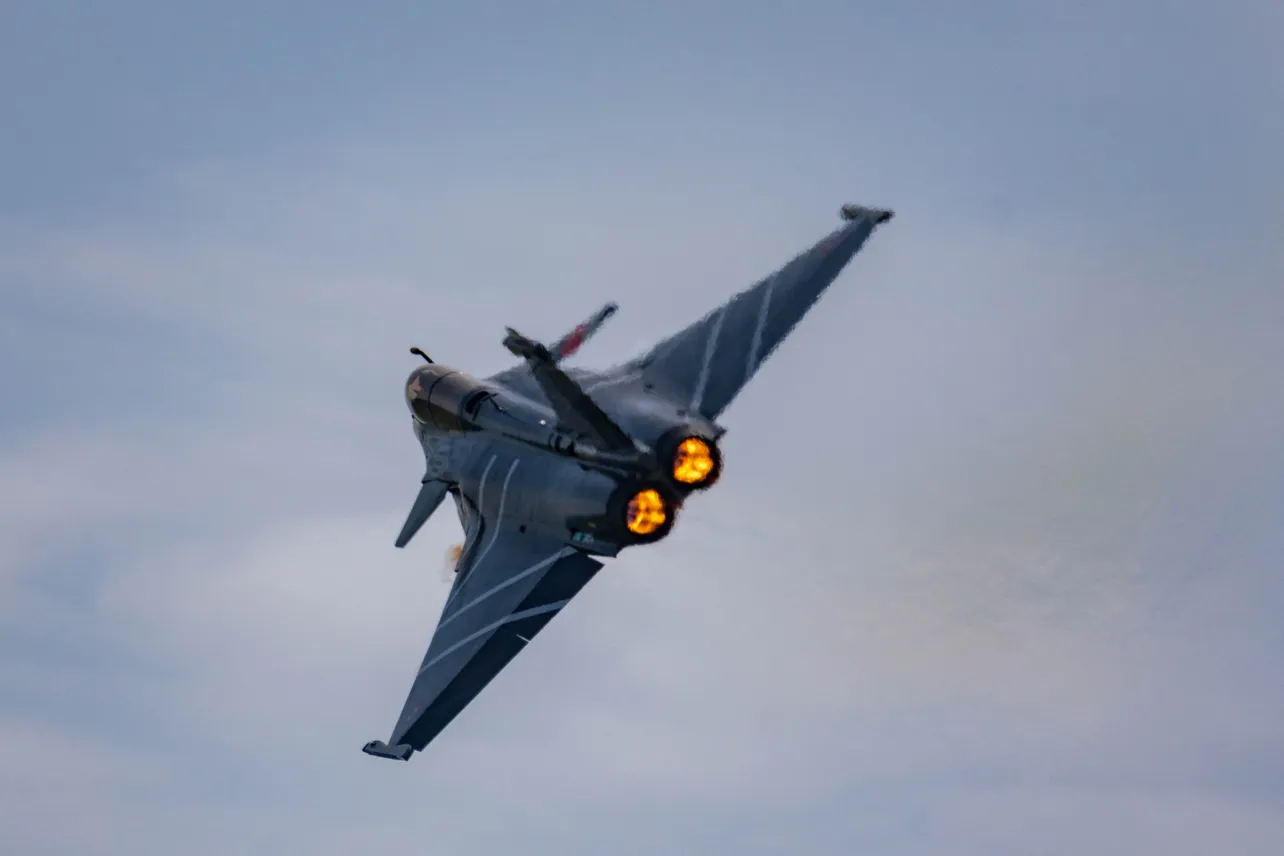
Dassault produces fighter aircraft, avionics, flight systems and integration technologies. The Rafale programme is fully developed in France, from design to production and upgrade cycles. The company also supports drone projects and next-generation combat systems.
Naval Group builds nuclear and conventional submarines, major surface combatants and amphibious vessels. The company provides design, propulsion, weapons integration and maintenance services. This capacity ensures that the most sensitive naval systems remain under French control.
Safran develops engines, optics, navigation systems and inertial sensors. Its technologies support aircraft, missiles, ships and land systems. Thales provides radar, communications, electronic warfare and surveillance networks that equip the French Air Force, Navy and Army.
MBDA designs and produces missiles for air, land and sea platforms. Its systems are integrated into Rafale aircraft, surface combatants, submarines and ground units. Nexter manufactures armoured vehicles, artillery systems and ammunition.
This industrial ecosystem allows France to modernise its forces without relying on third-party supply chains. Production, maintenance and upgrades remain domestic, and export revenues support research and development.
Overseas Territories and Global Presence
France maintains a global footprint through overseas departments, territories and long-standing military posts. These locations provide access points in the Atlantic, Indian Ocean, Pacific and Caribbean regions. The deployments support maritime security, crisis response and cooperation with regional partners.
In the Indian Ocean, forces are stationed in Réunion and Mayotte. These bases support surveillance across sea routes connecting Africa, the Gulf, India and Southeast Asia. They provide logistical support for naval patrols, humanitarian operations and joint exercises.
In the Pacific, France maintains forces in New Caledonia and French Polynesia. These units support regional stability, maritime awareness and cooperation with Australia, New Zealand and Pacific island states. The presence also supports France’s role in Indo-Pacific security initiatives.
In the Caribbean, forces stationed in Martinique and Guadeloupe support disaster response, anti-trafficking missions and regional coordination. In Africa, France is currently implementing a significant strategic shift, moving away from large, permanent bases in West Africa (e.g., in the Sahel region) toward a reduced, partnership-based approach. Its remaining Prepositioned Forces (FAP) are now primarily focused on training, intelligence sharing, and supporting key allies in regions such as the Gulf of Guinea (through cooperation) and East Africa (e.g.,Djibouti and Gabon).
This network allows France to maintain regular contact with strategic regions and deploy forces quickly when needed. It also supports the broader ecosystem of surveillance, mobility and operational flexibility.
Expeditionary Capability — Operating Without External Logistics
France organises its armed forces around the ability to deploy and sustain operations abroad. This capability is shaped by decades of missions in Africa, the Middle East and the Indo-Pacific.
Rapid-reaction brigades provide fast mobilisation for emergencies. Airborne units and marine infantry support high-mobility operations in complex terrain. Amphibious groups allow France to land forces from the sea and support humanitarian missions, stabilisation efforts, or combat operations.
Transport aircraft, tankers, and refuelling capabilities enable long-distance mobility. The A400M and MRTT fleets support heavy-lift transport, medical evacuation, and aerial refuelling, allowing France to sustain operations across continents. Naval assets provide additional mobility and logistics support, including supply ships and amphibious vessels.
Intelligence support comes from reconnaissance aircraft, drones, electronic-warfare platforms, and satellites. This structure allows French forces to operate even in regions where local infrastructure is limited.
The expeditionary model combines flexibility, endurance, and mobility. It is designed to operate independently from foreign logistics networks, creating a self-contained system for overseas missions.
Command and Decision Structure
France maintains national command authority across all branches of the armed forces. Military decisions, including deployment, targeting, and mission design, remain under French control even when operating with allies.
Command centres integrate intelligence, nuclear forces, cyber units, air operations, naval deployments, and land manoeuvre units. Communication networks maintain secure links between strategic and tactical levels. Space Command coordinates surveillance, satellite operations, and orbital monitoring.
The command structure supports rapid decision-making and remains compatible with allied systems when necessary. It allows France to participate in international missions while retaining national authority over its forces.
Service Structure — How the Branches Fit Together
The Navy provides global presence through submarines, surface combatants, and amphibious ships. Its fleet supports sea control, deterrence, crisis response, and humanitarian assistance. The aircraft carrier Charles de Gaulle extends its reach in high-intensity missions and joint operations.
The Air and Space Force operates fighter aircraft, transport fleets, tankers, surveillance platforms, and satellites. These assets support nuclear missions, air superiority, precision strikes, reconnaissance, and long-range mobility.
The Army uses modular brigades that combine infantry, armour, artillery, engineering, and logistics capabilities. This structure allows the Army to adapt to a range of missions, from stabilisation operations to high-intensity combat. Special forces and airborne units provide additional depth for rapid deployments.
Each branch contributes to the broader ecosystem, linking intelligence, mobility, firepower and logistics into a unified structure.
Training and Institutions
France maintains long-standing military schools that support officer development, engineering skills, and operational leadership. Saint-Cyr trains Army officers with a curriculum that includes tactics, military history, engineering, and leadership. The École de l’Air provides training for pilots, navigators, and air-command officers. The Naval Academy supports surface and submarine officers with navigation, engineering, and maritime operations programmes.
Technical schools support maintenance, logistics, intelligence analysis, and cyber operations. These institutions maintain standards, doctrine, and continuity across generations.
A Connected Ecosystem
France’s defence system functions as a connected ecosystem. Intelligence, nuclear forces, industry, command structures, overseas positions, and expeditionary capabilities support each other. Each layer is designed to operate independently, and together they allow the state to act using its own information, technology, and resources.
The system developed gradually after 1945 and remains organised around the same direction: France maintains the capabilities required to make its own security decisions.
Alliance Cooperation — Balancing Autonomy with Integration
France participates fully in NATO’s military structures while preserving national control over its most sensitive capabilities. Since rejoining NATO’s integrated military command in 2009, French forces have operated within alliance planning, training, and interoperability frameworks. France contributes personnel to NATO headquarters and regularly deploys units to missions in Eastern Europe, including Baltic air policing and forward presence rotations.
This integration does not extend to the nuclear domain. France remains outside NATO’s Nuclear Planning Group, and its deterrent stays under exclusive national authority. Strategic decision-making, command and employment of nuclear forces are not shared or delegated. This separation preserves the principle that ultimate security decisions remain sovereign.
Within the European Union, France promotes defence cooperation through common funding mechanisms and joint development programmes. Projects such as the Future Combat Air System and the Main Ground Combat System aim to pool costs, sustain industrial capacity and maintain technological relevance. While French leaders have acknowledged that the nuclear deterrent contributes indirectly to European security, no formal arrangements exist that would dilute national control.
The result is a dual posture. France integrates fully for conventional operations and coalition warfare, while retaining autonomy over strategic forces and decision authority. This balance allows participation in alliances without dependence, combining collective reach with independent choice.
Critiques
France maintains a full-spectrum military capability on a defence budget of roughly €43 billion per year, lower than both Germany (€56 billion) and the United Kingdom (£55 billion). Analysts question whether this level of spending can sustain autonomous operations across nuclear forces, intelligence, expeditionary deployments and industrial development at the same time.
The nuclear deterrent absorbs a substantial share of resources. Around 12 percent of equipment spending is allocated to nuclear forces, limiting investment in conventional stockpiles and force depth. This reflects a strategic choice that prioritises independence at the highest level over scale in conventional forces.
Operational experience has highlighted these constraints. During the 2013 intervention in Mali, French forces deployed rapidly but encountered logistical pressure within weeks, including reported ammunition shortages. The operation illustrated the trade-offs involved in sustaining overseas missions with a compact force structure.
Industrial autonomy also carries exposure. French defence companies rely heavily on exports, which account for roughly 40 percent of revenues. The 2021 AUKUS submarine decision, which cancelled a major French contract, demonstrated how geopolitical shifts can disrupt long-term industrial planning. Dependencies remain for certain components, including advanced electronics and raw materials.
Artificial Intelligence
Artificial intelligence is being integrated into France’s defence system as a support layer for intelligence, planning and command, rather than as an independent doctrine. The emphasis is on decision support, data processing and system coordination within existing national command structures.
AI is used to accelerate imagery analysis, signal processing, sensor fusion, and logistics planning, reducing decision timelines while keeping human authority intact. War-gaming and simulation increasingly rely on AI models to test scenarios, stress command chains and evaluate sustainment limits across land, air, naval, cyber and space domains.
Development is led primarily by national industry and state research institutions. France places emphasis on data sovereignty, model control and integration with domestic command-and-control systems, limiting reliance on foreign platforms for sensitive military applications.
Operational deployment remains incremental. AI supports analysis, maintenance, planning and simulation, while decisions involving escalation and the use of force remain under human control, consistent with France’s broader autonomy model.
Example of current technologies:
| Company | Development / Key Product |
|---|---|
| Thales | AI-enabled radar, sensor fusion, command-and-control systems, battlefield data integration |
| Safran | AI for navigation systems, inertial guidance, predictive maintenance and flight optimisation |
| Dassault Aviation | AI-supported mission planning, combat cloud integration, simulation environments |
| Airbus Defence and Space | Satellite imagery analysis, ISR data processing, space-domain awareness tools |
| Naval Group | AI-assisted sonar processing, submarine simulation and fleet maintenance systems |
| MBDA | Algorithmic guidance, targeting assistance and system-level missile integration |
| CEA (Defence Research) | Modelling, simulation, war-gaming tools and decision-support platforms |