
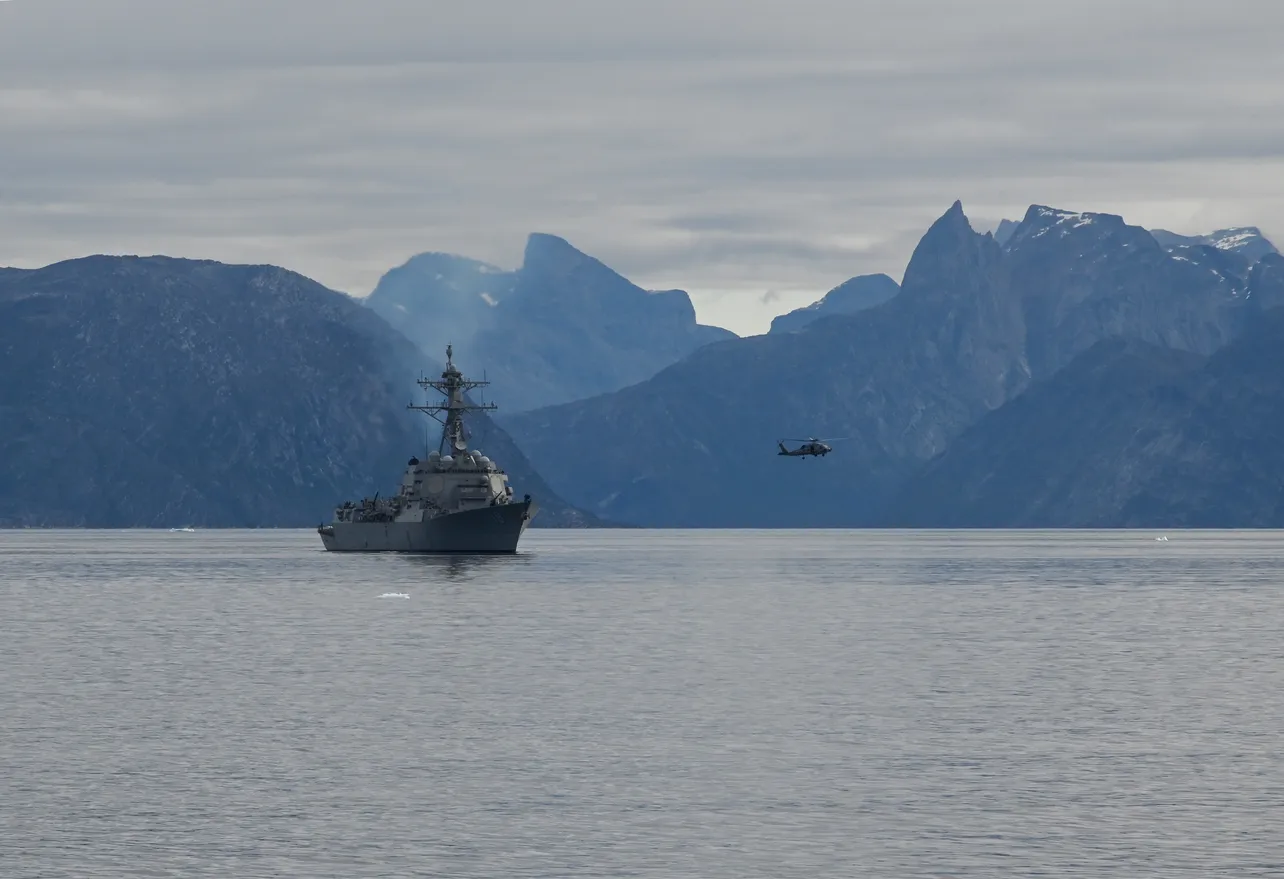
For decades, the Arctic was treated as a blank space on security maps—a region defined by ice, isolated warning stations, and submarine patrol routes. Military presence was minimal, and for most governments the High North played a marginal role in defense planning.
That detachment is ending. As sea ice retreats and commercial infrastructure expands, the Arctic has become a zone of military monitoring, strategic positioning, and intensified early-warning operations. This article outlines the security transformation now underway—what infrastructure exists, where it operates, and how Russia, the United States, and NATO maintain presence across the High North.
Arctic Access — Climate, Routes, and Strategic Competition
The Arctic is warming roughly four times faster than the global average. In the 1980s, the region offered about one month of navigable conditions for commercial vessels. Today, that window lasts three to four months and could reach six to seven months by the 2030s.
This extended access affects three main corridors: the Northern Sea Route along Russia's Arctic coast, the Northwest Passage through Canada's archipelago, and the Transpolar Sea Route across the central Arctic, potentially viable later this century.
Longer open-water periods also expose seabed and coastal areas previously inaccessible for resource extraction. The Arctic contains approximately 13 percent of the world's undiscovered conventional oil and 30 percent of undiscovered natural gas. Greenland holds significant deposits of rare earth elements essential for batteries, electronics, and defense technologies. As ice recedes, geological surveys and infrastructure development—ports, pipelines, storage facilities—can operate for extended seasons, making resource extraction increasingly viable.
As access expands, commercial and military infrastructure concentrate along key corridors, particularly Russia's northern coast. Ports and terminals operate alongside submarine zones and monitoring systems, with patrol flights and naval movements tracking activity across the region.
Russia — Building an Integrated Arctic Transport and Energy System
Russia leads the industrial build-out of the Arctic, and its efforts center on the Northern Sea Route (NSR). The corridor extends from Murmansk near Norway and Finland to the Bering Strait between Siberia and Alaska and is the only Arctic route currently supported by a complete transport chain.
Russia is building a connected system of ports, LNG terminals, repair facilities, and supply points designed to keep vessels moving through ice-affected waters. This network forms both the commercial backbone of the NSR and the foundation of Russia's broader Arctic strategy—one that integrates economic development with strategic military requirements.
Current activity confirms the system functions at commercial scale. Murmansk processes 58 million tons of cargo annually. Russia projects 100–150 million tons by 2030. In 2025, a standard container ship completed the route during peak summer in 20 days from Qingdao to the UK, demonstrating potential though such crossings remain experimental.
China — The Polar Silk Road
China describes itself as a "near-Arctic state," and its 2018 Arctic Policy incorporates the region into the Belt and Road Initiative as the Polar Silk Road. Within this framework, China identifies three practical objectives: developing Arctic shipping lanes, supporting infrastructure and energy projects, and deepening cooperation on navigation and governance.
To advance these goals, China mobilizes state-linked enterprises and policy banks to invest in ice-class vessels, equity stakes in Arctic LNG projects, terminal financing, and logistics infrastructure.
China's Arctic strategy is implemented primarily through cooperation with Russia. A 2025 framework agreement aligned the Polar Silk Road with the NSR, covering shipbuilding cooperation, satellite-navigation integration, and logistics hub development. The partnership is structural: Russia provides Arctic infrastructure and operational experience, while China contributes capital, shipbuilding capacity, and long-term commercial demand.
Russia — Securing the Arctic System
Russia approaches Arctic security as both an economic and strategic imperative, building military infrastructure that protects commercial operations while serving broader defense requirements.
Russia's Northern Fleet operates from bases along the northwestern Arctic coast, maintaining ballistic-missile submarines that form a core component of nuclear deterrence. As Arctic ice recedes—enabling longer shipping seasons—submarine concealment becomes more difficult. NATO forces can patrol previously ice-blocked waters, and surface vessels can operate year-round in areas once seasonally inaccessible. Russia must replace passive ice protection with active monitoring and control.
Russia maintains six naval bases, 14 airfields, and 16 deep-water ports along the route, with many facilities serving dual purposes. Ports handle commercial cargo and naval logistics, airfields support passenger flights and patrol aircraft, and nuclear-powered icebreakers clear channels for LNG tankers while maintaining state presence. Building separate infrastructure would be prohibitively expensive in Arctic conditions.
Russia operates extensive surveillance systems across the region. The Resonance-N radar network tracks aerial and missile threats at ranges exceeding 1,000 km, while seabed acoustic sensors across the Barents Sea detect submarine movements. Regular air patrols and surface operations provide continuous monitoring of Arctic waters.
This integrated approach reflects practical necessity—Arctic shipping and submarine operations both require infrastructure investment and territorial control, and as ice recedes, both commercial activity and active defense requirements intensify.
Western Arctic — Infrastructure and Operations
Western Arctic development advances at a slower pace due to geographic constraints and regulatory frameworks. Canada's Northwest Passage remains blocked by slower-receding ice and lacks integrated infrastructure. US Alaska holds reserves but lacks deepwater port capacity. Norway operates advanced projects under strict environmental controls. Western Arctic shipping remains under 2 million tons annually—roughly 3 percent of Russia's Northern Sea Route activity—reflecting fundamentally different development priorities and conditions.
US and NATO — Strategic Approach and Presence
The United States and NATO maintain limited territorial presence in the Arctic but operate sophisticated detection and coordination systems. Western strategic interests center on early warning rather than protecting fixed commercial installations or submarine operating areas.
Greenland occupies a critical position in this architecture. The island sits between North America and Eurasia, directly beneath flight paths that ballistic missiles and bombers must follow when crossing the Arctic. This geometric reality makes Greenland essential for early detection—objects launched from Russia toward North America rise above the radar horizon earlier when tracked from Greenland than from any other location.
The United States operates Pituffik Space Base in northwest Greenland under a 1951 defense agreement with Denmark. The AN/FPS-132 radar tracks threats continuously, providing 15-25 minutes of warning for ballistic missiles crossing the North Pole—enough time for defensive systems to respond. Between 150-650 personnel operate the facility depending on season. Clear Space Force Station in Alaska provides similar coverage for Pacific approaches, tracking over 9,500 objects in orbit and monitoring for missile attacks.
This minimal-footprint approach—comprehensive monitoring through technology rather than large permanent installations—has defined US Arctic strategy since the Cold War. The strategy assumes access to Greenland through alliance arrangements while avoiding the expense of building extensive Arctic infrastructure.
Recent developments have introduced uncertainty into this arrangement. Since 2019, the Trump administration has advocated for US acquisition or control of Greenland, describing it as a national security priority. Trump has cited concerns about Russian and Chinese presence in Arctic waters and the island's strategic position. The administration has stated that acquiring Greenland is vital to deter adversaries in the Arctic region and has not ruled out military options, though such action would strain NATO alliance structures.
Greenland holds an estimated 1.5 million metric tons of rare earth mineral reserves—critical materials for batteries, electronics, and defense systems where China controls approximately 90 percent of global processing capacity. However, Greenland's deposits face extraction challenges due to harsh climate, lack of infrastructure, and environmental regulations. The US holds larger rare earth reserves domestically (1.9 million metric tons), and any mined material would still require processing, which remains concentrated in China.
Greenland also guards the western edge of the GIUK Gap—the maritime chokepoint formed by Greenland, Iceland, and the United Kingdom. Russian submarines transiting from Kola Peninsula bases to the North Atlantic must pass through this gap, making it a critical monitoring zone. NATO maintains surveillance infrastructure across all three positions, tracking submarine movements and surface vessel activity. The gap served as a primary focus during the Cold War and remains central to NATO's maritime awareness in the Arctic and North Atlantic.
Denmark has responded by increasing its own Arctic military presence. In 2024, the government announced a $2.3 billion investment to improve surveillance and sovereignty capabilities in the region, including three new Arctic naval vessels, additional long-range drones, and expanded satellite capacity. Denmark's Joint Arctic Command, headquartered in Nuuk, handles surveillance and military defense of Greenland.
As Arctic ice continues to recede, emerging shipping routes and increased resource accessibility are intensifying competition. China declared itself a "near-Arctic state" in 2018 and incorporated the region into its Belt and Road Initiative as the Polar Silk Road. Russia has expanded Arctic military infrastructure significantly since 2014, opening new bases and reconstructing airfields. These developments have shifted the Arctic from a region of international cooperation during the Cold War era to an area of strategic competition.
NATO Coordination and Defense Operations
NATO coordinates Arctic security across member states with varying exposures. Norway, Finland, and Sweden maintain Arctic territory and share borders with Russia. Iceland controls strategic airspace between North America and Europe. These nations operate through integrated command centers and shared intelligence rather than independent national systems.
Norway maintains continuous Quick Reaction Alert—fighter aircraft on standby 24/7 that regularly intercept Russian aircraft operating near NATO airspace. These encounters follow established protocols: identify, monitor, document, without violation of international boundaries. Maritime patrol aircraft fly missions from Norway, Iceland, and Scotland, tracking submarine activity and monitoring sea lanes. The NATO Combined Air Operations Center in Bodø coordinates responses, monitoring up to 30,000 daily air movements.
US and allied submarines conduct patrols to monitor Russian submarine movements and maintain familiarity with under-ice operations. The objective is tracking patterns and reducing uncertainty rather than attempting to control Arctic waters. Detection under Arctic ice remains difficult—the most effective approach combines seabed sensor arrays at chokepoints, maritime patrol aircraft, and submarines conducting quiet patrols for close-range detection.
This architecture reflects geographic reality and strategic requirements. Western nations maintain limited Arctic coastline and center operations on detecting threats with sufficient warning time to respond, supported by networked sensors and allied coordination across vast distances. The approach prioritizes technology and coordination over permanent infrastructure, though recent geopolitical shifts are testing whether this strategy remains adequate as Arctic conditions and competitive dynamics continue to evolve.
Conclusion: Infrastructure as Strategy
Arctic security no longer operates at the margins of defense planning. As ice recedes and access expands, military infrastructure has become inseparable from commercial development across the region.
Russia has built an integrated system where ports, icebreakers, and LNG terminals serve both economic and strategic functions. China provides capital and long-term demand, securing its position in Arctic supply chains. Together, they have created the only functioning large-scale Arctic transport corridor, with military surveillance and naval presence embedded throughout.
The Western approach differs fundamentally. The United States and NATO prioritize early warning and coordinated response over territorial control, relying on technology, alliance structures, and minimal permanent presence. This strategy assumes stable access arrangements—particularly in Greenland—and functions through networked sensors rather than fixed installations.
Both approaches now face testing. Russia's model depends on sustained investment and Chinese partnership amid international sanctions. The Western model confronts renewed questions about whether light-footprint presence remains adequate as competition intensifies and traditional alliance arrangements face political pressure.
What remains clear is that Arctic infrastructure—whether radar installations, submarine bases, or dual-use ports—now carries strategic weight previously confined to more accessible regions. The transformation from isolated outposts to integrated security systems reflects a broader shift: the Arctic is no longer a buffer zone between competitors but an active theater where economic development and military presence advance together. As ice continues to retreat, this integration will deepen, making Arctic infrastructure decisions increasingly central to broader security calculations.