
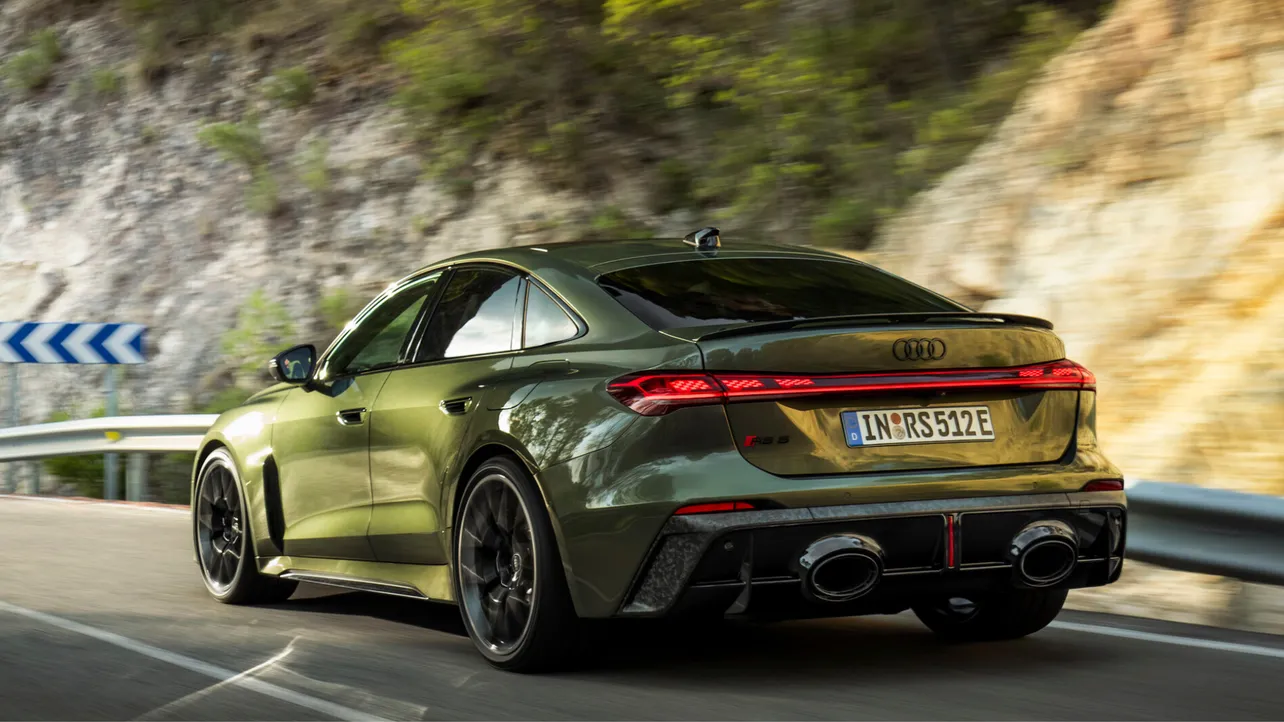
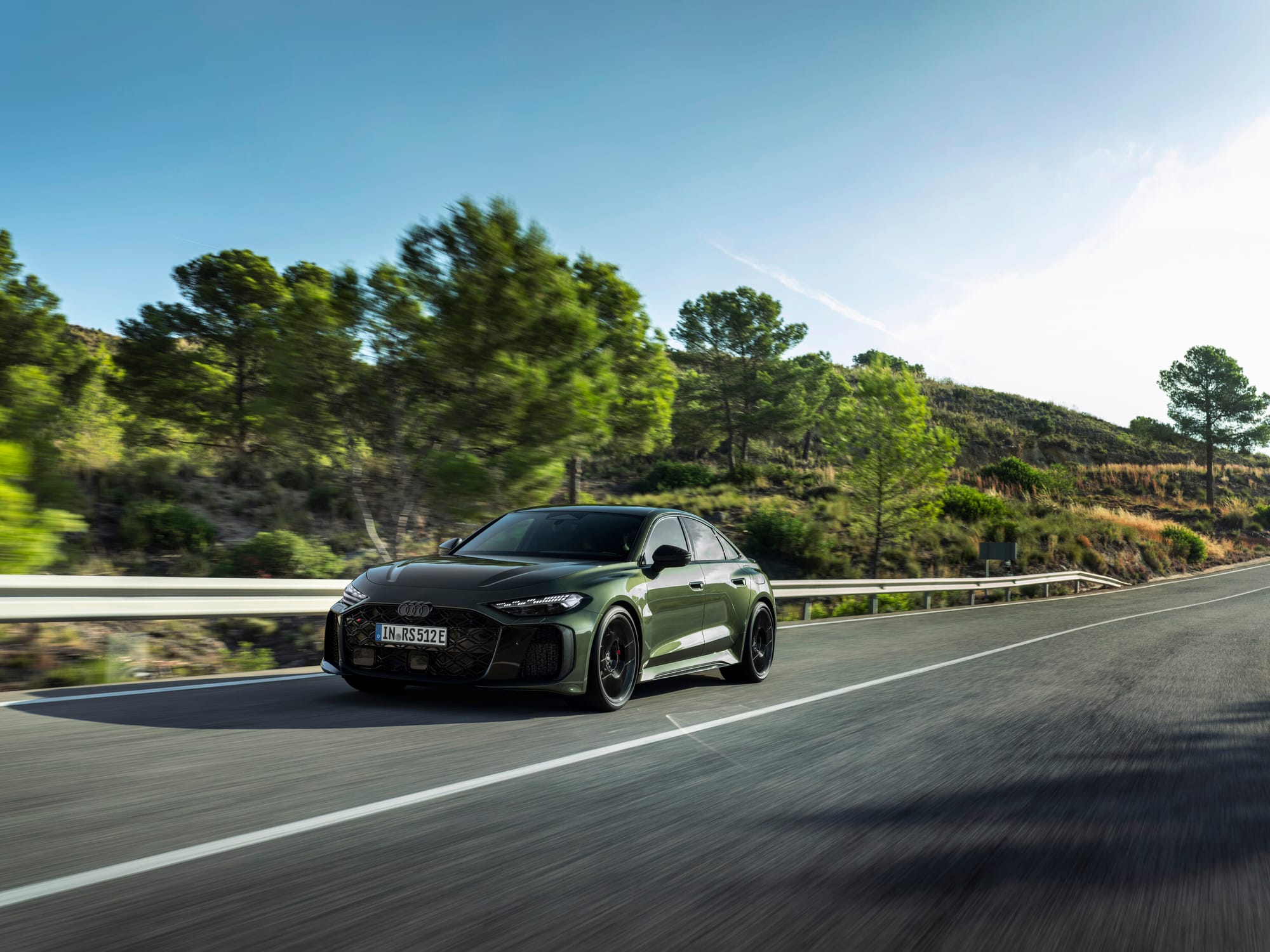
Audi has introduced the new RS 5, the first plug-in hybrid in the RS performance line. The car is available in two body styles: a Sedan — a body style new to the RS 5 — and an Avant, the estate version. Both go on sale in Europe in the first quarter of 2026. Compared with the previous model, the RS 5 now combines a 2.9-litre twin-turbo V6 with an integrated electric motor, producing a total of 639 PS and 825 Nm of torque.
Also new is a revised rear setup with active torque distribution, allowing power to be managed between the rear wheels. Exterior and lighting updates accompany the mechanical changes.
The Engine — Combustion and Electric Together
The RS 5 uses a 2.9-litre twin-turbo V6 producing 510 PS. An electric motor integrated into the eight-speed transmission adds 177 PS. Combined system output is 639 PS and 825 Nm of torque. The electric motor delivers torque immediately at lower speeds, reducing delay before full boost builds. Acceleration from 0–100 km/h takes 3.6 seconds. Top speed is limited to 250 km/h, or 285 km/h with the optional performance package.
The Drivetrain — Torque Distribution at the Rear
Audi introduces active rear torque distribution as part of a revised quattro system. This is the first time this specific setup is used in a production car.
Torque can now be managed continuously between the rear wheels. The system recalculates the optimal torque difference between the two rear wheels. The calculation runs at 200 Hz — one adjustment every five milliseconds — allowing real-time optimisation of stability and agility.
Body and Chassis — Wider Architecture
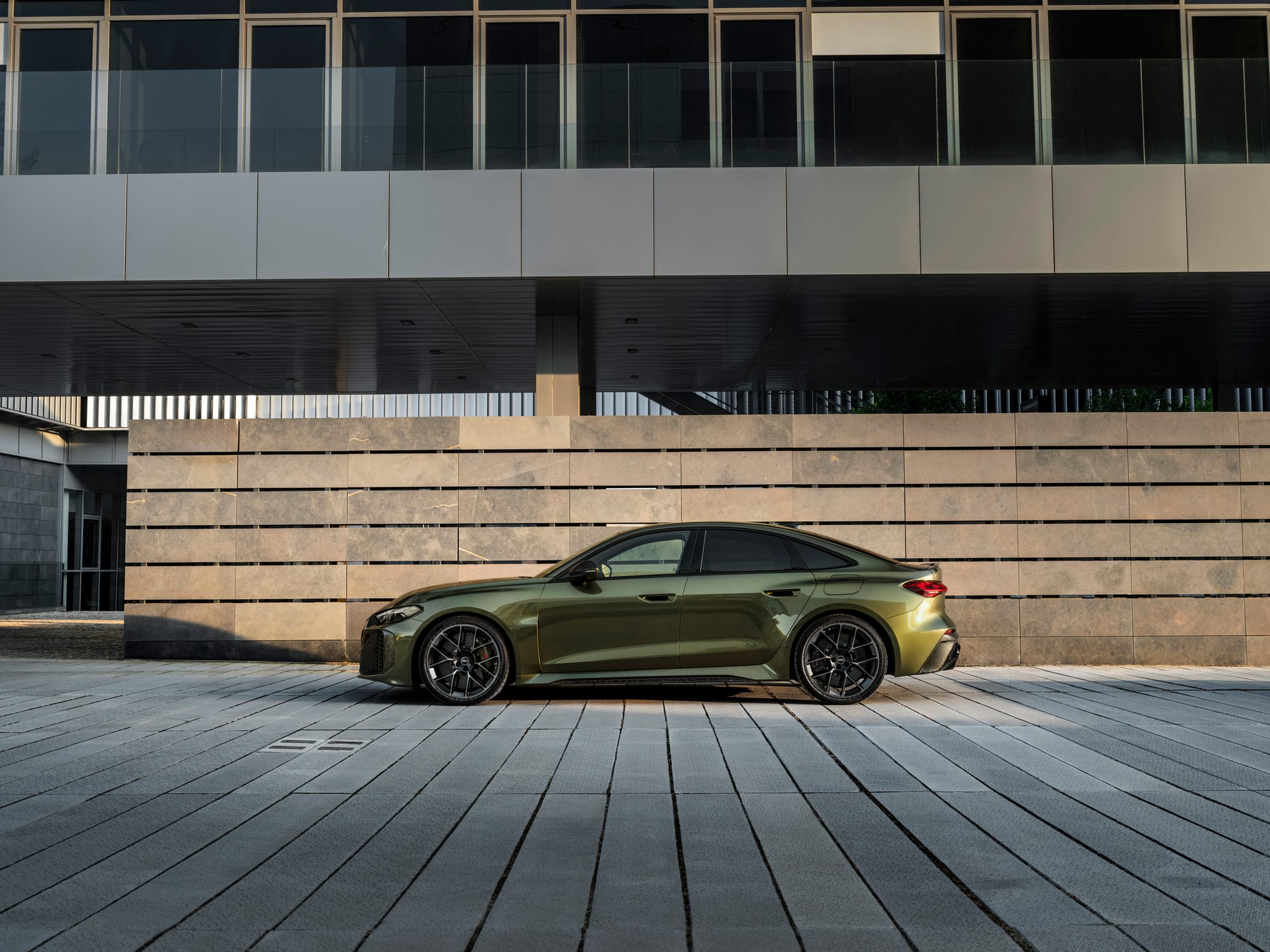
Compared with the standard A5, the RS 5 is widened by four centimetres per side at both the front and rear. The broader track accommodates revised suspension geometry and the new rear drivetrain layout.Curb weight is 2,355 kilograms for the Sedan and 2,370 kilograms for the Avant.
The body structure is 10 percent stiffer than the base model. Suspension uses a five-link layout at both axles with RS-specific dampers. Matrix LED headlights are standard and feature an RS-specific light signature. At the rear, OLED lighting elements define the updated light design. Steel brakes are standard. Larger ceramic brakes are available as an option. The wider stance reflects the mechanical changes underneath.
Driving Modes — From Comfort to RS Torque Rear
The RS 5 offers several drive modes, including comfort, dynamic, RS sport and RS torque rear.
In comfort mode, the system prioritises smooth delivery and can favour electric driving at lower speeds. Dynamic mode sharpens throttle response and increases rear bias under acceleration.
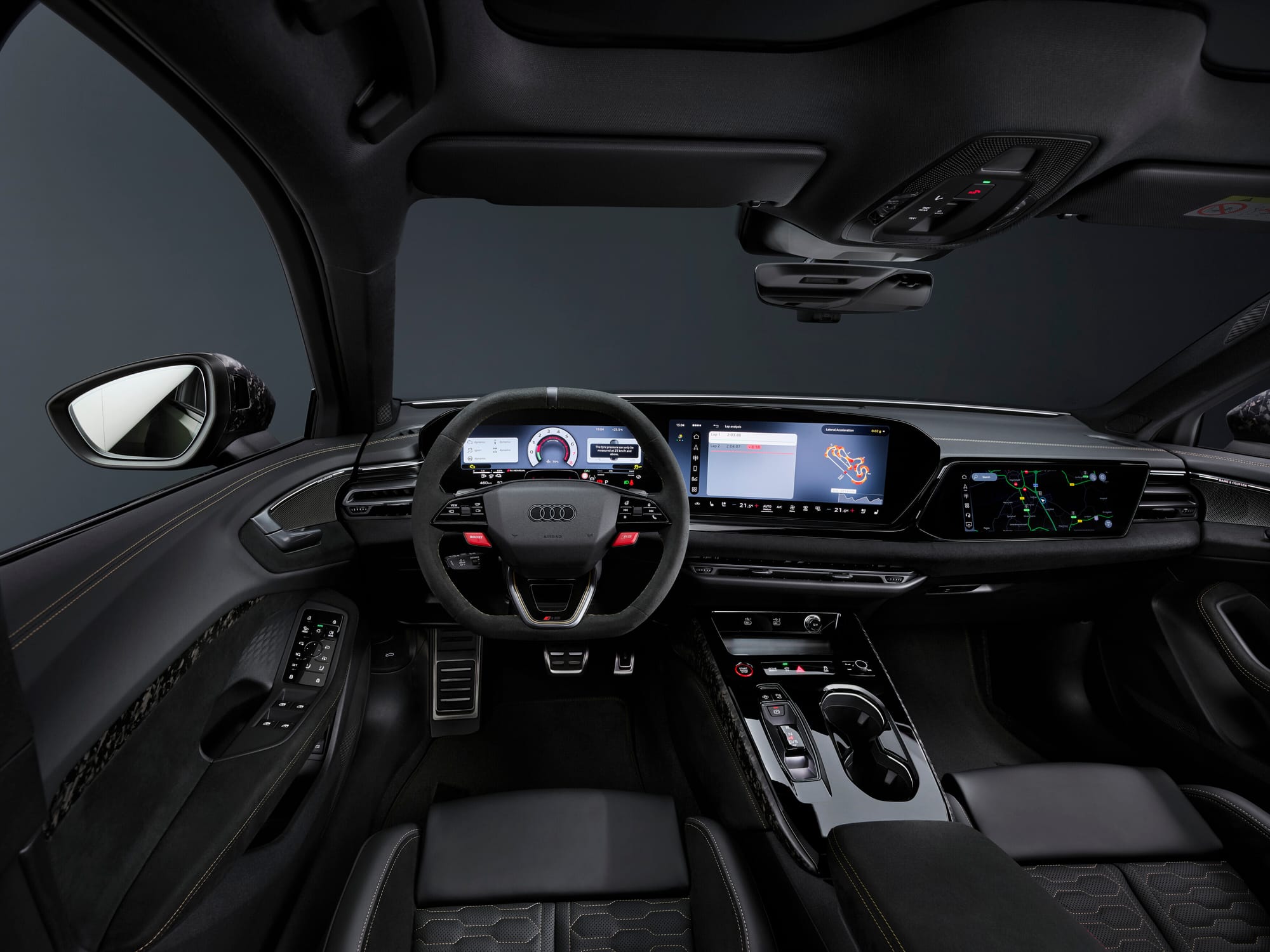
RS sport is calibrated for maximum traction at higher speeds. RS torque rear shifts more power toward the rear axle, allowing controlled oversteer in appropriate conditions. A boost function provides full system output for ten seconds when activated.
Electric Range — Daily Operation
The hybrid system allows the RS 5 to operate on electric power alone for up to 84 kilometres, and up to 87 kilometres in urban conditions.
For short commutes, the combustion engine may not start at all. The transition between electric and hybrid operation happens automatically, depending on speed, load and battery state.
Charging is possible at up to 11 kW, with a full charge taking around two and a half hours. The electric range expands usability without changing the car’s core purpose.
Conclusion
The new RS 5 retains the core elements of the model: a twin-turbo V6, all-wheel drive and a widened chassis.
What changes is the integration of electric propulsion and active torque distribution at the rear axle. Performance is now shaped by both systems working together.
The result is a car that produces more power and delivers it with greater precision, while operating differently in daily conditions than its predecessor.