
For decades, professional boxing has operated through independent promoters and competing championship organizations.
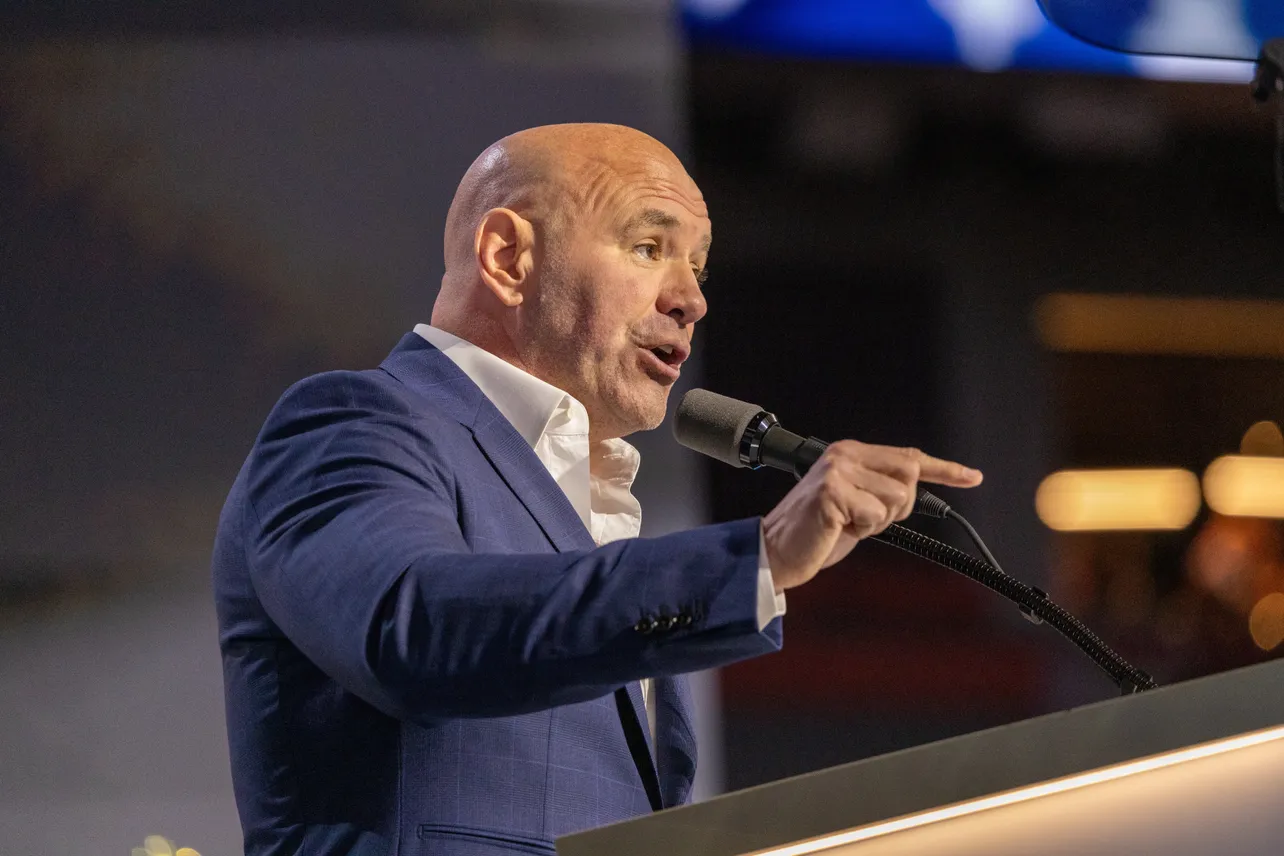
In recent months, Dana White has introduced Zuffa Boxing, a centralized boxing platform that differs from the traditional promoter-based model and follows a structure similar to the UFC.
Zuffa Boxing operates under TKO Group Holdings, the publicly listed parent company that owns both the UFC and WWE.
The project is supported financially by Sela, an entertainment company owned by Saudi Arabia’s Public Investment Fund and chaired by Turki Alalshikh. In recent years, Alalshikh has become one of the most visible organizers of major boxing events, leading the staging of high-profile heavyweight bouts under Riyadh Season in Saudi Arabia.
Structure and Format
Zuffa Boxing launches with a fixed annual schedule. Beginning in 2026, the organization plans to stage twelve events per year, distributed primarily through Paramount+, with select cards potentially airing on CBS.
Early events have taken place at the Meta Apex in Las Vegas — the same venue used for UFC Fight Night events. The arena seats approximately 1,000 spectators and is built for repeatable live broadcast production, with integrated staging, lighting, and media infrastructure.
The promotion has introduced eight recognized weight divisions:
Heavyweight (200+ lbs)
Cruiserweight (200 lbs)
Light Heavyweight (175 lbs)
Middleweight (160 lbs)
Welterweight (147 lbs)
Lightweight (135 lbs)
Featherweight (126 lbs)
Bantamweight (118 lbs)
Within each division, Zuffa Boxing intends to recognize a single champion supported by internal rankings.
The divisional structure is more compact than the broader professional boxing landscape, where additional “super” and “junior” weight classes create a wider distribution of titles.
The Traditional Boxing Model
Unlike Zuffa Boxing’s centralized structure, traditional boxing is organized through independent promoters.
Professional boxers typically sign with promotional companies such as Matchroom Boxing, Top Rank, Premier Boxing Champions (PBC), Golden Boy Promotions, and Queensberry Promotions.
These companies are responsible for organizing and promoting events. This includes arranging opponents, negotiating purses, securing venues, aligning broadcast partners, and marketing both the event and the athlete. Boxers may also work with independent managers who represent them in contractual negotiations and broader career decisions.
Because opposing boxers are often signed to different promotional companies, major matchups require negotiation between those promoters.
Championship titles are overseen by separate sanctioning bodies such as the WBC, WBA, IBF, and WBO. A sanctioning body maintains its own rankings and recognizes a champion in each weight division. These organizations do not promote events themselves, but their titles carry commercial value and are often central to negotiations. When championship belts are involved, promoters must also coordinate with the relevant sanctioning body, which can impose rules, mandatory challengers, and sanctioning fees.
As a result, major bouts often require coordination between at least two promotional companies, one or more sanctioning bodies if titles are involved, and a broadcast partner. Each party must agree on revenue splits, contractual terms, and event control.
This multi-party negotiation can make the organization of high-profile events more complex. At the same time, because each event is negotiated individually, fighters and promoters retain the ability to structure agreements around specific matchups, which can create substantial earning potential when major contests are successfully assembled.
The Monetary Difference
In traditional boxing, money is built around the event.
Each fight is negotiated on its own. A promoter assembles the card, secures a broadcaster, agrees on purses, and builds the commercial package around that specific night. The fighter earns from that one event, not from a fixed multi-fight structure. If the event is large, the payout can be large. If it is small, the payout is small.
At the top level, a single bout can generate multi-million-dollar purses. Revenue may include gate receipts, pay-per-view participation, sponsorship, and site fees from host cities. The upside is tied to how big the event becomes.
Commercial rights are also event-based. Fighters typically control sponsorship space on their shorts and robes and can negotiate endorsements independently. For established names, that sponsorship inventory can represent significant additional income beyond the contracted purse.
A league-style platform works differently. The event is not the primary financial unit — the platform is.
Fighters sign multi-fight agreements within one organization. Compensation is structured inside that agreement rather than negotiated from scratch each time. The organization controls the calendar and the commercial presentation of the event.
In the UFC model — the closest structural reference — individual sponsor placement on fight gear is restricted, and sponsorship revenue is organized through league-wide agreements rather than negotiated independently per bout.
Zuffa Boxing has not yet published full contract details. If it follows a similar structure, commercial rights and compensation would likely be centralized at platform level. If it allows fighters to retain traditional boxing-style sponsorship freedom, the financial distinction narrows.
The difference is the shape of earnings.
Traditional boxing allows income to spike dramatically around major events and gives elite fighters broad commercial control. A centralized league distributes earnings through defined agreements across recurring events.
For developing fighters, a scheduled platform with multiple guaranteed bouts can provide activity and exposure. For established fighters, the traditional event-based structure can offer greater upside when a major fight materializes.
Zuffa Boxing and the Signing of Conor Benn
While Zuffa Boxing has been announced as a league-style platform, its signing of Conor Benn illustrates a parallel approach within the same framework. TKO executives have clarified that Benn is not part of the standard league roster but is instead positioned as a “super fight” asset.
Benn built his career under Matchroom Boxing and recently signed with Zuffa. His first high-profile appearance is not scheduled on a Zuffa league card, but on the undercard of Tyson Fury’s return bout — a separately promoted event distributed via Netflix.
In this instance, Zuffa operates in a traditional promoter role, signing talent and placing that fighter on an independently assembled card rather than staging the bout exclusively within its own centralized calendar.
Conclusion
Zuffa Boxing does not enter professional boxing as a conventional addition to the existing promoter landscape. Its declared structure — fixed calendar, single champions, centralized agreements — reflects an attempt to introduce platform governance into a decentralized sport.
For decades, boxing has operated through distributed authority. Promoters manage talent, title organizations recognize champions, and broadcasters assemble events.
Zuffa proposes a model in which scheduling, championship recognition, and commercial presentation are controlled within one framework.
Whether that structure becomes a parallel league or remains one participant within the existing marketplace will depend on how the broader system responds — promoters, belt organizations, broadcasters, and fighters.
The question is not whether Zuffa can stage events.
The question is whether professional boxing will accommodate structural consolidation.