
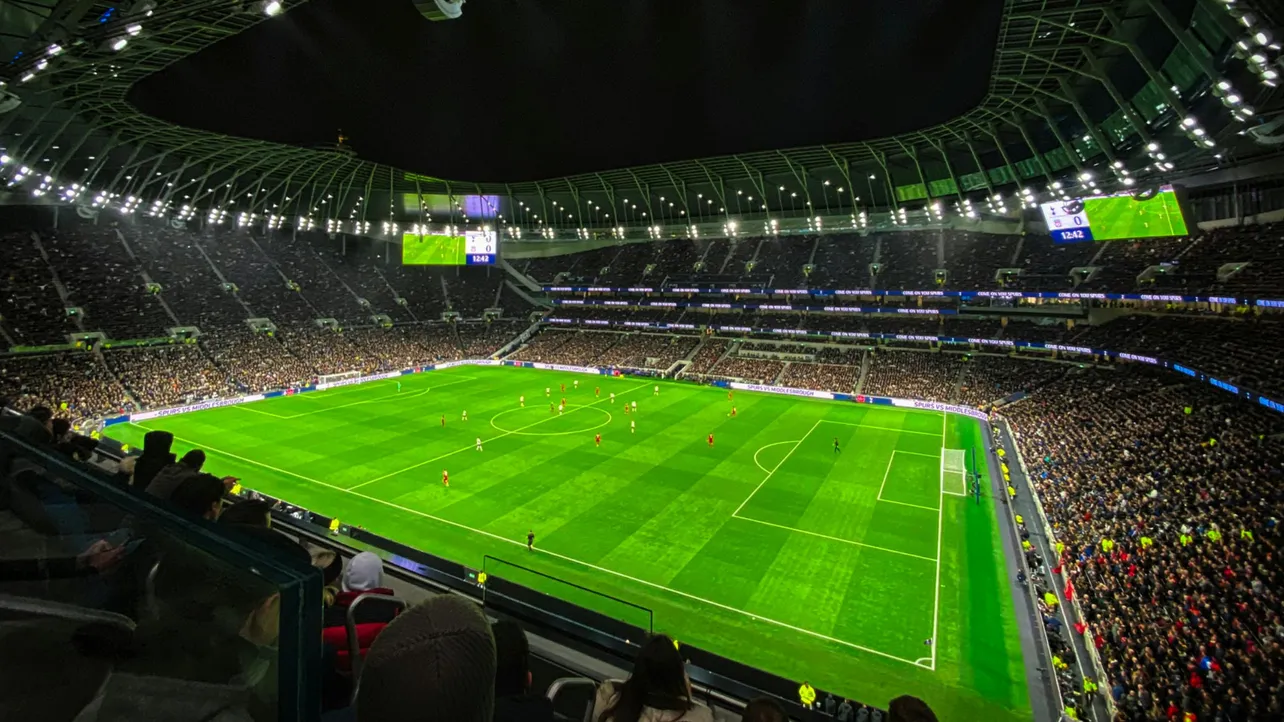
Over the past two decades, elite football changed in ways that are visible and measurable. Matches got faster, recovery windows shortened, and what once appeared exceptional became baseline. More money entered the sport, recruitment widened globally, and infrastructure improved. Players became faster, stronger, and better conditioned. Each improvement raised the standard and compressed the margin for everyone else.
The result is a game that continuously improves — not by design, but as a consequence of competition.
The Match Profile
The total distance covered in a football match has remained relatively stable over the past 25 years. In the early 2000s, players typically ran about 9 to 10 kilometers per game. Currently, this has increased to roughly 10 to 11 kilometers. Overall, the amount of running has increased only slightly.
The change is how fast those kilometres are covered. A larger share of the match now takes place at high speed and sprint pace.
Premier League data across two research windows illustrates the shift. Between 2006 and 2013, sprint distance increased by around 35 percent and sprint frequency rose by roughly 85 percent (Barnes et al., 2014). A later analysis covering 2015 to 2024 confirmed that high-intensity running, high-speed running and sprint distance continued to rise significantly (Allen et al., 2025). Taken together, the evidence shows that the increase was not temporary. Sprint exposure expanded across both periods, reinforcing the move toward more frequent short-burst efforts within the same ninety minutes.
The pattern is not limited to England. La Liga shows similar recent increases, while Champions League matches often demand 10–20 percent more sprinting than most domestic leagues.
Over the same early Premier League period, passing volume increased and successful pass rates improved, driven mainly by short and medium combinations rather than long balls. The game did not only become faster in straight lines. It became faster in circulation and decision sequences.
The calendar intensified alongside this shift. Professional teams regularly compete with four days or fewer between matches. High-speed exposure therefore accumulates across more fixtures.
Modern matches contain more repeated high-intensity actions within the same ninety minutes, and those actions occur across denser schedules. The challenge is no longer covering distance once. It is sustaining speed and execution across an extended season without visible decline.
Technique Under Speed
The rise in speed increases pressure on decisions. With less time on the ball, actions must be prepared earlier — often before possession arrives. Body position and scanning happen in advance. What looks instinctive is usually the result of earlier preparation.
Fatigue increases mistakes. Repeated high-intensity efforts reduce precision. Passes lose accuracy, reactions slow, and execution breaks down — especially when margins are tight.
While low-intensity phases and brief standing moments provide intermittent recovery, the compressed decision windows, rapid transitions, and accumulating fatigue ensure cognitive load remains high. Players must anticipate and act earlier, often under mounting mental strain.
Disciplined lifestyle and structured recovery protect these details. Sleep, nutrition, and precise workload management help maintain decision quality under physical stress. At elite level, small declines are visible immediately.
Training mirrors match tempo, with small-sided games shrinking space. Touch limits decrease decision time, while transition drills repeatedly simulate turnover scenarios at high speed. Video review helps improve quicker recognition.
Creativity remains central but it now operates within tighter limits and at higher speed.
Training / Recovery System
As matches became more intense and seasons became longer, preparation adjusted. The task is to repeat high-speed actions across many fixtures without visible decline, while managing the injury risk that can disrupt a season.
Strength sessions now focus on acceleration and deceleration. Players train how to push into the ground efficiently over short distances and how to stop safely at speed. Braking capacity became central because many muscle injuries occur during deceleration rather than sprinting itself. Eccentric strength work is used to increase tolerance to these forces.
Sprint work also changed. Coaches refine starting mechanics and stride efficiency within football patterns: short bursts, changes of direction, contact, and immediate re-acceleration. The objective is not maximum speed in isolation. It is repeated speed under tactical stress.
Recovery became structured rather than reactive. Post-match protocols are scheduled within hours. Cold exposure, compression systems, mobility sessions, and light recovery work are planned across congested weeks. During periods with matches every three or four days, recovery windows are treated as performance sessions.
Measurement followed this shift. Players wear GPS units during training and matches. These track sprint counts, high-speed running distance, accelerations, and decelerations. Staff review this data daily to adjust workload. If a player accumulates excessive high-speed load, the next session may be reduced. If output drops, it is investigated rather than ignored.
Injury-prediction platforms combine training load and match exposure to identify elevated risk before breakdown occurs. Sleep tracking devices measure duration and recovery quality, while heart-rate variability is used as an indicator of readiness. Wearables such as WHOOP monitor sleep, strain, and recovery signals to support daily readiness checks. AI-based systems such as Zone7 integrate load and exposure data to help flag injury risk and guide workload decisions. These tools do not replace coaching judgement, but they add another layer of observation, allowing staff to adjust intensity across weeks rather than reacting only after fatigue becomes visible.
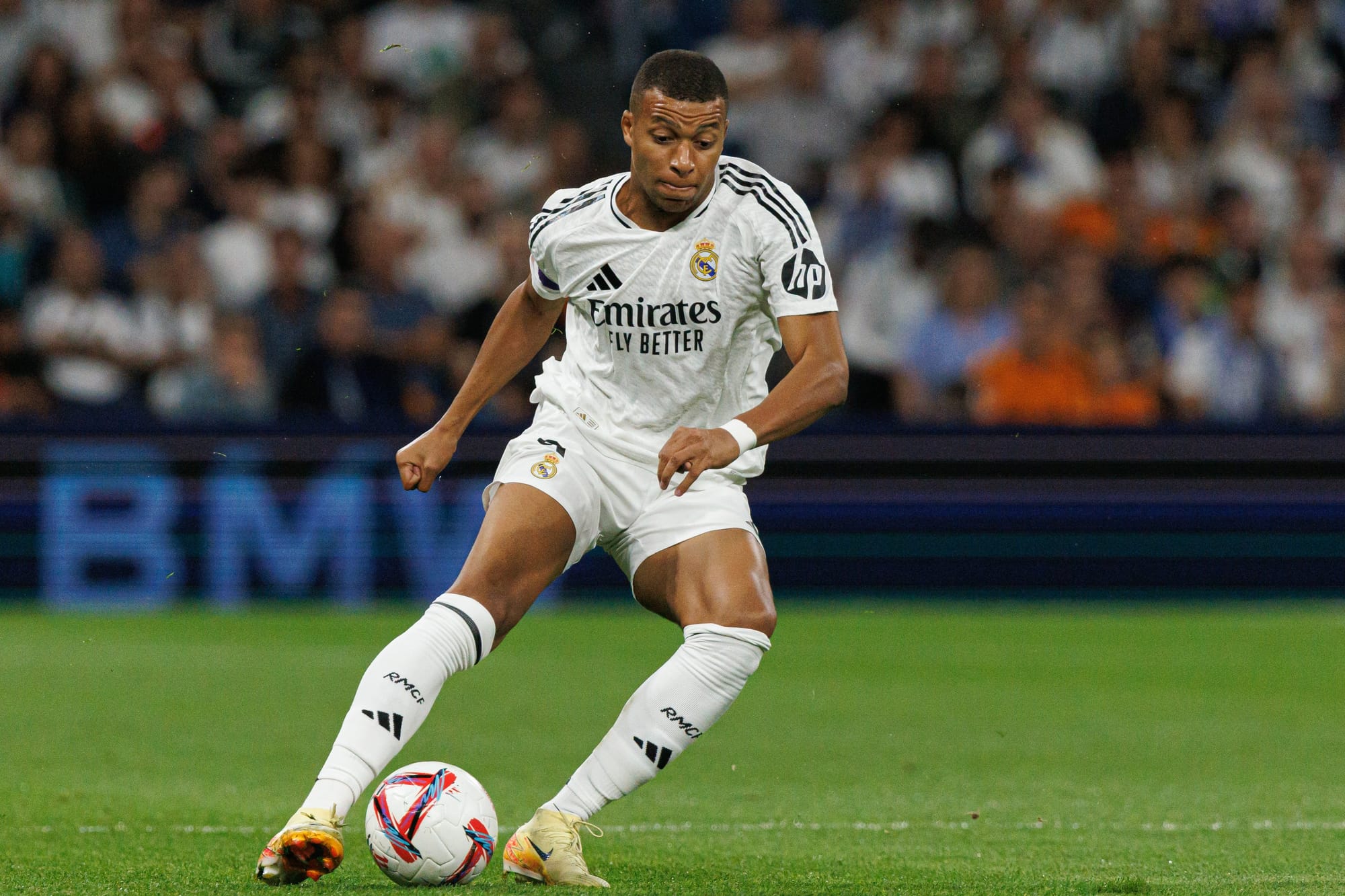
Real Madrid, for example, integrated the Oura Ring to monitor sleep and physiological response to travel and training, allowing staff to adjust sessions if recovery markers fall outside baseline. These tools do not replace coaching judgement. They reduce uncertainty.
Players are not trained to peak briefly. They are trained to hold speed without breaking.
The Mental Load
As the competitive margin tightened on the pitch, the professional environment tightened with it. Players operate in a market where exposure is continuous and evaluation is immediate.
The match calendar intensified, and public visibility became part of the workload. Social media, highlights, analysis shows, fan channels and betting content extended the life of each performance event. Errors are replayed, distributed and evaluated continuously. Form is no longer assessed only within the club environment. It is reassessed publicly and repeatedly across the media cycle.
Internal competition compounds this pressure. Squads are deeper, roles rotate more frequently, and younger players arrive earlier. A player competes not only against the opponent, but against positional alternatives within the squad.
This increases cognitive load alongside physical load. Fatigue affects decision sharpness before it affects visible sprint output. In a game defined by timing, small declines in focus translate directly into execution errors.
Clubs responded structurally. Sports psychologists are integrated into performance departments at leading clubs. Their work centres on regulation, routine stability, and decision-making under pressure. Psychological preparation is treated as a component of competitive readiness rather than a reactive intervention.
Mental preparation, like physical preparation, became structured within the weekly training cycle.
Modern football requires clarity at speed, sustained over long seasons. The professional environment around the game evolved to support that requirement.
Development as Competitive Infrastructure
The shift at first-team level did not occur in isolation. As the professional game intensified, development systems adjusted with it.
Academies moved from supportive structures to strategic assets. Transfer fees increased, wage structures expanded, and squad depth became essential across long seasons. Producing players internally offered stability. Home-grown players reduce acquisition costs, absorb tactical systems earlier, and generate transfer value if sold. Development became part of competitive planning rather than a parallel activity.
As elite requirements shifted toward repeatable high-intensity output and tactical precision, preparation timelines moved forward. Recruitment begins earlier. Structured environments start younger. Tactical education is introduced sooner. Physical preparation remains age-appropriate but becomes systematic. Pathways are aligned with first-team demands rather than detached from them.
This does not mean children are trained as professionals. It means benchmarks are clearer and evaluation is continuous. Physical development is monitored. Tactical understanding is assessed. Advancement and release decisions occur earlier.
The acceleration becomes most visible in the early-to-mid teenage years. Physical profiles begin to separate. Game comprehension becomes measurable. Selection decisions carry longer-term consequences. At this stage, the contrast between structured development and informal pathways is most pronounced.
The nostalgia around street football reflects a real observation. Unstructured play develops improvisation, spatial instinct, and creative risk-taking in ways monitored sessions do not fully replicate. Those qualities remain valuable. The constraint, however, is not structure but tempo. Instinct in the modern game operates within speed. Decisions must occur earlier in the sequence. Technical ability without processing speed is difficult to sustain at elite level.
Filtering therefore begins sooner. Late development remains possible, but the margin for prolonged adjustment narrowed. The same competitive spiral that reshaped the first team reshaped the academy. Development became integrated into the performance system.
The pathway did not eliminate instinct. It required it to function under tighter conditions.
Conclusion
Football did not change in one direction. It intensified across several dimensions at the same time.
Match data shows more high-intensity running and sprint exposure. Passing sequences became quicker and more frequent. Fixture congestion increased. Monitoring systems expanded. Preparation became more structured. Psychological support became integrated. Development pathways aligned earlier with first-team demands.
None of these adjustments happened in isolation. They reflect the same underlying condition: a competitive environment where margins are narrow and advantages compound.
The sport did not become faster in total distance, but in how effort is distributed. It did not abandon skill; it required skill to operate under less time. It did not replace creativity; it compressed the window in which creativity can function.
What changed is the baseline. High intensity is no longer exceptional. It is expected. Recovery is no longer optional. It is managed. Decision speed is no longer a differentiator on its own; it is part of the standard profile.
Football remains a game of space, timing and judgement. The difference is that those elements now operate inside tighter intervals and across longer seasons.
The evolution is measurable. The direction is structural. Competition did not alter the identity of the game. It recalibrated its threshold.raft - Saved