
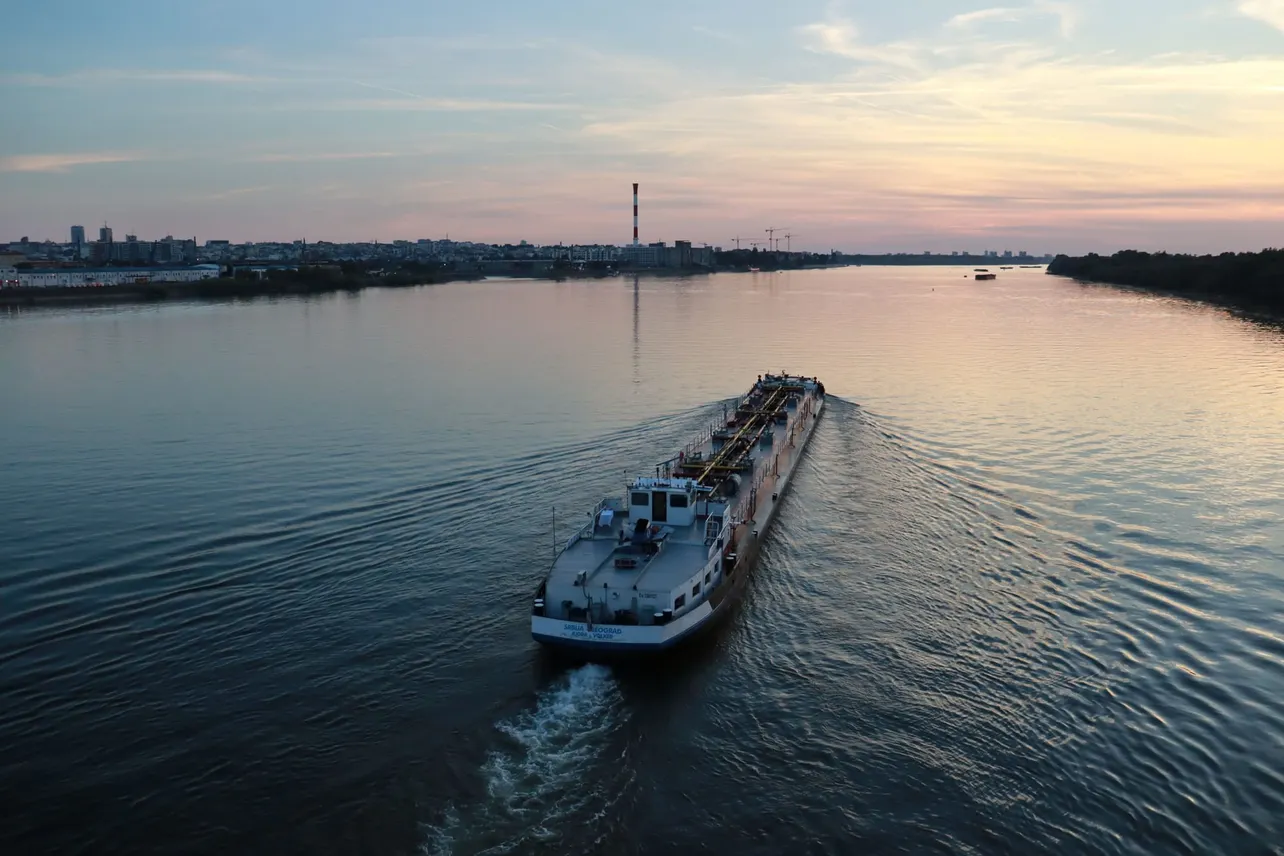
Recent droughts across Europe have reduced water levels on major rivers, including the Rhine and Danube. Low water has restricted inland shipping, increased transport costs and affected power generation.
The Rhine is particularly important because it connects major European ports with some of the continent's largest chemical, steel and petrochemical production sites. The infrastructure along the river supports industrial supply chains that extend from bulk raw materials to more specialized manufacturing.
This article examines how this industrial network depends on the Rhine, what happens when low water restricts its operation, and how companies and policymakers are adapting infrastructure and logistics to recurring droughts.
The Rhine as an Industrial Transport Corridor
The Rhine connects some of Europe's largest seaports, including Rotterdam and Antwerp, with major industrial regions in Germany, France and Switzerland. Raw materials arriving at these ports are transported inland to steel producers, chemical companies, refineries and other industrial facilities. After processing, finished products are distributed across Europe or exported to international markets through a combination of inland shipping, rail, road and pipelines.
Much of this trade consists of bulk commodities, including petroleum products, chemicals, iron ore, steel, coal, coke, agricultural commodities and construction materials.
Inland waterways are particularly important for transporting these goods because of the large quantities that can be moved at once. A typical inland vessel can carry around 2,000 tonnes of cargo, compared with approximately 1,200 to 1,500 tonnes for a dedicated freight train, while a single tank container transported by road or rail carries around 25 tonnes.
BASF illustrates the scale of these industrial supply chains. Located in Ludwigshafen, the company's site stretches for around 10 kilometres along the Rhine and is the world's largest integrated chemical complex. The site operates three company-owned harbours, where an average of around twelve inland vessels dock each day.
BASF itself describes the Rhine as the site's “supply artery” and its most important transport route for large quantities of goods. According to Andreas Backhaus, Head of European Site Logistics at BASF, “If there are any issues here, it affects the whole site.”
The Rhine also supports one of Europe's largest petrochemical corridors, relying on a dual-transport network of underground pipelines and river barges. Crude oil and volatile feedstocks move continuously via pipelines from seaports to inland refineries and chemical complexes. Once processed into fuels and industrial chemicals, specialized river barges and overland transport deliver these finished products to industrial parks and markets across Europe
Further north, Duisburg is home to Europe's largest inland port and one of the continent's largest steel production clusters. Thyssenkrupp Steel's Schwelgern plant port alone handles around 20 million tonnes of raw materials each year, primarily iron ore and coking coal. Large quantities of these raw materials are transported along the Rhine to supply the company's Duisburg steelworks. Finished steel is then distributed through the region's rail, road and inland waterway networks.
The scale of the industrial infrastructure along the Rhine highlights the importance of the river for industrial logistics. While companies such as BASF and Thyssenkrupp have reduced parts of their German operations due to high energy costs and international competition, both continue to invest in their major Rhine sites. BASF is reducing some energy-intensive production in Ludwigshafen while expanding more specialized products, including semiconductor-grade sulfuric acid. Thyssenkrupp is reducing steel capacity in Duisburg while investing in a new direct-reduction plant designed for future hydrogen-based steel production.
These investments mean that both sites will continue to require large quantities of raw materials and the transport infrastructure needed to supply them.
The Impact of Low Water Levels
Recurring droughts have significantly reduced water levels along parts of the Rhine and Danube, creating difficulties for industries and infrastructure to operate at normal capacity. Power plants along the Danube in Romania and Hungary have been forced to operate at reduced capacity, while production facilities along the Rhine received less raw material for manufacturing.
While power plants require sufficient river water for cooling, inland shipping faces a different challenge. Lower water levels prevent vessels from loading their usual cargo, forcing them to operate with only a fraction of their normal capacity. As a result, more vessels are required to transport the same amount of raw materials and products, increasing transport costs and reducing the efficiency of industrial supply chains.
The economic effects can also continue beyond the period of low water itself. A RETHINK-GSC study examining the 2018 low-water period found that exports transported on German inland waterways fell by nearly 20 percent, while imports declined by 12 percent. Companies that depended on inland shipping for imported materials also recorded an export decline of around 4 percent, regardless of how those exports were transported.
Companies also adjusted their logistics after water levels returned to normal. The study found a continued shift from inland waterways towards rail and road transport, particularly for time-sensitive goods such as chemicals and other intermediate inputs. According to study author Saskia Meuchelböck, “Even temporary disruptions can have lasting effects on firms’ sourcing strategies.”
Policy institutions and transport experts increasingly classify inland waterways as part of Europe's critical infrastructure. The Rhine illustrates this importance, supporting both the movement of bulk commodities and more specialized supply chains, including BASF's semiconductor-grade chemical production. Recurring periods of low water have therefore increased the focus on how this infrastructure can be adapted to future disruptions.
Adapting to Recurring Droughts
Repeated low-water periods, particularly the severe drought of 2018, have led companies and policymakers to strengthen their preparation for future disruptions. Companies along the Rhine have adapted their logistics over several years. During the current drought, BASF is using specialized low-draft vessels that can continue operating at very low water levels. Covestro has increased raw-material stocks and shifted to lower-draft vessels, while Thyssenkrupp has chartered shallower vessels that can sail when its own deeper-draft barges cannot. However, the current drought shows that these measures cannot prevent all disruptions.
Preparation for low-water periods is also taking place at the public level. Germany launched its national Low Water Information System (NIWIS) in July 2026. The platform combines daily information on river levels, groundwater and soil moisture from federal and state sources, giving companies and authorities additional information to prepare for periods of low water.
At the European level, the response covers the broader issue of water resilience. The EU's Water Resilience Strategy includes measures addressing water scarcity and drought. According to the Commission's action tracker, the EIB Water Programme and Sustainable Water Advisory Facility have been launched, alongside the reallocation of €3.1 billion towards water resilience. Other measures remain in progress, including new water-scarcity indicators, guidance for drought-management plans, a Water Resilience Investment Accelerator, water-retention measures and a Copernicus Water Thematic Hub. Several of these actions are scheduled through 2026 and 2027. With much of the strategy still being implemented, its wider impact on Europe's resilience to future droughts remains to be seen.
The UNECE has similarly warned that transport infrastructure will face increasing climate risks and has called for these risks to be incorporated into infrastructure planning and resilience measures.
Conclusion
Recurring droughts have highlighted the importance of Europe's inland waterways. Along the Rhine, low water affects more than shipping. The river connects major seaports with chemical producers, refineries and steel manufacturers that depend on the movement of large quantities of raw materials and products.
Continued investment at industrial sites such as Ludwigshafen and Duisburg means that the infrastructure supporting production along the Rhine remains important, even as parts of German industry are being restructured.
As periods of low water become more frequent, maintaining reliable transport and industrial infrastructure along the Rhine will remain an important part of supporting European manufacturing and trade.