
The AfD in Germany — From Electoral Support to Institutional Influence
Yours Magazine · 5 Sept 2026 · 9 min read
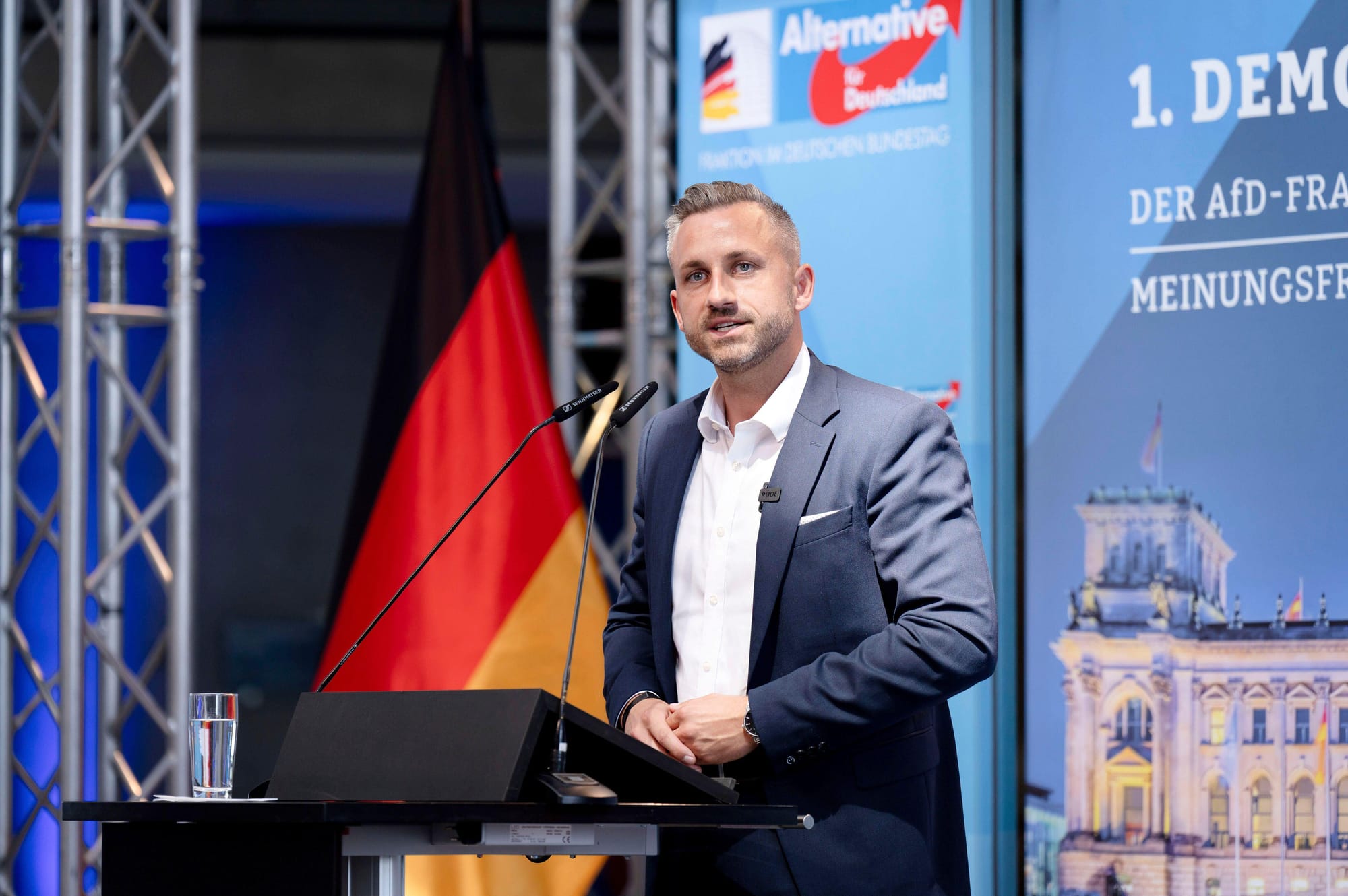
On Sunday, 6 September, voters in the German state of Saxony-Anhalt will elect a new state parliament. The AfD is polling at around 40% and is expected to become the largest political force by a considerable margin. Depending on how many smaller parties enter parliament, it could also secure enough seats to lead a state government for the first time.
The party’s growth has produced sharply different interpretations. Critics point to radical representatives, controversial positions and the classification of several AfD state associations by domestic intelligence authorities. Supporters view its rise as a democratic response to dissatisfaction with migration policy, economic conditions and established parties they believe no longer represent substantial parts of the electorate. This division is reflected in debates over whether the AfD should remain politically isolated, be treated as a conventional competitor or face examination under Germany’s constitutional mechanisms.
While this debate continues, the AfD has spent more than a decade developing parliamentary experience, political personnel, local organisations and wider networks. The election in Saxony-Anhalt could now give the party its first opportunity to convert electoral support into government responsibility and direct state institutions.
From Parliamentary Opposition to State Government
The AfD was founded in 2013 during the European sovereign debt crisis. It initially emerged as a conservative and economically liberal challenge to the management of the euro, but narrowly failed to enter the Bundestag in its first federal election.
The party changed considerably during the following years. Migration became its central issue after the refugee crisis of 2015, while questions of national identity, European integration and Germany’s political direction gained greater importance.
In 2017, the AfD entered the Bundestag for the first time. It has since become established across federal, state and municipal politics, with particularly strong support in eastern Germany. At the 2025 federal election, it received 20.8% of the vote and became the second-largest party in the Bundestag. Its national support has continued to grow, while polling in several eastern states has placed it considerably higher.
Electoral growth has not yet produced executive power. Germany’s other major parties continue to reject coalitions with the AfD under the political boundary commonly described as the Brandmauer, or firewall. Its opponents consider this separation necessary because of radical positions and doubts about parts of the party’s relationship with the constitutional order.
The effects of this strategy remain contested. It has prevented the AfD from entering government, but it has also required established parties with substantially different programmes to cooperate in increasingly broad coalitions. The AfD uses these arrangements to support its claim that the traditional parties ultimately form a single political establishment. Whether the Brandmauer has limited the party or contributed to its anti-establishment appeal is now part of the wider political debate, including within the CDU.
A separate discussion concerns whether the AfD should be prohibited. In 2025, Germany’s federal domestic intelligence service classified the national party as confirmed right-wing extremist. The AfD appealed, and a court suspended the classification in February 2026 while the case continues. Its Saxony-Anhalt branch remains separately classified as confirmed right-wing extremist by the state intelligence authority. These classifications do not themselves prohibit the party. A prohibition would require separate proceedings before the Federal Constitutional Court and would have to meet a high legal threshold. Supporters of such a procedure argue that democratic institutions must be protected from forces seeking to weaken them. Opponents question whether prohibiting a party with support from a substantial part of the electorate would be legally successful or politically effective.
The result is a party that is firmly established inside Germany’s parliamentary system but remains outside its governments. It has gained experience in opposition, developed political organisations and expanded its personnel without having to take responsibility for running a state administration. Saxony-Anhalt could now bring that phase to an end.
Why Saxony-Anhalt Matters
The AfD has already achieved major electoral results in eastern Germany. In 2024, it became the largest party in Thuringia and finished narrowly behind the CDU in Saxony. It also received almost 30% of the vote in Brandenburg. These results strengthened the party’s position inside the state parliaments but did not bring it into government.
The results nevertheless gave the party greater institutional influence. Its parliamentary groups receive public funding, employ political and legal advisers, participate in specialist committees and use parliamentary inquiries to examine the work of state governments. In Thuringia and Brandenburg, the AfD also holds more than one-third of the parliamentary seats. This allows it to block certain institutional decisions, but not to set government policy or direct state ministries.
Saxony-Anhalt could represent the next stage. Polling places the AfD at around 40%, substantially ahead of the CDU and the remaining parties. Germany’s five-percent electoral threshold means that votes cast for parties that fail to enter parliament are not reflected in the distribution of seats. If several smaller parties remain below that threshold, the AfD could potentially obtain an absolute majority of seats without receiving more than half of all votes.
Such a result would allow it to move around the "Brandmauer" rather than negotiate through it. With an absolute majority in the state parliament, the AfD could elect the minister-president, form the government of Saxony-Anhalt without a coalition partner and appoint the political leadership of the state’s ministries.
The difference would be most visible in education, culture and domestic administration, where Germany’s states hold substantial authority. A government in Magdeburg could influence school curricula, teacher policy, historical education and the distribution of funding to universities, museums, theatres and cultural organisations. These are also areas in which the AfD has been particularly critical of the political and cultural direction established during recent decades.
The Interior Ministry would provide another important area of authority. Its political leadership sets priorities for the state police, migration administration and the state Office for the Protection of the Constitution. Ministers could not simply remove the permanent civil service or operate outside the law, but they would supervise the institutions responsible for implementing policy within Saxony-Anhalt.
The AfD also proposes changing the structure of public broadcasting. It has announced that it would terminate the broadcasting treaties applying to Saxony-Anhalt, seek to abolish the compulsory household contribution and reduce public broadcasting to a smaller basic service. A government in Magdeburg could not determine the programming of MDR directly or restructure the joint broadcaster alone, but it could use the state’s position within the treaty system to challenge how public broadcasting is organised and financed.
The party’s influence would also extend beyond Saxony-Anhalt through the Bundesrat, where state governments participate in federal legislation. One state could not determine national policy, but an AfD government would give the party its first direct position within this part of the federal system.
For the AfD, this would make Saxony-Anhalt more than an individual state government. It would provide the party with its first opportunity to apply parts of its programme through ministries and state institutions, particularly in migration administration, education, culture and public broadcasting. It would also allow its politicians and advisers to gain experience in running an administration and to present Saxony-Anhalt as an example of how the party governs when it holds executive responsibility.
This has wider significance because the AfD already has substantial support in Thuringia, Brandenburg, Saxony and other parts of Germany, while its position has also strengthened at federal level. The party views government in Saxony-Anhalt as a possible starting point for further institutional expansion. Other parties are concerned that an AfD-led state could weaken the Brandmauer, provide the party with a governing record and create additional momentum before future state and federal elections.
The importance of Saxony-Anhalt therefore lies not only in the authority the AfD could exercise within the state, but also in the example it could create beyond it. Whether the party can establish such a model depends on the personnel, administrative knowledge and institutional structures it has developed.
Preparing for Government
A parliamentary majority would give the AfD access to government, but it would also create an immediate organisational challenge. The ministries and their permanent civil servants would remain in place, but the party would need ministers and could appoint its own state secretaries, advisers and political staff to direct the existing administration.
Germany’s established parties have developed this personnel over decades. Their organisations extend from municipal councils and state parliaments to the Bundestag, while their youth organisations and affiliated foundations provide further routes into political work. Experience moves between party offices, parliamentary groups, ministries, universities, trade unions and business organisations. This gives established parties a large network from which to recruit when they enter government.
The AfD began without a comparable structure. Its rapid electoral growth created parliamentary positions and access to public resources, but it also produced a continuing need for qualified staff. Experience gained in opposition does not necessarily prepare a politician or adviser to manage a ministry, supervise a budget or coordinate the implementation of policy across an administration.
The party has increasingly attempted to close this gap. According to recent reporting, it has created strategy groups, assembled a pool of potential personnel and developed training programmes for work in ministries, public authorities and senior political offices. Academies in Berlin and Thuringia, with another planned in Brandenburg, are reported to offer training in what the party describes as Staatssteuerung—the management and direction of the state. The party has also sought experience from Austria’s Freedom Party, which has previously participated in national and regional governments.
The AfD can draw on more than a decade of parliamentary development. Its members and employees now include lawyers, economists, researchers and municipal politicians with experience in legislation and public administration. The party-affiliated Desiderius Erasmus Foundation provides political education and contributes to the wider intellectual environment around the party, although it remains legally separate from the AfD.
Important limitations remain. The party has never managed an entire state government, and reports about its preparations continue to identify shortages of suitable personnel. A small group of experienced politicians may be sufficient to lead an opposition party, but government requires qualified people across several ministries and hundreds of political and administrative functions. The permanent civil service would continue to carry out much of the daily work, while the new political leadership would need to understand and direct an administration it had previously criticised from outside.
The AfD’s preparations therefore reflect both its growing ambition and the difficulty of converting electoral momentum into institutional capacity. It is attempting to create the personnel and structures that Germany’s older parties accumulated over several generations. This development also has a historical parallel. Earlier political movements in the Federal Republic learned that lasting change depended not only on protest or electoral success, but on establishing a sustained presence inside the institutions that shaped political and cultural life.
The Earlier March Through the Institutions
The AfD’s preparation for government represents more than a response to one state election. It reflects the recognition that political movements achieve lasting influence when they develop people and organisations capable of working within institutions. In the history of the Federal Republic, this form of change is most closely associated with the generation of 1968.
The movement emerged in a West Germany that had established democratic institutions after the Second World War but retained elements of its earlier social and professional order. Former members of the National Socialist system continued to hold positions in parts of the civil service, judiciary, universities and business. A younger generation increasingly questioned this continuity and what it regarded as the country’s limited confrontation with its past.
The protests also extended to the Vietnam War, traditional authority and established attitudes towards family, gender and social behaviour. The movement contained different political groups and did not follow one common strategy. Some pursued revolutionary ideas, while others increasingly looked towards change through the existing democratic system.
Rudi Dutschke described this approach as a long march through the institutions. The idea was that protest alone would not permanently change society. Political influence would also require people to enter parties, universities, schools, media, law and public administration.
This process developed gradually rather than through a centrally organised campaign. Members of the wider generation became politicians, teachers, professors, journalists, lawyers and civil servants. Their ideas entered institutions through generational change, wider social developments and political reform.
The Green Party became one political expression of this transformation. Founded in 1980, it brought together environmental groups, peace activists, feminists and parts of the extra-parliamentary left. It later entered state governments and, in 1998, the federal government.
Over time, ideas that had once challenged the postwar establishment gained a stronger position within German politics and public institutions. This included a more critical engagement with National Socialism, environmentalism, changing gender roles and more liberal approaches to society and national identity.
The meaning of this development remains contested. Supporters associate it with democratisation and social openness. Critics argue that the movement’s ideas became dominant within parts of education, culture and the media, creating a new establishment that became less receptive to conservative positions.
The AfD defines itself against several aspects of this political and cultural development. Its current institutional expansion can therefore be understood not only as preparation for government, but as an attempt to challenge parts of the order that developed after 1968.
Conclusion
The election in Saxony-Anhalt represents a possible transition in the development of the AfD. The party has already established itself across Germany’s parliamentary system, but it has not yet carried responsibility for governing a federal state. An absolute majority would provide access to ministries and policy areas including education, culture, migration administration and public broadcasting.
The AfD has been preparing for this possibility by developing political personnel, training programmes and wider organisational structures. At the same time, its rapid electoral growth has created questions about whether it has enough experienced people to manage a state administration.
The comparison with the generation of 1968 does not place the two movements on the same political or historical level. It illustrates how movements seeking lasting change eventually turn towards institutions. The 1968 generation influenced the Federal Republic over several decades through politics, education, media and culture. The AfD is now building institutional capacity partly to challenge the order that followed.
Saxony-Anhalt could provide the first indication of how far that development has progressed. The election will measure the party’s electoral support. What follows will show whether it can translate that support into lasting institutional influence.
Production note: This article was developed and directed by the author, with AI assistance used for research, source verification, structuring and editing. The argument, selection of examples and final editorial decisions were made by the author. All images are non-AI-generated and sourced from Alamy.