
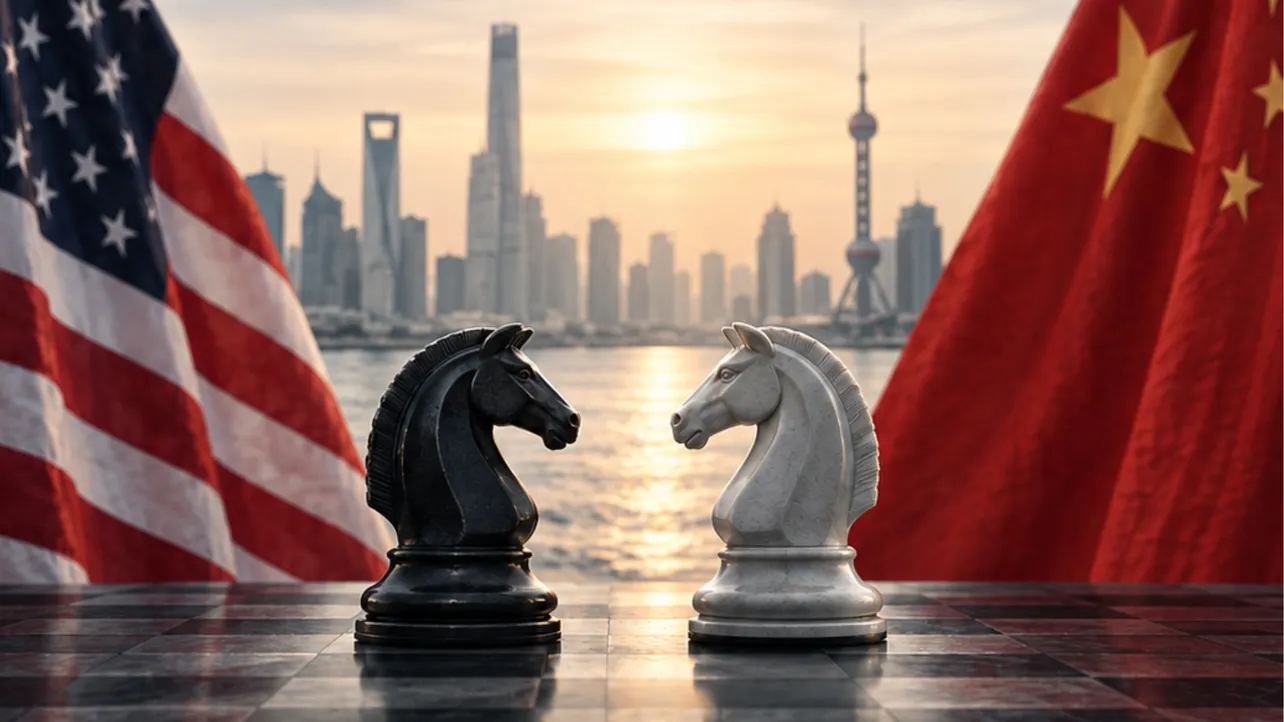
Recent discussions about artificial intelligence have focused increasingly on security risks and whether the development of the most advanced systems should be slowed. Anthropic chief executive Dario Amodei has called for greater caution, a position also supported by Elon Musk and other technology leaders. US President Donald Trump has rejected a broader slowdown, arguing that the United States cannot afford to lose its technological lead over China.
China has become central to this debate because it is now one of the main competitors in advanced AI development. At the same time, Beijing has introduced its own controls on artificial intelligence and has repeatedly stated that AI should remain secure, controllable and under human supervision. The United States and China are now preparing for their first official bilateral discussions devoted specifically to artificial intelligence, with talks on AI safety under consideration for mid-September.
This article examines the security risks surrounding advanced AI, the competitive landscape in which the technology is being developed, and how the United States, China and Europe are approaching AI security. It also examines why strategic competition between the United States and China makes broader agreement on slowing development difficult.
The Security Risks of Advanced AI
The security concerns surrounding artificial intelligence have increased as models have become capable of performing more complex tasks with less human supervision. Current systems can write software, analyse large amounts of information and use external tools, while newer AI agents can complete sequences of tasks with limited human intervention. This increases their usefulness but also creates new ways in which the technology can be misused or behave unexpectedly.
Cybersecurity is one of the most immediate concerns. Advanced models can identify vulnerabilities, write malicious code and assist with different stages of a cyberattack. The same capabilities can also be used defensively to identify and repair security weaknesses, making cybersecurity an example of how improvements in AI can create both benefits and new risks.
Biological and chemical risks are another area of concern. AI systems can provide increasingly detailed scientific information and assist with experimental planning and technical problems. This could accelerate legitimate research, but sufficiently capable systems could also lower the level of expertise required to develop biological or chemical threats.
A more uncertain risk concerns increasingly autonomous systems. AI agents can already carry out longer tasks without continuous human supervision, which reduces the opportunities for people to intervene when something goes wrong. Researchers are also studying whether future systems could evade monitoring, undermine safeguards or assist with the development of more capable AI. Current systems are not considered capable of causing a broader loss of human control, but increasing autonomy has made this an important area of safety research.
These risks are difficult to manage because many of the same capabilities also have legitimate uses. Individual developers have introduced their own systems for testing and controlling increasingly capable models. These safeguards, however, operate within a competitive international environment in which companies and governments have strong interests in developing more capable systems, creating pressure to continue advancing the technology even as new risks emerge.
The Competitive Landscape
Artificial intelligence is developed through an international network of technology companies, chipmakers and data centres. At the centre are companies building the models themselves. OpenAI, Anthropic, Google, Meta and xAI are among the leading developers in the United States, while DeepSeek, Alibaba, ByteDance and Tencent have built a large and competitive market in China. This makes the United States and China the two main centres of frontier AI development.
Building these systems requires large amounts of computing power. Nvidia designs many of the advanced processors used for AI, but the production behind them extends across several countries. TSMC in Taiwan manufactures many of the leading chips, ASML in the Netherlands supplies important equipment used to produce them, while SK Hynix and Samsung in South Korea provide the advanced memory needed for AI computing.
Competition therefore starts between companies, but it does not end there. AI is becoming increasingly important for scientific research, industrial production, robotics, cyber capabilities and military systems. Governments consequently have their own interest in how quickly the technology develops and which countries have access to the most capable systems.
This creates two connected levels of competition. Companies compete to develop more capable AI, while countries compete over the economic and strategic advantages that the technology could provide. A government can introduce rules for companies operating within its own country, but those rules do not apply elsewhere. Any broader attempt to slow AI development therefore depends not only on regulating companies, but also on cooperation between the countries developing the technology.
Different Approaches to AI Security
The United States, China and Europe have all introduced measures to manage the risks associated with artificial intelligence, but they differ in how these controls are applied.
In the United States, much of the development of frontier AI remains in the hands of private companies. Developers including OpenAI and Anthropic conduct their own safety testing and can restrict the release of systems they consider dangerous. The federal government has also developed standards for testing AI systems and evaluates risks related to areas such as cybersecurity, biological threats and national security. The Trump administration has, however, opposed broader regulation that could significantly slow the development of new models.
Frontier AI development is less concentrated in Europe than in the United States and China, but Europe has moved further towards formal regulation. The European Union's AI Act establishes legal requirements according to the risks created by different AI systems. Developers of the most capable general-purpose models can be required to evaluate their systems, reduce identified risks, report serious incidents and maintain cybersecurity protections.
China combines continued investment in AI with stronger government oversight. Regulations already cover generative AI services, algorithms, data and generated content. Chinese authorities have also begun to address risks associated with increasingly capable systems. President Xi Jinping has called for stronger monitoring, early-warning systems and emergency responses and has stated that artificial intelligence should remain secure, controllable and under human supervision.
International cooperation has developed alongside these national approaches. The United Nations established a Global Dialogue on AI Governance and an Independent International Scientific Panel on Artificial Intelligence in 2025. The G7 has developed principles and a voluntary code for advanced AI systems, while international AI summits have brought governments together around areas such as model testing, risk assessment and the safe development of frontier systems.
These mechanisms do not have the authority to restrict how individual countries develop AI. International controls therefore depend on governments agreeing on common measures and applying them within their own jurisdictions.
The United States and China have nevertheless discussed areas where cooperation is possible. These include common testing standards, information sharing on serious incidents and safeguards against cyberattacks, biological misuse and loss of control. US and Chinese officials have already discussed some of these issues through unofficial channels, while further government talks on AI safety have been under preparation.
A broader agreement to slow frontier development is more difficult. Amodei has argued that American companies could slow development only if the United States maintains a sufficient lead over China, and has proposed tighter restrictions on China's access to advanced chips, semiconductor equipment and AI technology. China supports international AI governance but opposes restrictions that it considers an attempt to preserve American technological dominance.
This leaves both countries with common concerns over AI security but different interests in how restrictions are applied. Any broader agreement would require both sides to accept limits on development and confidence that those limits were being followed.
The Race for AI
The competition in artificial intelligence does not have a single measure of success. More capable systems could increase productivity, accelerate scientific research and support industrial automation, while also improving intelligence analysis, cyber capabilities and military systems. Leadership in AI could therefore strengthen several sources of economic and strategic power at the same time.
For the United States, this is connected to its existing position in the global technology industry. American companies develop many of the most capable AI models and control important parts of the computing and cloud infrastructure used internationally. Maintaining this position could support American economic competitiveness, military capabilities and influence over the technologies and standards adopted by other countries.
China has different but overlapping interests. AI is being integrated into manufacturing, robotics, healthcare, transport and scientific research, while automation could help increase productivity as the country's working-age population declines. Developing domestic models, processors and computing infrastructure also reduces China's dependence on foreign technology and could strengthen its position in relation to the United States.
These advantages can extend beyond the two countries themselves. AI systems, computing infrastructure and related technologies can be supplied to other countries and incorporated into their economies, communications networks and security systems. Technological leadership can therefore create wider geopolitical influence as countries become more dependent on technology developed in the United States or China.
The competition becomes more difficult to assess at the frontier of AI development. Current systems are improving gradually, but some researchers expect increasingly capable models to begin performing larger parts of scientific research, software development and AI development itself. This has created concern that a country reaching much more capable artificial intelligence first could use that advantage to accelerate further development.
This possibility is often discussed in relation to artificial general intelligence, or AGI. There is no agreed definition of when AGI would be reached or evidence that the first country to develop it would permanently dominate others. The stronger argument is that sufficiently capable systems could provide a temporary but potentially important advantage in research, cyber operations, intelligence, military technology and economic development. How large or durable that advantage would be remains uncertain.
This uncertainty is part of what makes an agreement to slow development difficult. If both the United States and China restricted frontier development at the same time, some of the risks could be reduced. Neither country, however, can easily know whether the other is observing the same restrictions or continuing development privately. A country that slowed while its competitor continued could instead increase the technological gap it was trying to prevent.
The same problem applies to the conditions surrounding an agreement. American proposals to restrict China's access to advanced processors and semiconductor technology are intended partly to preserve the US technological advantage. From China's perspective, restrictions of this kind can also preserve an existing American lead rather than create equal conditions for AI safety. From the American perspective, allowing China unrestricted access to the computing technology needed for frontier development makes slowing American companies more difficult.
The disagreement is therefore not simply about whether advanced AI could become dangerous. Both countries have recognised serious risks. The difficulty is agreeing on restrictions while AI development could also change their economic, military and geopolitical position. The United States does not want safety measures to allow China to close its technological lead, while China does not want international controls to preserve an existing American advantage.
Conclusion
The United States and China have been preparing further discussions on AI safety, with cyber risks, information sharing and safeguards around increasingly capable systems among the areas that could be addressed. These discussions could establish practical measures where both countries have an interest in reducing the possibility of serious misuse or loss of control.
A broader agreement to slow AI development would be considerably more difficult. Artificial intelligence is becoming connected not only to economic growth, but also to scientific capability, military power and international influence. Neither country wants to accept restrictions that could leave it at a strategic disadvantage if the other continues to develop more capable systems.
The current debate therefore involves two concerns at the same time. Governments and technology companies are increasingly considering how to control the risks created by advanced AI, while the United States and China continue to compete over the advantages the same technology could provide. Any meaningful agreement on slowing development would have to address both.
Production note: This article was developed and directed by the author, with AI assistance used for research, source verification, structuring and editing. The argument, selection of examples and final editorial decisions were made by the author. All images are AI-generated.