McLaren — Identity, Manufacturing and Customer Experience
Yours Magazine · 6 Oct 2026 · 7 min read
In September 2026, McLaren presented a new brand identity for its racing and road-car businesses. The design draws on symbols from the company’s history and gives the two businesses a more consistent appearance.
The new identity sits alongside wider changes across the British manufacturer. These include a £500 million investment to expand McLaren’s UK engineering and manufacturing operations and bring future engines and transmissions in-house.
The company is also continuing an approach that ties production more closely to customer orders, while placing greater emphasis on personalisation and experiences for owners.
This article looks at these developments together, from the new identity and manufacturing plans to sales, personalisation and the customer experience.
Brand Identity — Heritage and Continuity
In developing the new design, McLaren’s road-car and racing teams went back through their shared archives. They looked at the symbols, stories and design details that had shaped the company over time, from Bruce McLaren’s early years in New Zealand to the global brand it is today.
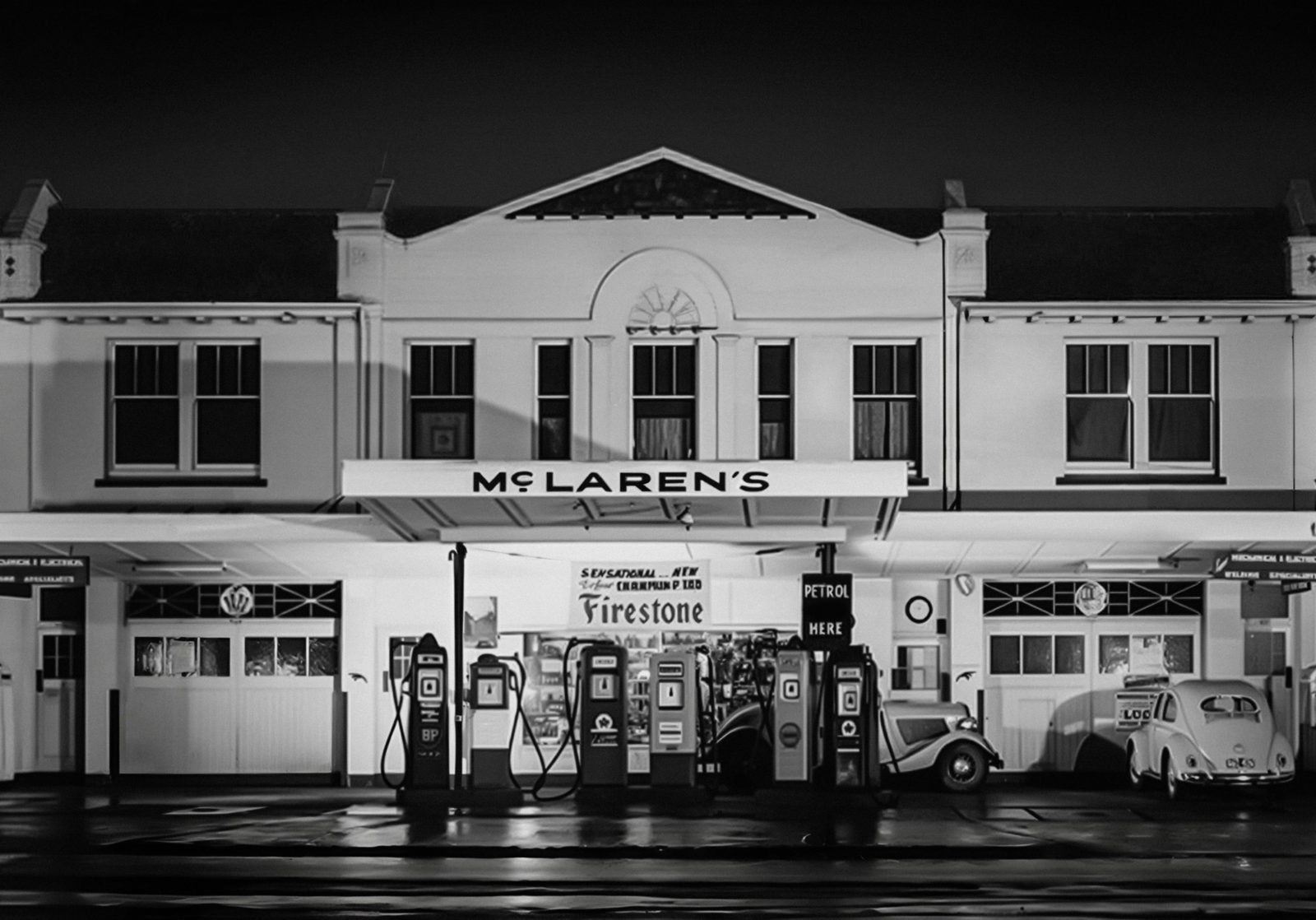
Bruce McLaren grew up in Remuera, a suburb of Auckland, where his parents, Les and Ruth, ran a service station. Its workshop became an important part of his early racing years. There, he rebuilt an Austin 7 and drove it to his first race victory at the age of 15.
He later moved to Britain and founded his own racing team in 1963.
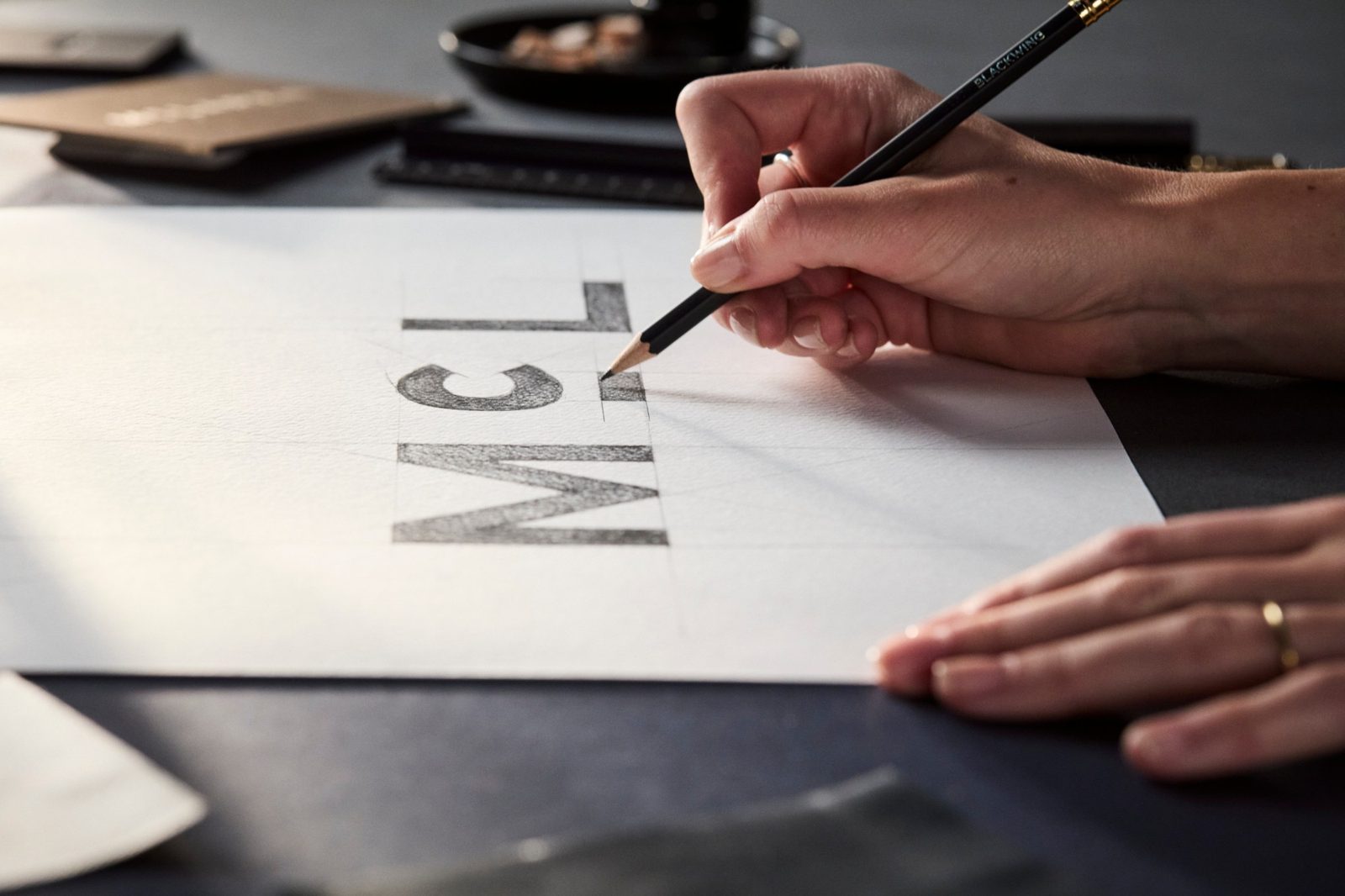
It was in that family history that McLaren found the reference for its new wordmark. The sign above the family service station provided the inspiration for the lettering. Rather than reproduce it exactly, McLaren reworked the original letterforms for a contemporary identity, using the old family name as the basis for how the company now presents itself.
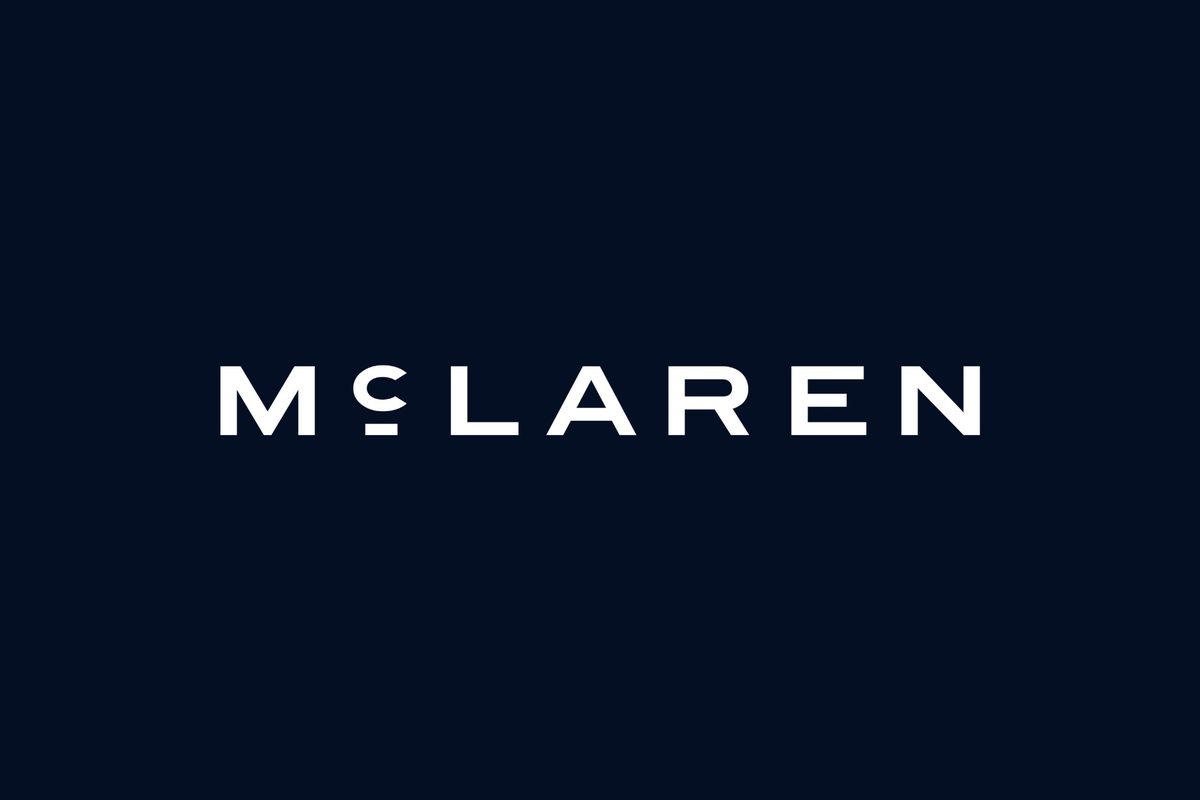
McLaren describes the result as a way of reconnecting with its origins while creating a visual language for the future.
Alongside the new design elements, McLaren keeps several symbols that are already closely associated with the company. The Speedmark, first introduced in 1997, remains one of its most recognisable features and continues to sit at the centre of the brand identity. The Speedy Kiwi is also retained as a reference to Bruce McLaren’s New Zealand roots.

In terms of colour, papaya remains a defining part of McLaren’s identity. It is joined by an expanded palette inspired by important moments in the company’s history.
McLaren says the new identity is meant to bring its racing and road-car businesses closer together and give the company a clearer expression of where it is heading next. It is also intended to support a broader experience around the brand, with more emphasis on personalisation, ownership and fan engagement.
The changes come as McLaren is also investing in the next generation of its products and manufacturing. A £500 million programme will expand its British operations and bring the development and manufacture of future engines and transmissions in-house.
Production — Own Engines and Expanded Manufacturing
The investment forms part of a wider commitment from McLaren shareholder L’IMAD, a sovereign investor of the Government of Abu Dhabi. McLaren says L’IMAD has worked closely with the company’s management team on its strategic direction and long-term growth.
Since McLaren introduced its first series-production supercar, the 12C, in 2011, the company has worked with British engineering specialist Ricardo on its road-car powertrains. McLaren developed the engines, while Ricardo manufactured them at its purpose-built facility in Shoreham-by-Sea before delivering them to the McLaren Production Centre in Woking. By 2023, Ricardo had produced more than 34,000 McLaren powertrains under this arrangement.
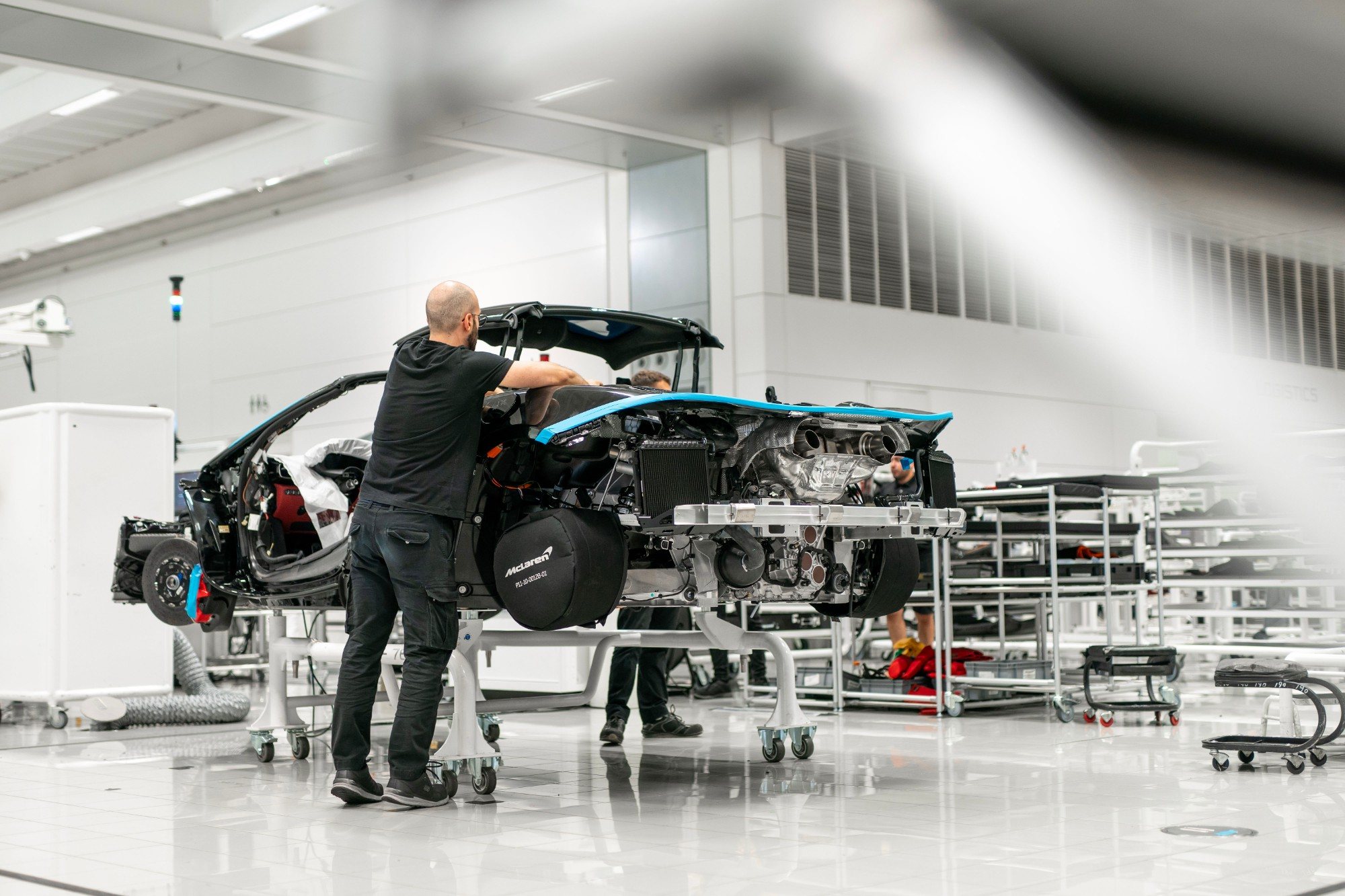
The new investment changes that model. Future engines and transmissions will be both designed and manufactured by McLaren itself. This gives the company greater control over how its future powertrains are developed and integrated into its cars, while keeping more engineering knowledge, technology and production capability within its British operations.
This becomes particularly important as McLaren develops its next generation of cars.
The first in-house powertrains will include two new engines and transmissions designed to support the company’s hybrid strategy, while the wider investment will provide the manufacturing capacity, engineering capability and technology needed as McLaren expands beyond its traditional two-seat supercars into a broader portfolio that includes a planned performance SUV.
To support that additional manufacturing capacity, McLaren plans a new vehicle assembly facility in Britain, while its existing Production Centre in Woking will also be expanded. In South Yorkshire, the company will grow its Composites Technology Centre, where it develops and manufactures the carbon-fibre structures used in its cars.
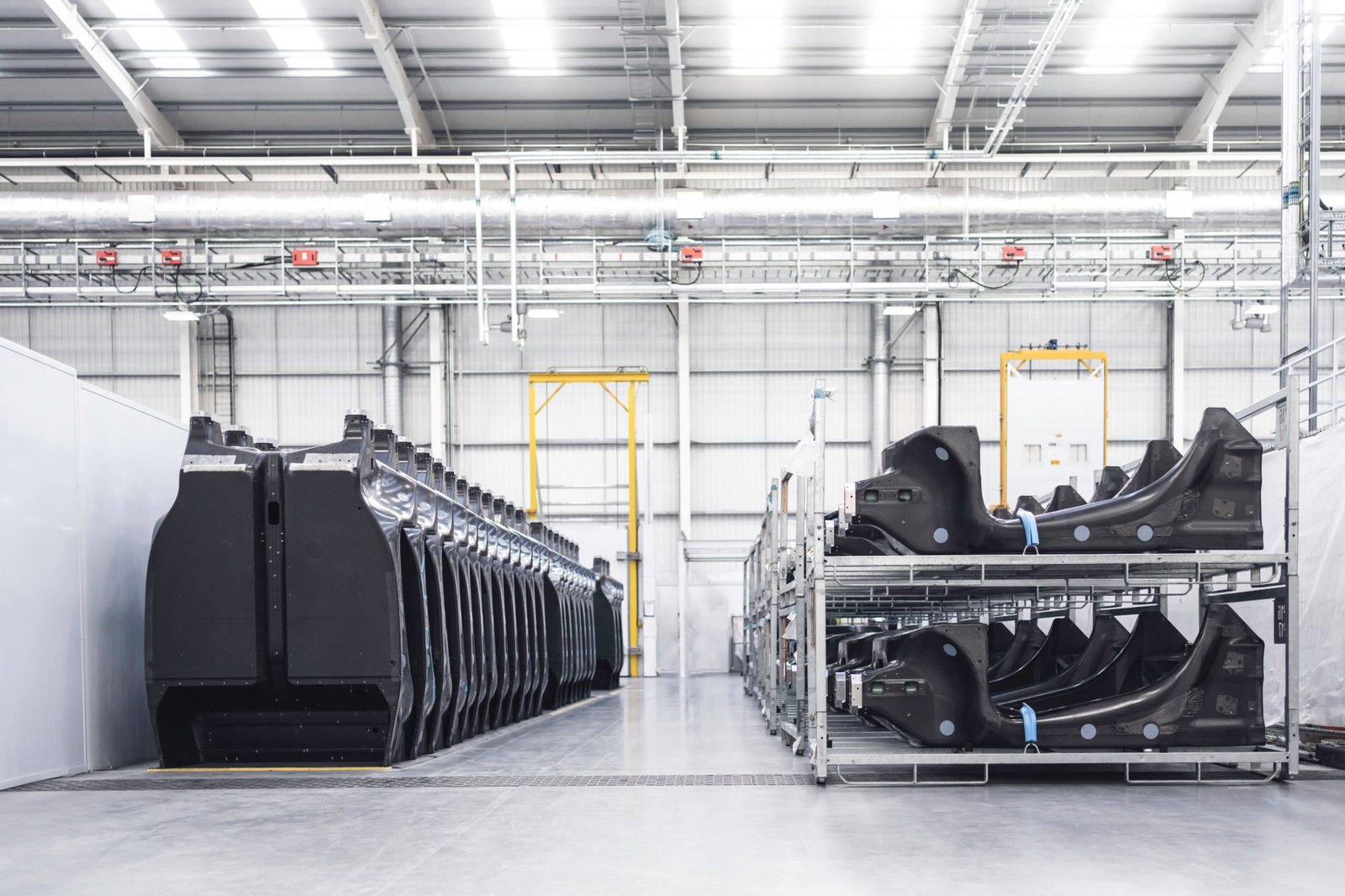
McLaren has already added two further sites to its British operations. The Creation Centre in Bicester focuses on design and innovation, while a facility in the Midlands is used for testing and vehicle development. Together with Woking and South Yorkshire, these sites cover the process from design and development through to advanced manufacturing.
According to McLaren, the programme will create at least 1,000 direct and indirect jobs across its UK operations by 2032, while doubling its manufacturing workforce and supporting new apprenticeships. Up to 3,000 further jobs are expected across the supply chain.
The investment is also intended to strengthen McLaren’s expertise in lightweighting, carbon fibre and advanced manufacturing, while retaining more of its intellectual property in the UK.
Sales — Personalisation and Customer Experience
Alongside the changes to its identity, products and manufacturing, McLaren is also further developing its approach to customers, with a greater focus on selling against demand, expanding personalisation and creating more experiences around ownership and the brand.
CEO Nick Collins describes the sales approach as a “pull” model, in which McLaren builds against customer demand rather than pushing additional cars into its dealer network. He links the ability to maintain that approach to the company’s new ownership structure, which allows McLaren to take a longer-term view rather than focusing on short-term volume targets. Production has been realigned so that demand remains above availability, while the settlement of McLaren’s bond debt means the company no longer reports quarterly results to the financial markets.
At the same time, McLaren is still looking for growth. Rather than presenting that growth simply as higher production, the company is expanding its retail network, particularly in the United States, while placing more emphasis on personalisation and experiences around ownership and the brand.
Collins says the United States already accounts for more than half of McLaren’s global sales and sees room to expand its network of 27 dealerships by up to 40 percent over roughly the next two years, adding between five and ten locations. McLaren is also planning experience centres in New York, Miami and Los Angeles.
These centres are intended to operate separately from the franchised dealer network, with a greater focus on McLaren’s heritage, brand and personalisation rather than conventional vehicle sales.
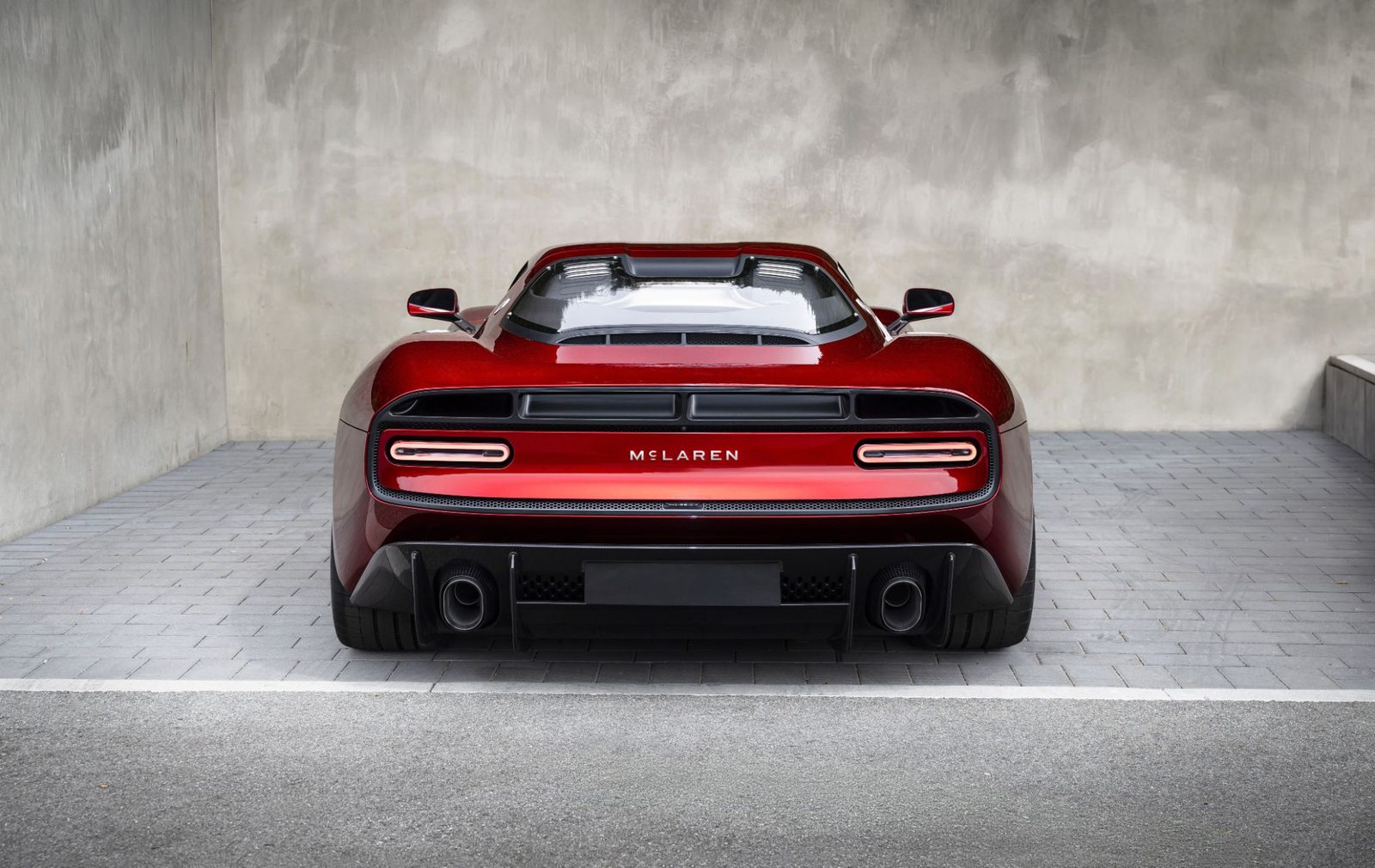
Personalisation already plays a larger role through McLaren Special Operations, or MSO. Customers can choose individual colours, materials and finishes or commission more extensively bespoke cars. The W1 provides one example of how far this can extend, with customers able to work with MSO on individual specifications for McLaren’s latest flagship model.

McLaren is also developing more exclusive experiences around individual products. Project: Endurance is a limited programme for buyers of the track-only MCL-HY GTR, of which around 30 to 35 are planned, linked to McLaren’s 2027 Le Mans and World Endurance Championship programme. Buyers are expected to receive 12 track days across six events over two years, together with access to the factory racing programme.
Together, these developments show McLaren pursuing growth while keeping production tied to demand and placing greater emphasis on personalisation, customer experience and closer engagement with the brand.
McLaren’s Next Phase
McLaren’s recent changes cover several parts of the company. The new identity brings its racing and road-car businesses under a more consistent appearance while drawing on symbols and references from McLaren’s history.
At the same time, the £500 million investment will expand the company’s engineering and manufacturing operations in Britain. Future engines and transmissions will be designed and built in-house, production capacity will increase, and McLaren is preparing a broader range of models that includes a planned performance SUV.
On the customer side, McLaren is keeping production tied to demand while expanding its retail presence, personalisation through MSO and experiences around ownership and the brand.
Production note: This article was developed and directed by the author, with AI assistance used for research, source verification, structuring and editing. The argument, selection of examples and final editorial decisions were made by the author. Images are non-AI-generated and sourced from the McLaren Automotive media site.
Primary research was based on McLaren Automotive and McLaren Racing material, including company announcements on the new brand identity, UK manufacturing investment, McLaren Special Operations and Project: Endurance. Additional research and verification used material from Ricardo, CAR Magazine and Automotive News.