
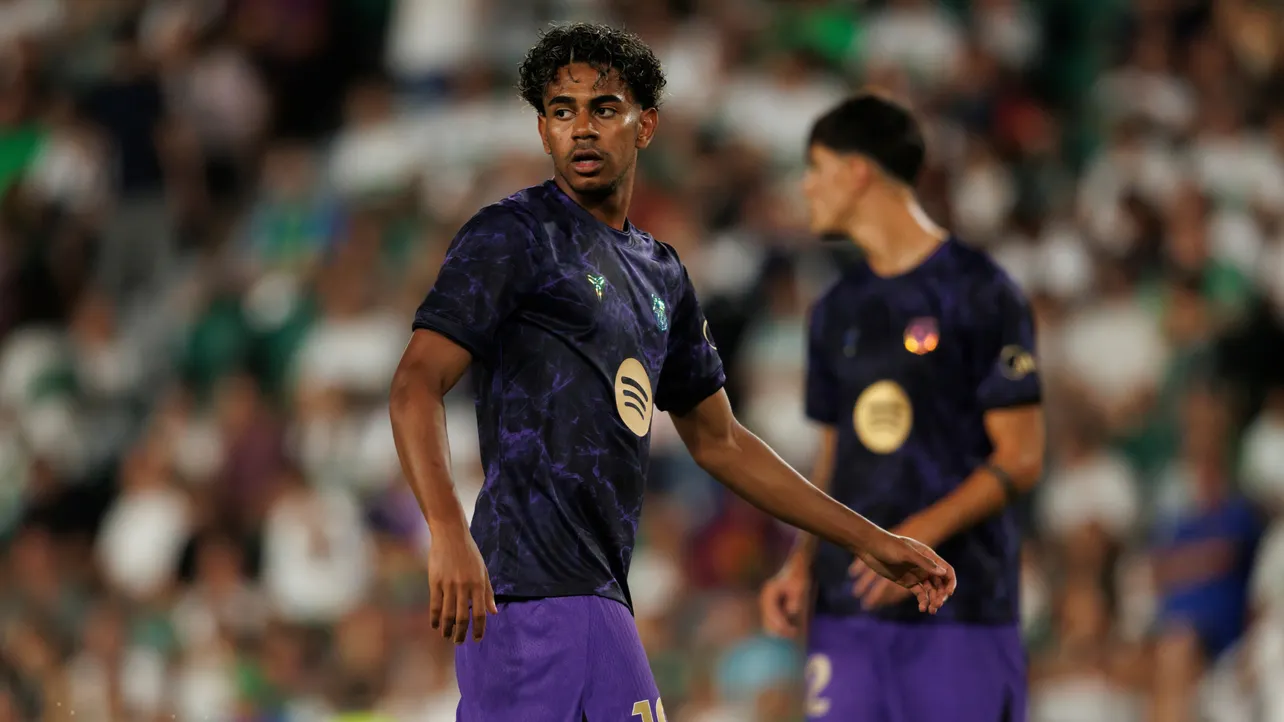
FC Barcelona have opened the 2026/27 season with eight consecutive wins. The team leads La Liga and has scored more goals in its first seven league matches than any Barcelona side before it. New signings, including Ballon d’Or winner Rodri and fast attacking players such as Karim Adeyemi, have strengthened a team that has already won two league titles under Hansi Flick.
When Flick arrived in 2024, Barcelona had talented players but faced injuries, financial difficulties and disagreement over how much the squad needed to change. Club president Joan Laporta believed a new coach could get more from the existing team. This article looks at how that decision, Flick’s playing style, the development of young players and later signings brought Barcelona to its current position.
Before Flick Arrived
Barcelona had won La Liga under Xavi Hernández in 2022/23, but the following season ended without a trophy. Xavi’s title-winning team controlled matches through possession and pressing and was especially difficult to score against. That defensive strength, combined with Robert Lewandowski’s goals, allowed Barcelona to win even when games remained close.
The balance became harder to maintain in 2023/24. Sergio Busquets, who had given Barcelona stability in midfield, had left the club, while Gavi, who helped win the ball back quickly, suffered a long-term injury. Frenkie de Jong also missed time with an ankle injury, leaving Barcelona with fewer experienced midfielders available together.
Barcelona still had the quality to reach the Champions League quarter-finals, but defensive mistakes became more costly.
At the same time young players like Lamine Yamal and Pau Cubarsí established themselves in the first team, showing that the club had talents it could build around. But developing those players would take time, and bringing in experienced replacements or additional players was difficult. Barcelona was still carrying heavy debts after years of expensive transfers and high salaries, compounded by lost income during the pandemic. The club was reducing its wage bill, while the move to the smaller Olympic Stadium during Camp Nou’s renovation reduced income further.
Xavi questioned how far Barcelona could go under these conditions without significant changes to the squad. Club president Joan Laporta believed the existing players could achieve more. In May 2024, he decided to appoint a new coach who shared that belief. That search led Barcelona to Hansi Flick.
Flick’s First Two Seasons
Laporta said Flick understood Barcelona’s playing style, knew its young players from La Masia and believed in the squad’s potential. He expected the German coach to bring fresh impetus and make the team more competitive.
Flick had built an intensely attacking team at Bayern Munich, winning six trophies, before coaching Germany’s national team. He was dismissed from that position in 2023 after disappointing results, but his success at Bayern and his confidence in Barcelona’s players convinced the club to appoint him.
Flick said he wanted to create the right environment for Barcelona’s young players to improve. Laporta also wanted better physical preparation after a season disrupted by injuries and drops in performance later in matches. This suited Flick’s intention to make Barcelona play with greater intensity, which would require the players to maintain their effort throughout a game.
His first preseason centred on preparing the team for a more direct and intense style of play. Flick built on the possession and high pressing Barcelona already used under Xavi, but wanted the team to attack towards goal more quickly, giving opponents less time to organise their defence. The forwards would help defend from the front, while Barcelona’s defenders moved up behind them. By forcing mistakes close to the opposing goal and attacking immediately, Barcelona could turn that pressure into scoring opportunities.
That gave Flick a way to make more use of the attacking talent already at the club. Yamal and Raphinha could use their speed against opponents caught out of position, while Lewandowski remained the main goalscorer. Barcelona could still create chances through patient passing, but Flick placed greater emphasis on moving forward quickly when an opening appeared. The physical preparation mattered because the whole team had to keep applying that pressure together.
Dani Olmo’s arrival from RB Leipzig added another player who could create chances and score. Bringing him into the team, however, showed that Barcelona’s financial problems remained. His registration for league matches was delayed, and the club initially relied on an allowance for long-term injuries, following an injury to defender Andreas Christensen, to register him.
As the season developed, Raphinha became particularly effective in Flick’s system. He helped lead the pressure on opponents and took on a greater role in scoring, while Yamal became an increasingly important source of chances. Barcelona scored more than 170 goals in 2024/25 and won La Liga, the Copa del Rey and the Spanish Super Cup. The first season showed how much the team could improve through changes to its preparation and playing style.
The Champions League semi-finals also exposed the risks. Barcelona lost to Inter Milan after two close matches, the second decided in extra time. Inter scored from crosses and set pieces and found ways to attack the space behind Barcelona’s defenders. Moving the team forward had helped Barcelona create more chances, but it also left them vulnerable when opponents escaped their pressure.
Barcelona continued with Flick’s attacking style in 2025/26. Marcus Rashford arrived on loan, adding speed and another option in attack, while Joan García joined as goalkeeper. Within the team, Yamal took on more responsibility for scoring as well as creating chances. He and Ferran Torres each scored 16 league goals, helping Barcelona retain La Liga and the Spanish Super Cup.
Atlético Madrid, however, knocked Barcelona out of the Copa del Rey in the semi-finals and the Champions League in the quarter-finals. Flick’s second season ended with two more trophies, but Barcelona had again fallen short in Europe.
A Stronger Squad and a Record Start
By the summer of 2026, Barcelona’s financial position had improved. Sponsorship and merchandise sales were growing, while the return to Camp Nou had increased stadium income. Player sales brought in additional money, and departures freed space on the wage bill. Although the club still faced financial difficulties, these changes gave it more room to strengthen the team Flick had built.
One of the main arrivals was Rodri from Manchester City, winner of the 2024 Ballon d’Or. He brought experience in midfield and the ability to protect the defence while helping Barcelona control possession. Flick praised his leadership and said that playing him alongside Pedri would give the team more control of matches. For a side that committed so many players to attacking, Rodri offered support behind them and a way to keep possession when a quick attack was not possible.
Barcelona also needed new players in attack after Lewandowski and Ferran Torres left. Gabriel Jesus joined from Arsenal to play through the centre, while Anthony Gordon arrived from Newcastle and Karim Adeyemi from Borussia Dortmund to strengthen the sides. Gordon and Adeyemi brought speed that suited Flick’s approach, allowing Barcelona to attack before opponents could organise their defence. Together, the arrivals added greater control in midfield and more choices for the fast attacking football established over the previous two seasons.
The new players joined a team in which Yamal and Raphinha had become increasingly influential. Raphinha took on a central attacking role and became the league’s leading scorer, while Yamal continued to create chances as well as score. Barcelona opened the season with seven league wins and 31 goals, a club record for that stage of the competition. Together with victory in their opening Champions League match, that made eight consecutive wins across both competitions.
Barcelona had already extended Flick’s contract until 2028, showing its confidence in his work. Flick has been more cautious about the early results, stressing that what matters is how the team finishes the season.
Conclusion
Flick took over a Barcelona team that had already won under Xavi but was struggling with departures, injuries and financial limits. Laporta’s decision to appoint him rested on the belief that the players could achieve more. Flick’s changes to their preparation and playing style helped turn that belief into two league titles, while the development of younger players gave the club a stronger team to build around.
Improved finances then allowed Barcelona to bring in more experience in midfield and more speed in attack. The record start to 2026/27 follows that combination of coaching, player development and recruitment over two seasons. Success in Spain has been sustained; whether the team can go further in Europe remains to be seen.