Porsche Sonderwunsch — Creating the Flachbau RS
Yours Magazine · 28 Aug 2026 · 6 min read
Porsche recently completed a private customer project through its Sonderwunsch programme. The programme allows customers to work directly with Porsche on individual cars.
For this project, the customer provided Porsche with a 2018 Porsche 911 GT2 RS. The request was to give the car the flat-fronted design of the historic Porsche 935 racing car and improve its performance without changing the engine. The finished car also had to remain legal for road use.
The project took almost three years and involved Porsche’s design, engineering and motorsport teams, together with aerodynamics and performance specialist Manthey.
History — From the Porsche 935 to the Flachbau
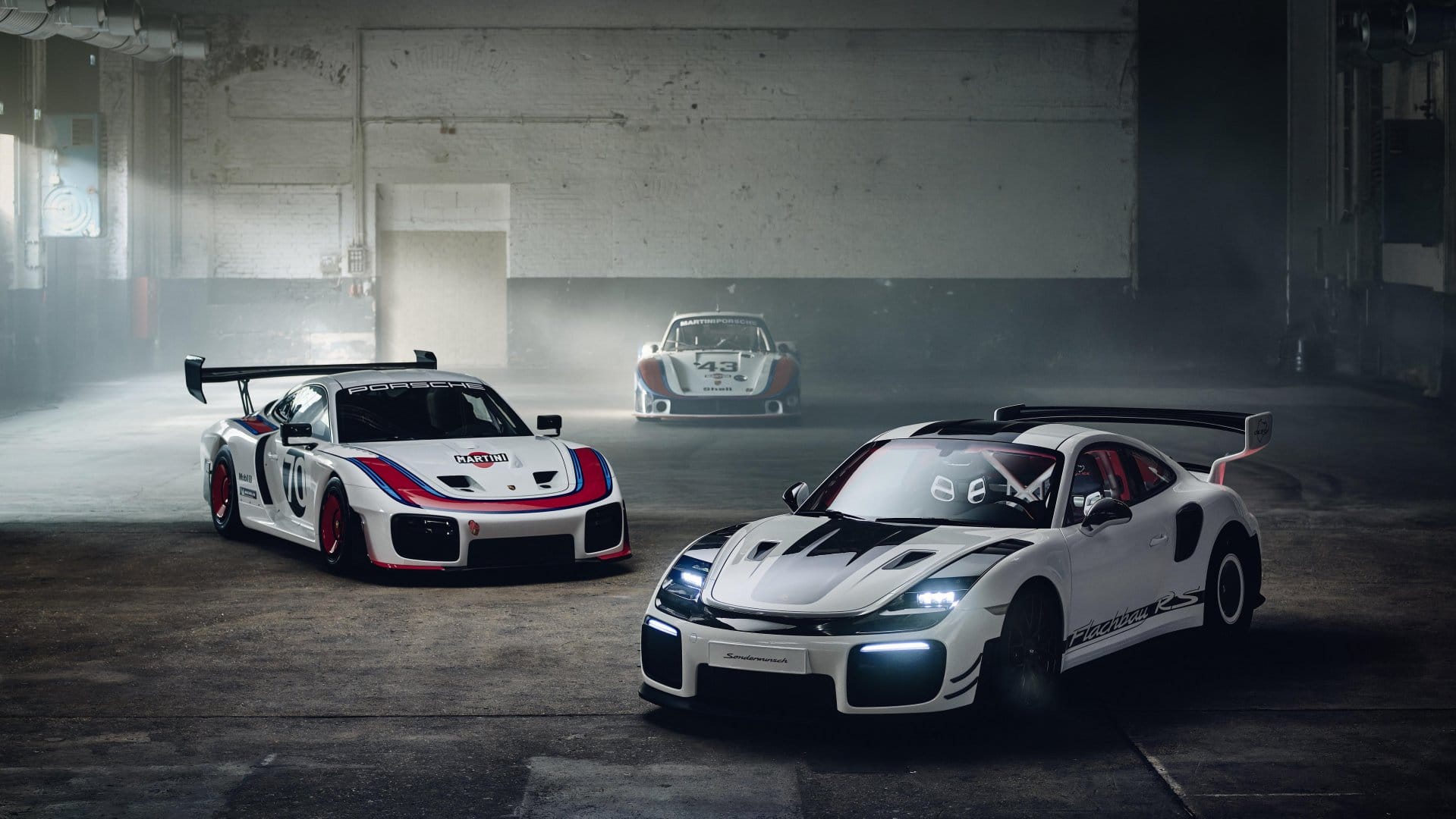
The design of the Flachbau RS goes back to the Porsche 935, introduced in 1976 as a racing version of the 911 Turbo. The rules of its racing class allowed Porsche to make extensive changes to the bodywork. Porsche therefore replaced the front wings and round headlights with a lower front that improved the car’s aerodynamics.
The shape became known as Flachbau, the German term for “flat construction.” Over the following years, the 935 became one of Porsche’s most successful endurance racing cars, with victories at Daytona, Sebring and Le Mans.
A longer version developed for the 1978 season was nicknamed “Moby Dick” because of its shape and white body. The car won the Six Hours of Silverstone.
Its racing success and unusual appearance created demand among Porsche customers. During the 1980s, Porsche began offering a road-going Flachbau version of the 911 Turbo. By the end of production in 1989, Porsche had sold almost 1,000 examples.
The Commission — Rebuilding a 2018 GT2 RS
For the new Sonderwunsch project, the customer brought Porsche a nearly new GT2 RS from their own collection. The aim was not simply to recreate an earlier Flachbau, but to apply the same design to a modern car.
The customer also wanted to improve its performance and add a rear wing inspired by the 911 GT3 R rennsport. At the same time, the finished car had to remain fully legal for road use.
With the engine and transmission left unchanged, the project focused on the design, aerodynamics and weight of the car. Porsche brought together its Sonderwunsch team, Style Porsche, Porsche Motorsport and engineers from Weissach, along with the specialists at Manthey.
Grant Larson led the design work. He had also designed the modern Porsche 935 presented in 2018, which served as an important reference for the new Flachbau RS.
Developing and Testing the Flachbau RS
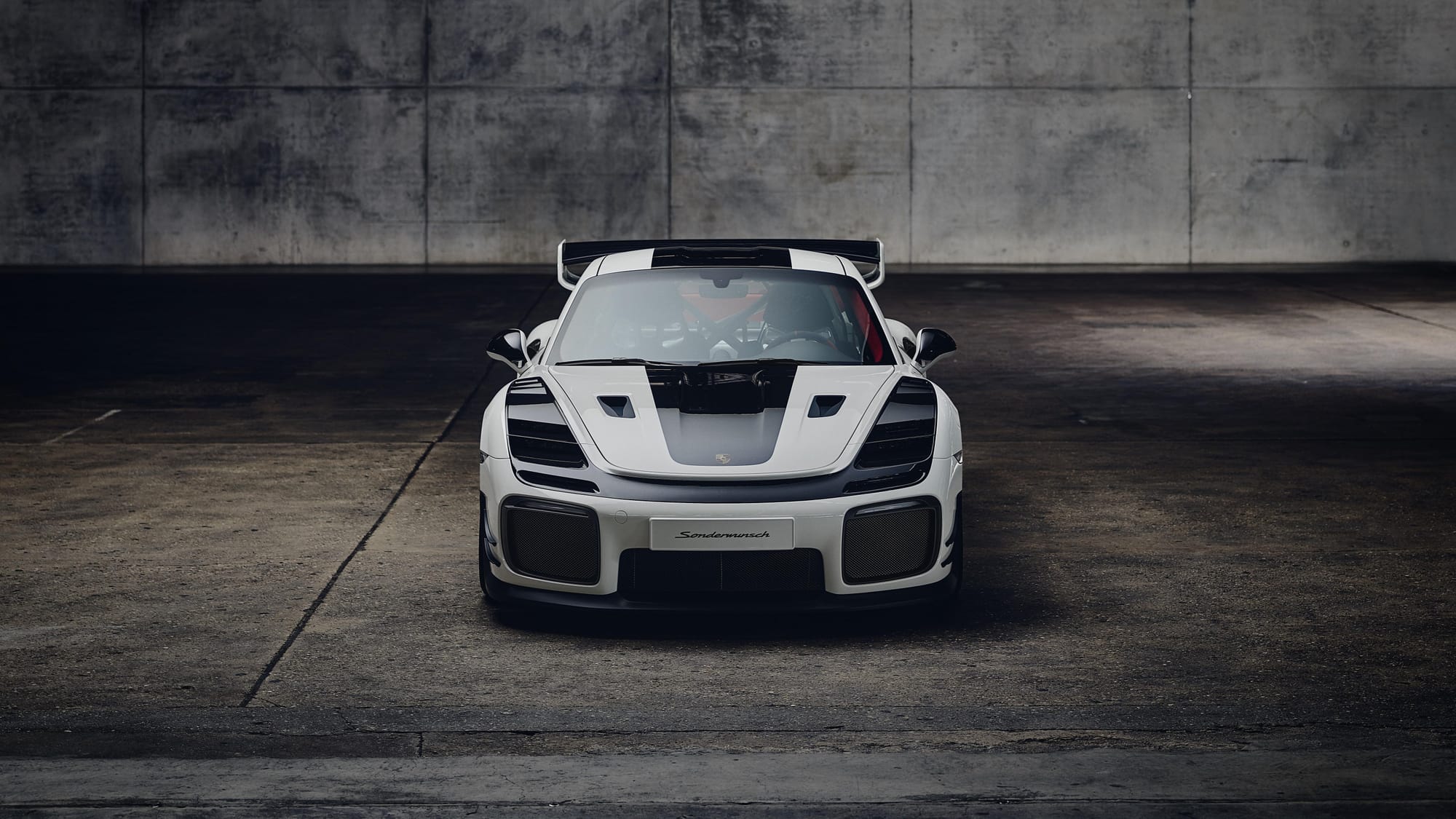
Development began with the front of the car. To create the Flachbau shape, Porsche designed new front wings with openings that release pressure from the wheel arches. The lower profile also required a new front bumper and changes to the fuel-filler cover, which no longer fitted within the altered wing.
The round headlights of the GT2 RS created another challenge. There was not enough space for them inside the lower front, so Porsche developed a new lighting system using narrow LED units. The lights for dipped beam, high beam and daytime running are arranged above one another within the bodywork.
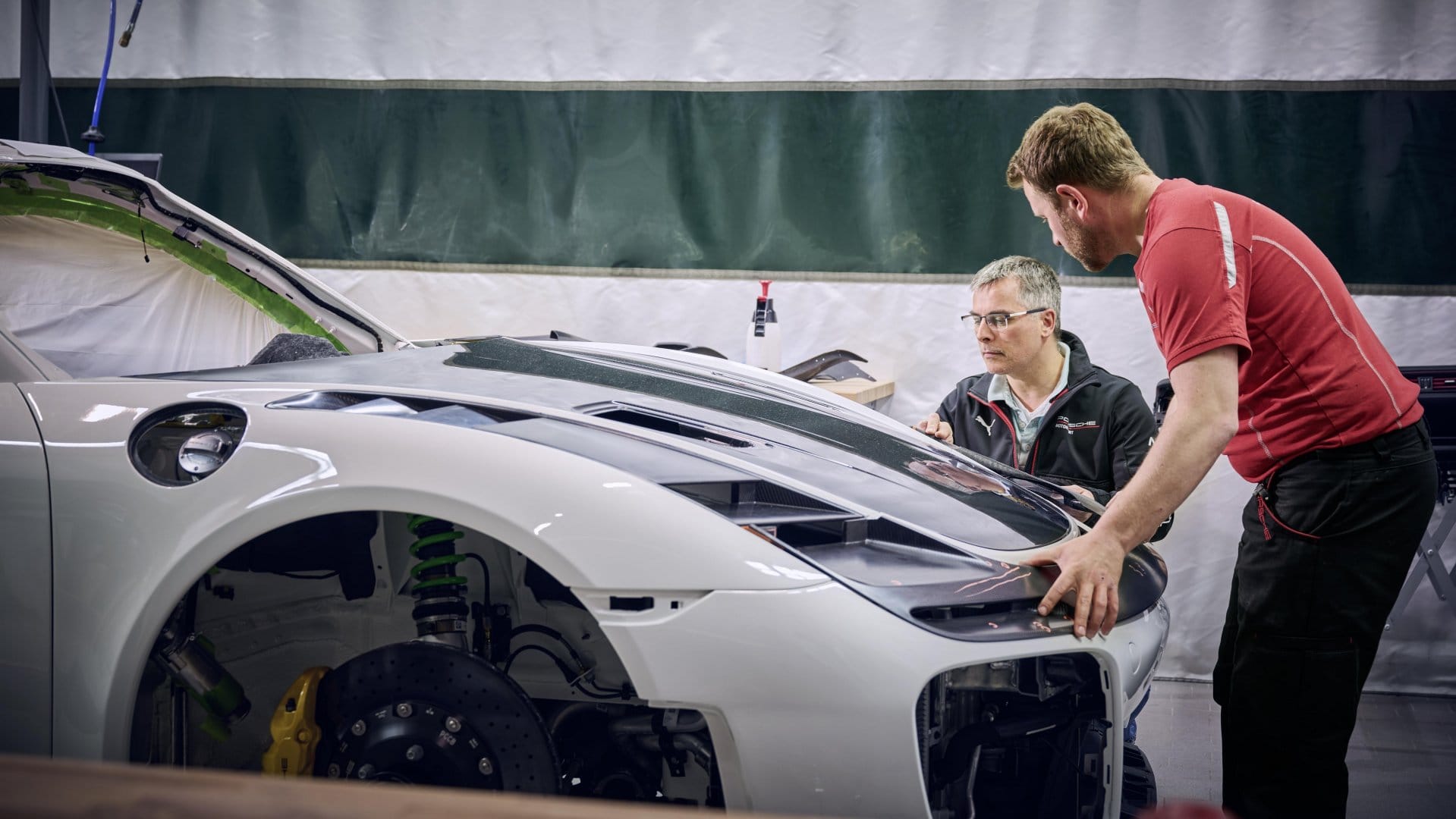
Porsche also changed the aerodynamics around and underneath the car. The new front splitter works together with parts based on the Manthey Kit, including changes to the underbody and rear diffuser. Carbon-fibre covers were added to the rear wheels to reduce drag.
At the rear, Porsche developed a large wing with S-shaped supports. Its design was inspired by the 911 GT3 R rennsport, but it was adapted for the shape and performance requirements of the Flachbau RS. The wing sits around five centimetres higher and can be moved between three positions, allowing the aerodynamic setup to be changed for different circuits.
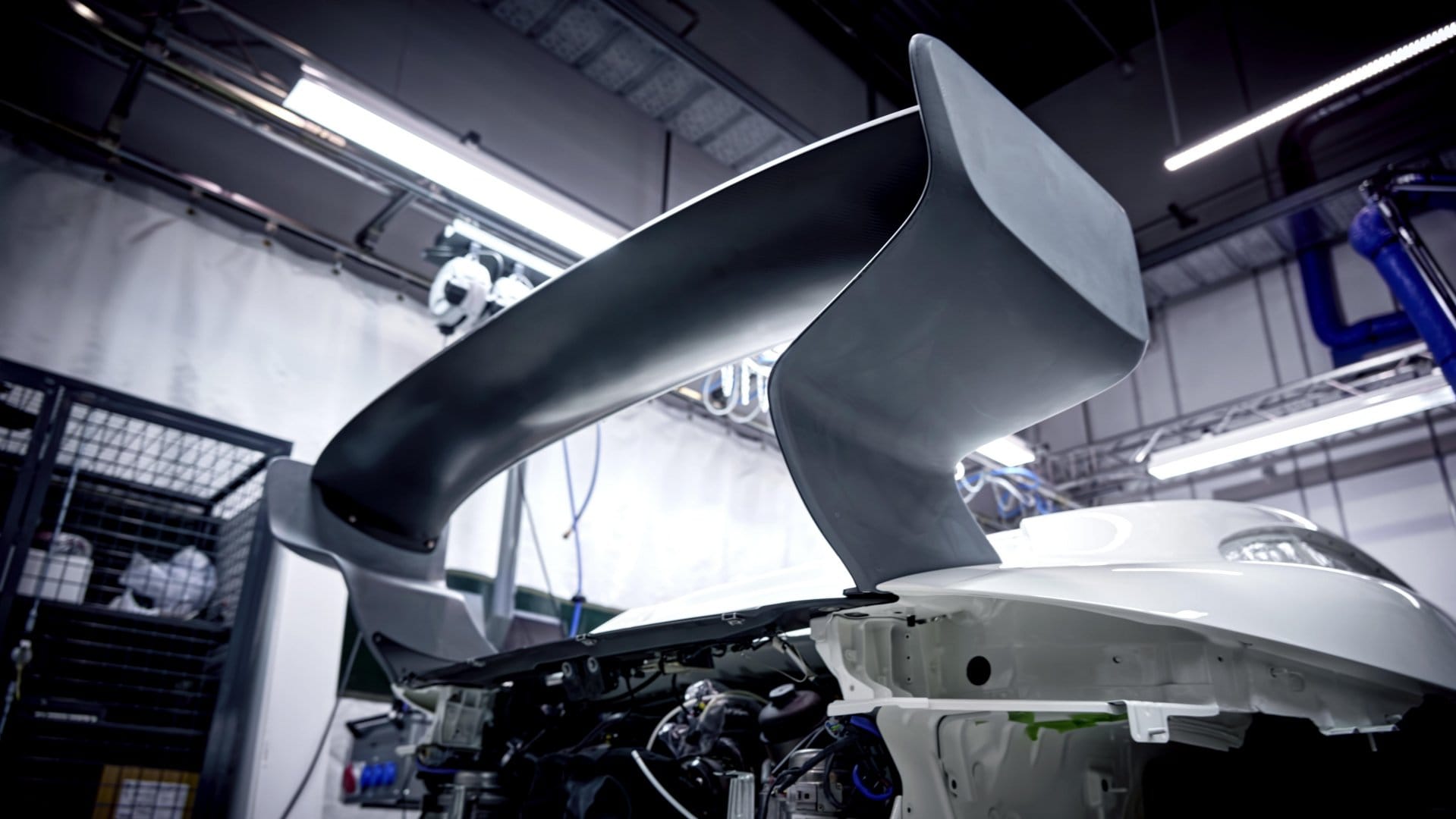
Before producing the new parts, Porsche checked the complete design digitally. Engineers examined how the changed bodywork would affect the structure and airbag system. They also calculated the forces placed on the rear wing and studied the airflow around the car.
Once the design had passed these checks, Porsche produced new tools to manufacture the individual components. The new wings, bumper and other body parts were developed specifically for the Flachbau RS rather than taken from another Porsche model.
The development programme also included extensive physical testing. The lighting system was tested for road approval, while the aerodynamics were developed further in a wind tunnel.
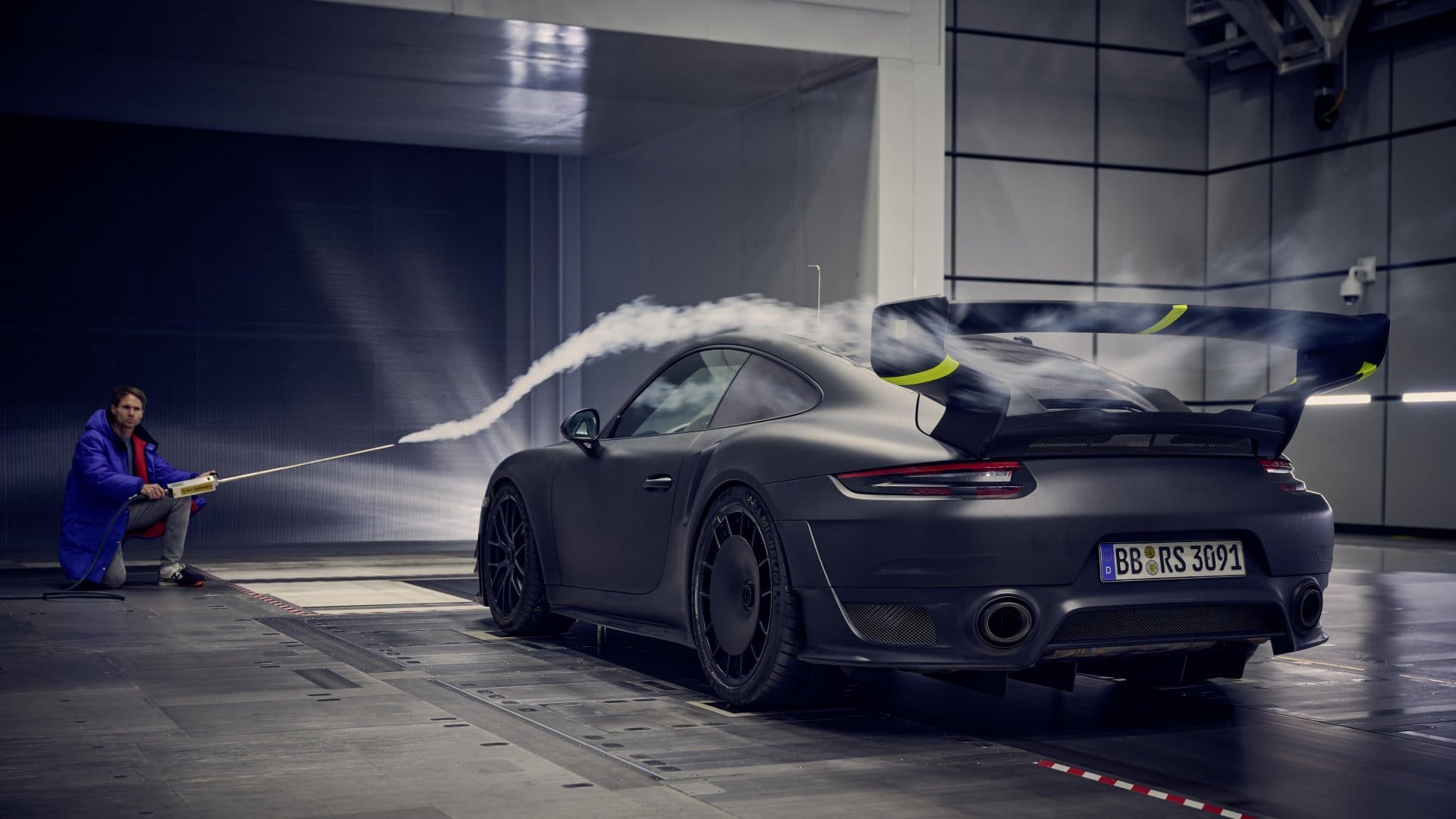
The rear wing underwent vibration and load testing to confirm that it could withstand long-term road and circuit use. Porsche also tested the cars at its facilities in Weissach, at Mendig airfield and on the Nürburgring Nordschleife.
The testing programme included more than 1,000 kilometres and 50 performance laps on the Nordschleife. According to Porsche, test driver Lars Kern completed several laps in under seven minutes. He reported that the redesigned car remained stable and precise at very high speeds.
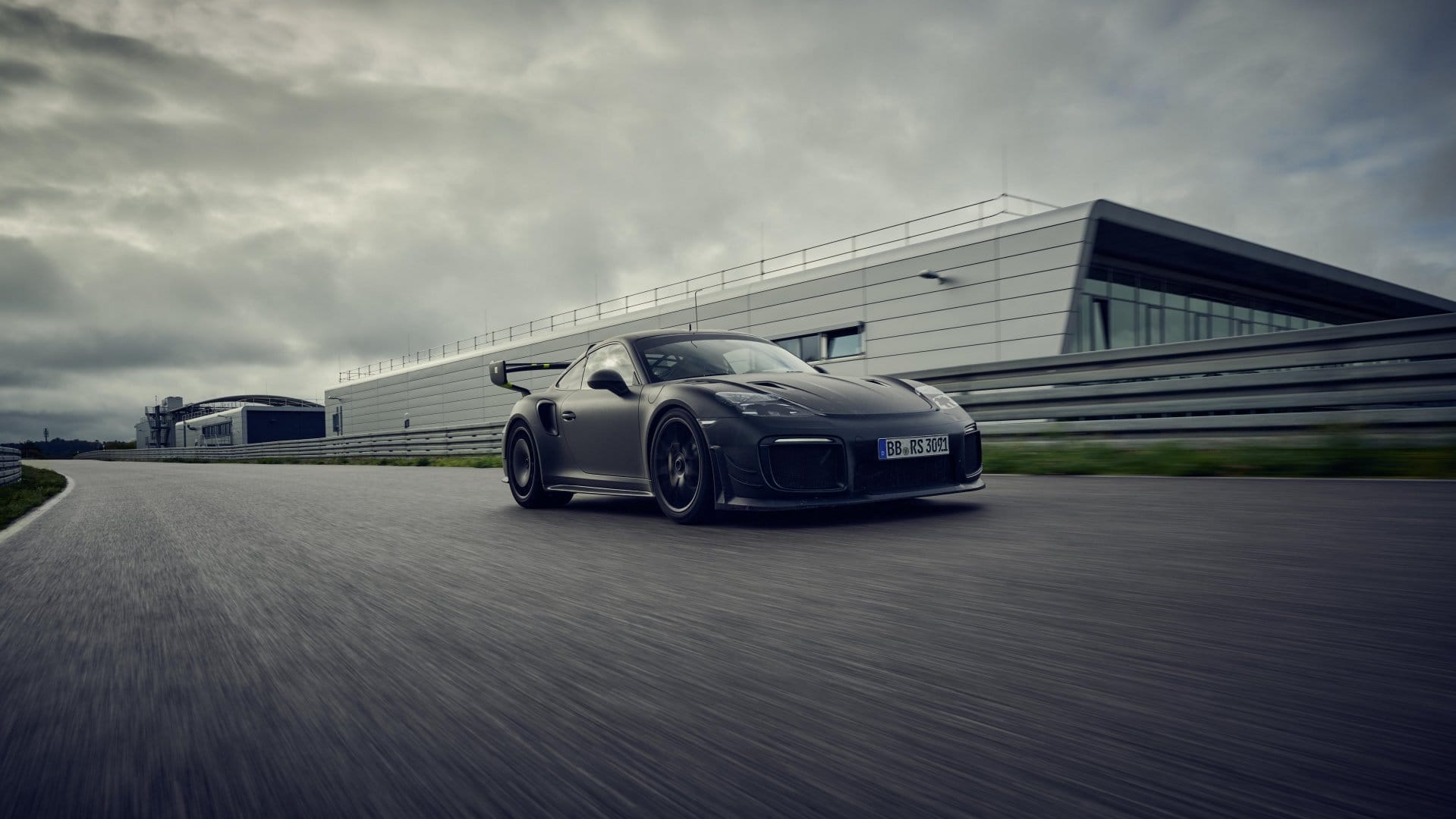
For the final exterior, Porsche finished the car in Grand Prix White, a colour first offered during the 1970s. To recreate the shade, Porsche used a historic 911 from its own collection as a reference and measured its paintwork. The white body is combined with matte-black sections and exposed carbon, including a U-shaped element at the front inspired by the “Moby Dick” racing car.
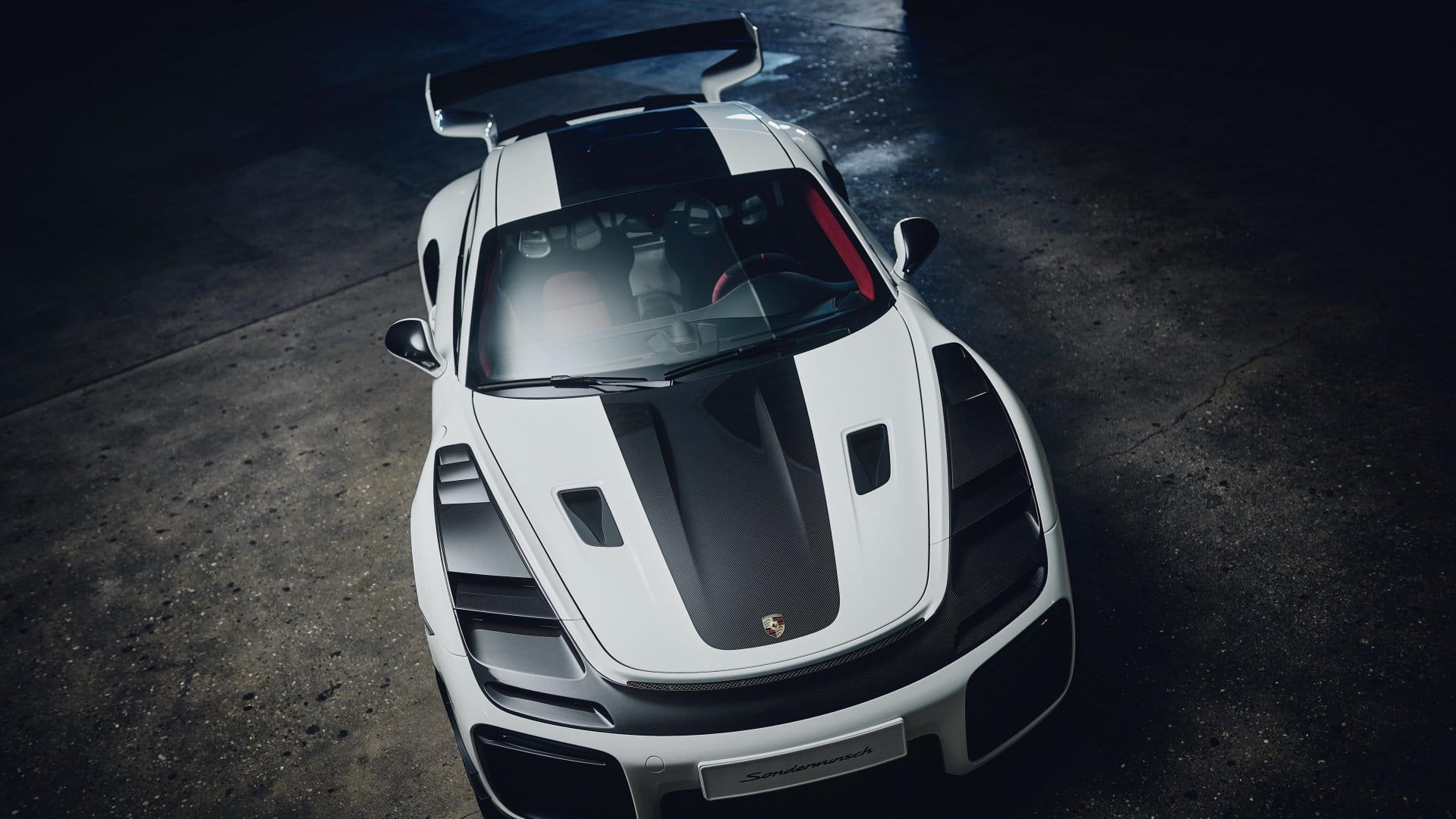
Weight was also reduced inside the car. Porsche retained the red Alcantara, black leather and carbon around the driver and passenger but removed the infotainment and audio systems. Sections of the carpeting, insulation, trim and wiring were also taken out.
The infotainment display was replaced by a leather-covered storage compartment. Equipment required for road use, including the warning triangle and towing eye, was placed inside a removable Emergency Box. The owner can remove the complete box before using the car on a circuit.
The carbon bucket seats carry “Flachbau RS” lettering and an embroidered outline of the Nürburgring. A plaque on the passenger side identifies the car as “Factory One-Off 2026 | Flachbau RS.
The Completed Flachbau RS
After almost three years of development, Porsche completed the Flachbau RS in 2026. The finished car was presented publicly at Monterey Car Week in August. Porsche has not stated when it was handed over to the customer.
The original 3.8-litre twin-turbo engine, seven-speed PDK transmission and output of 700 PS remain unchanged. Performance was instead improved through lower weight and revised aerodynamics.
The completed car is 31.6 kilograms lighter than the original GT2 RS with the Weissach package. Porsche also reports between two and three per cent more rear downforce than a GT2 RS with a comparable Manthey setup, depending on the position of the rear wing.
At its maximum speed of 340 km/h, the Flachbau RS produces 554 kilograms of rear downforce in the high-downforce setting.
The Flachbau RS remains a single car developed for its original customer. Porsche has disclosed neither the price of the project nor the identity of the owner.
The project shows how far a Sonderwunsch commission can extend beyond individual colours and materials. In this case, Porsche designed and manufactured new components, tested the redesigned car and completed the project with full road approval.
Source: Porsche Newsroom
Production note: This article was developed and directed by the author, with AI assistance used for research, source verification, structuring and editing. The argument, selection of examples and final editorial decisions were made by the author. All images are non-AI-generated and sourced from Porsche Newsroom.